The Promise 10

  • Subscribe to our RSS feed.
  • Twitter
  • StumbleUpon
  • Reddit
  • Facebook
  • Digg
Showing posts with label AREVA. Show all posts

Monday, 9 December 2013

“Nuclear energy is a sector of the future.”

Posted on 13:56 by Unknown

“Nuclear will always make up at least half of our energy (electricity output)," he was quoted as saying during a Franco-Chinese seminar in Beijing on Friday to commemorate a 30-year partnership in the nuclear sector.

"Nuclear energy is a sector of the future," he added.

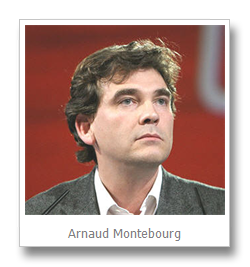
That’s Arnaud Montebourg, the French industry minister, speaking, so he knows whereof he speaks. France is building two nuclear reactors in China, which raises an important point – nuclear energy technology is not just a economic boon to ratepayers like those in France but to companies like the French-owned AREVA, which is building the Chinese reactors.

The Reuters story also mentions in passing that the French utility EDF is building a new reactor in England. This is how trade works.

---

Which may be why we’re hearing this out of Japan:

In an attempt to overturn the previous administration's pledge to phase out nuclear power, Japanese Prime Minister Shinzo Abe's government will call it an "important source of energy for the country" in its new energy plan.

We mentioned last week (in the post below this one) that a government report signaled a return to nuclear energy in Japan. So it does, as this news attests. The Wall Street Journal has more:

Highlighting the economic necessity of nuclear power, the draft points out that a surge in liquefied natural gas imports to stably supply electricity throughout the country has led to very expensive fossil fuels costs. It also said an overreliance on thermal power has increased the country's carbon dioxide emissions.

The story goes on to report that though nuclear energy has not regained its popularity in Japan, Abe remains quite popular despite these decisions. Polls are polls and can carry a lot of unintended implications, but let’s allow that Abe’s good standing may carry nuclear energy along with it as electricity prices drop and carbon emissions relent. 

Nothing here about trade, really, but Japan does consider nuclear technology an exportable good. I can’t help thinking that that may be playing a part in Abe’s calculations.

Read More
Posted in AREVA, EDF, France, Japan, Nuclear Energy | No comments

Thursday, 17 October 2013

Why India's Nuclear Liability Law Is Harming Indian Interests

Posted on 21:30 by Unknown
Ted Jones
The following is a guest post by Ted Jones, Director of International Supplier Relations for NEI.

In a post published this week on the New York Times’ India Ink blog, M.V. Ramana and Suvrat Raju discussed U.S.-Indian commercial nuclear cooperation in the context of nuclear liability law. They argue that the divergence of the Indian liability law from international practices is minimal and justified by the Indian public interest.

 But the authors are deeply misinformed about the attributes, purposes and effects of nuclear liability law. As a result, they misunderstand features of the Indian liability law that could undermine India’s public safety interest.

A basic principle of nuclear liability law – embodied in the international conventions as well as the national laws of nuclear energy countries – is channeling of absolute and exclusive legal liability to the operator of the plant. A second basic principle is limitation of the amount of liability borne by the plant operator. The authors characterize the principles of nuclear liability law as a “subsidy to the nuclear industry” that has allowed suppliers to “have escaped unscathed in the past.” But these features promote important goals – including deployment of the safest and best technologies the private sector has to offer, economic rationalization of insurance, and alignment of legal liability with responsibility.

A few points to consider:
  • Rationalization of liability. Channeling liability to the plant operator makes economic sense, because insuring a single plant is simpler and therefore cheaper than separately insuring the plant’s hundreds of suppliers. In assuming the liability risk of its suppliers, the plant operator factors the liability cost into the procurement contracts. As a result, the suppliers effectively pay their share of liability costs. They have never “escaped unscathed.”
  • Role of the regulator. The authors fail to recognize that in the nuclear energy industry – very unlike their examples of the chemical and oil and gas industries – a strong regulator plays a unique role. In the United States and India, the nuclear regulator ensures safety at every phase of plant development and operation, and this role has important ramifications for liability. After a power plant component has been rigorously scrutinized and licensed, it is appropriate for the legal liability associated with that component to shift away from it supplier. Imposing exclusive and absolute liability on the utility, which will operate and maintain it, aligns legal and functional responsibility and serves the public safety interest.
  • Worldwide acceptance. In the authors’ vivid account, nuclear liability principles were imposed on the world by the “powerful governments” of the United States and Europe, which “extracted these legislative concessions for their companies, as they expanded to build reactors around the world.” This ignores that the United States and Europe first adopted the same nuclear liability principles in their home countries for domestic reasons. Contrary to their claim that the United States bullied India to adopt nuclear liability, India’s Department of Atomic Energy adopted a liability law based on the international model for similar domestic reasons, years before the United States and India agreed to collaborate in nuclear energy. Likewise, India made its own decision to adhere to the IAEA’s Convention of Supplementary Compensation (CSC) in order to obtain the convention’s unique benefits of international support, not because the U.S. supports it.
  • India’s radical departure from international practice. The authors claim that the Indian liability law “largely copied” the CSC model law. The CSC model law, consistent with longstanding and widespread international practice, allows two exceptions to the basic principle that absolute and exclusive liability be channeled to the plant operator. The first exception, reflected in Article 17(a) of the Indian law, permits the plant operator legal recourse against a supplier if the parties so agree by contract. The second exception, reflected in the Article 17(c) of the Indian law, permits the operator legal recourse if the supplier has intentionally caused damage. To these limited exceptions, the Indian law adds a third, in Article 17(b): where “the nuclear incident has resulted as a consequences of an act of the supplier or his employee, which includes the supply of equipment or material with patent or latent defects or sub-standard services.” The authors, who are not lawyers, claim that “this clause does not seem significant,” but Indian and international legal experts have consistently concluded that 17(b) undermines the channeling principle and the purpose of nuclear liability.
  • Broad dissatisfaction with the Indian law. The authors single out “strenuous demands made by the United States and industry,” but ignore the many other stakeholders who have faulted the law. Nuclear Power Corporation of India Ltd (NPCIL), the sole plant operator, warned in a statement on the eve of the Indian parliament’s approval of the liability law that 17(b) would “defeat the purpose” of the law. The statement predicted that if the clause remained in the law, “no manufacturer, Indian or foreign would be able to serve the nuclear power industry.” NPCIL’s prediction has been accurate, as it has failed to conclude any major contract since 2010. Despite years of contract negotiations for Kudankulam units 3 and 4, Russia and India have yet to overcome the nuclear liability issue. Russia initially sought to grandfather the two power plants under an existing intergovernmental agreement that absolves Russia of any legal liability for an accident at Kudankulam units 1 & 2. More recently, Russia has indicated that it would demand an increase in the agreed price for the plants, in consideration of costs associated with the Indian liability law. Similarly, the French have been unable to conclude a contract for the first pair of Areva power plants at Jaitapur, in large part due to concerns about liability. Indian suppliers, too, have been reluctant to agree to contracts with NPCIL. As former Atomic Energy Chairman Anil Kadkodkar warned in 2010, India’s private sector may suffer the greatest impact from the law, because it impedes their collaboration with foreign nuclear companies globally, not just in India.
  • Public interest. The authors invoke the Bhopal catastrophe to justify Article 17(b) of the Indian law, but the Bhopal case illustrates why it is essential that India establish an effective liability regime. If such an effective national and international liability regime existed for the chemical industry, the victims of Bhopal would have received swift, certain and adequate compensation, supplemented by other countries and administered by a dedicated national tribunal. But instead of a liability regime, Bhopal’s victims were forced to contend with a litigation regime that is by its nature slow and uncertain, and which often provides inadequate compensation. To this day, many of Bhopal’s victims have never received compensation.
Read More
Posted in Anil Kadkodkar, AREVA, Bhopal, Department of Atomic Energy (India), IAEA, India Ink, Ltd, M.V. Ramana, New York Times, Nuclear Power Corporation of India, Rosatom, Suvrat Raju | No comments

Friday, 7 June 2013

NextEra Sets Record With 700-MW Power Uprate

Posted on 08:00 by Unknown
NEI’s Top Industry Practice Awards recognize innovation in the nuclear energy industry. Presented at NEI’s annual conference, the awards honor accomplishments that help the industry improve safety, streamline processes and increase efficiency.

In a special series of articles this week, our publication Nuclear Energy Overview highlights the challenges and successes of five winners.


This year’s Westinghouse Combustion Engineering Award went to a gargantuan project—NextEra Energy completed the largest extended power uprate project in history, adding more than 700 megawatts of additional generating capacity across four reactors in Florida and two in Wisconsin.

With more than 30 million hours worked to complete the uprate, NextEra’s project called on a workforce of thousands, an economic boon to the communities that host the facilities.

Terry Jones, vice president of nuclear power uprates, stressed the importance of instilling in the workers the nuclear energy industry’s safety culture.

“They understand how we work, how we’re just absolutely fanatical when it comes to safety,” Jones said.

Much of the workforce was new to the nuclear industry, but extensive training, on-site coaching and daily feedback ensured the work was performed safely and efficiently.


A major workforce challenge was coordinating the logistics of so many workers.

“On any given day, you’re dealing with a workforce that’s in excess of 3,000, in addition to your normal plant staff,” Jones said. “You had to set up a traffic control just to be able to get the workforce to and from the sites in a safe manner.”

The benefits of an extensive workforce outweighed the challenges, however.

“We provided a tremendous amount of employment and economic benefit to the region. We were employing more than 3,500 workers on any given day on average, and about 50 percent of that workforce was Floridian,” Jones said.

He added that NextEra will see many long-term benefits from the uprates.

“You’ve got a more modern plant that will result in improved reliability. You’ve got fuel cost savings for the customer. You’ve got greater fuel diversification. You’re reducing CO2 emissions,” Jones said.
Read More
Posted in 2013 Nuclear Energy Assembly, AREVA, Duke Energy, Oconee, Rachel Doss, refueling outage, South Carolina, TIP Award | No comments

Thursday, 6 June 2013

Duke Examines 6,500 Oconee Reactor Parts in One Refueling Outage

Posted on 13:54 by Unknown
NEI’s Top Industry Practice Awards recognize innovation in the nuclear energy industry. Presented at NEI’s annual conference, the awards honor accomplishments that help the industry improve safety, streamline processes and increase efficiency.

In a special series of articles this week, our publication Nuclear Energy Overview highlights the challenges and successes of five winners.


Rachel Doss’ team at Duke Energy’s Oconee nuclear energy facility in South Carolina earned the 2013 AREVA Vendor Award, but its project—developing and implementing guidelines for inspecting and evaluating pressurized water reactor internals—was many years in the making.

Rather than scheduling reactor internal inspections over multiple refueling outages, Duke’s winning team performed one of the industry’s largest-ever reactor vessel inspections, examining more than 6,500 reactor components during one outage at the Oconee 1 reactor.


Its scope required planning with vendors, performing numerous risk assessments and developing contingency plans.

“The engineering work contract was in place three years in advance of the project. The inspection service to get all of the tooling developed, that was in place two and a half years in advance. We started our biweekly calls one and a half to two years in advance of the inspections,” said Doss, a fleet programs engineer with Duke Energy.

“Because we started planning so far in advance, we were able to come up with a list of unknowns prior to the outage,” Doss said. The team was then able to gather reactor vessel measurements and develop new tools that allowed inspections to be performed remotely and in parallel with other work, helping the company avoid the high costs of completing the work over the course of multiple outages.
Read More
Posted in 2013 Nuclear Energy Assembly, AREVA, Duke Energy, Oconee, Rachel Doss, refueling outage, South Carolina, TIP Award | No comments

Wednesday, 24 April 2013

Swinging the Axe at MOX

Posted on 14:40 by Unknown
One of the most vexing aspects of President Barack Obama’s 2014 budget request (as regards topic of blog, naturally) is the deep cut made to MOX facility construction in South Carolina. This is being built at the Department of Energy’s Savannah River Site and is about 60 percent complete.

But let’s back up. What is the MOX facility? For that matter, what’s MOX? (link to NEI’s member site – you can see the whole thing if you’re a member – but this is the key part)

Shaw AREVA MOX Services is the prime contractor for the design, construction and startup of the Energy Department’s mixed oxide fuel fabrication facility being built at DOE’s Savannah River Site in Aiken, S.C. Under a program managed by DOE’s National Nuclear Security Administration, the MOX plant will help dispose of 34 metric tons of surplus weapons grade plutonium by blending it into fuel for commercial power reactors

And here’s the thing or at least a thing: we share this obligation with Russia, who participated in the megatons to megawatts program to downblend plutonium. This (really great) write-up at World Nuclear Association provides much more detail about the whole program, but we’ll zero in on the MOX facility part:

After environmental and safety reviews, the US Nuclear Regulatory Commission authorized construction of a MOX fuel fabrication plant (MFFF) at the DOE Savannah River site in South Carolina by Duke, Cogema, Stone & Webster.  Construction started in August 2007, by Shaw Areva MOX Services.  It will make about 1700 civil MOX fuel assemblies from depleted uranium and at least 34 tons of weapons-grade plutonium, unlike other MOX plants which use fresh reactor-grade plutonium having around one third non-fissile plutonium isotopes.  US reactors using MOX fuel will need to be licensed for it. The MFFF is designed to turn 3.5 t/yr of weapons-grade plutonium into about 150 MOX fuel assemblies, both PWR and BWR.

Couldn’t happen to a nicer element, could it? It turns plutonium from destructive to constructive in a single pass. The nonproliferation aspect is a considerable upside – in fact, a key point.

NEI’s President and CEO Marvin Fertel called out DOE on this aspect during testimony before the House Appropriations Committee:

NEI supports completion of the MOX fuel facility now under construction at the Savannah River Site in South Carolina.  This facility, which is approximately halfway through construction and in which approximately $4 billion has been invested, is important to U.S. national security and as a demonstration of America’s commitment to nonproliferation.

A little more, on the value of the MOX facility to its many partners (and eventual beneficiaries):

It is estimated that the fuel produced from the MOX project would produce $50 billion worth of electricity and enable the federal government to eliminate the expense of storage and surveillance of the plutonium in the future.  Construction and operation of the MOX plant is the result of years of work and commitments with the Russian Federation, the state of South Carolina, and thousands of workers at the site and across the country.  Each of those parties made commitments on the assumption that the U.S. government is a credible partner capable of fulfilling its arms control and nonproliferation commitments.  Failure to complete this project will validate those critics of the government, and the DOE in particular, who claim it simply cannot complete complex projects, particularly those concerning nuclear materials disposition.

That’s – pretty harsh.

But not undeserved. It’s not just that the MOX facility completes an obligation with the Russians to convert this fuel. Or that DOE is risking a large blow to its reputation. Or even that it impacts workers in South Carolina in the midst of a jobs slowdown. It’s the middle part: “Each of those parties made commitments on the assumption that the U.S. government is a credible partner capable of fulfilling its arms control and nonproliferation commitments.” That’s important. That takes in all the rest.

Now, MOX has a science-y profile that makes it seem a safe project to swing a budget axe at. I get that. But this is not an examination into the love life of caterpillars (which, don’t get me wrong, still might be quite important), the MOX facility is a project with many moving parts – many goals fulfilled in several different important policy areas – and proof that America takes those policies seriously. If it doesn’t, it should – they have an existential dimension that requires a serious, committed response. It’s not a lot to ask for.

Note: Some of our commenters pointed out the MOX facility is only for conversion of U.S. fuel. That is correct – I knew that somewhere in my brainpan, but totally muddled it here. I’ve revised the post to make this clearer.

AREVA has a blog on the MOX facility here. Another good place (along with the WNA article cited above) to learn more about the MOX facility and MOX itself.

Read More
Posted in AREVA, MOX Fuel, nonproliferation, Nuclear Energy, Russia, Savannah River Site | No comments

Friday, 22 March 2013

Nuclear Advocate Simona De Silvestro Kicks Off IndyCar Series in Florida

Posted on 15:26 by Unknown

Simona De Silvestro will drive the
No. 78 Nuclear Clean Air Energy IndyCar.
Folks, start your engines. The Honda Grand Prix of St. Petersburg is this Sunday, March 24, and marks the start of the 2013 IZOD IndyCar Series. NEI is proud to join member companies Entergy and AREVA in sponsoring open wheel racing’s rising star Simona De Silvestro. This season De Silvestro joins the KV Racing Technology team and sits behind the wheel of the No. 78 Nuclear Clean Air Energy Chevrolet.

A long-standing advocate of the industry, the 24-year-old racer hails from Switzerland, where nuclear energy supplies 40% of the nation’s electricity. De Silvestro’s background gives her a unique appreciation for the importance of nuclear in providing emission-free power: “Nuclear is clean, safe and reliable, and that’s what makes it a quality option for producing electricity.” Her support is energizing our future workforce too, as proven by her recent visit to the University of Florida to promote STEM education and careers.

We are excited for the series and expect a great year for De Silvestro. Be sure to tune in as nuclear shares the spotlight with the talented racer on the streets of St. Petersburg. The race airs on NBC Sports Network at 12 p.m. (ET).
Read More
Posted in AREVA, Entergy, IndyCar, KV Racing Technology, NEI, Simona De Silvestro | No comments

Friday, 5 October 2012

What Is Said About Nuclear Energy–and What It Means

Posted on 13:24 by Unknown
WIPP

Storing Used Nuclear Fuel at WIPP

From Konrad Szymanski, a European Parliament MP:
“Commissioner [Gunther] Oettinger is responsible for energy policy across all 27 EU countries. It would be extremely disappointing if this became an exercise in forcing Germany’s position on nuclear energy down the throats of other countries.”
I’ve never cared for that phrase, popular during the health care debate, and would be surprised if Szymanski actually used it in whichever language he was speaking when he said it.

What he’s talking about is a European Union report about the stress tests performed on nuclear energy facilities there. The report does not recommend closing any plants; it does recommend spending up to 25 billion Euro (about $32 billion) to make them “safer.” This hasn’t gone over well.
The report is misleading because it conveys the impression that plants are unsafe and a lot of work is needed to make them safer, while in reality the situation is not that dramatic. Moreover, the methodology by which the commission reached this result isn’t clear and the commission is making recommendations in a domain where it really has no powers.
When you start talking about 25 billion anythings, you might as well say 50 or 75 billion – it’s all more than can be reasonably estimated in a fairly tight timeframe. The report might better have left out cost estimates; including them just makes the German Oettinger, who chaired the committee that oversaw the stress tests, vulnerable to charges like those from Szymanski.

The report will be up for discussion in parliament in about two weeks, but so far, the reaction has been very poor.
---
From Ron Litzinger, Southern California Edison President :
"We have concluded that Unit 2 at San Onofre can be operated safely. This plan will get San Onofre Unit 2 back to providing reliable and clean energy to Southern Californians."
This is unalloyed good news, though not one without caveats. San Onofre has been offline with generator problems for eight months, but tests show that one of the two reactors can run at 70 percent power without issue. That’s what Litzinger is announcing.

The caveats:
"The agency will not permit a restart unless and until we can conclude the reactor can be operated safely," NRC Chairman Allison Macfarlane said. "Our inspections and review will be painstaking, thorough and will not be rushed."
Which is what you want to happen.
The plan "is a reckless gamble that flies in the face of the utility's claim that it puts safety ahead of profits," the advocacy group Friends of the Earth, which is critical of the nuclear power industry, said in a statement.
To FOE, this would be true of an issue-free facility that’s been turning out electricity for many years. It’s the group’s default position. Just on the level of common sense, putting profits ahead of safety will only lead to tears – not to mention corporate ruin.

Notably, an attempt earlier this year to gather enough signatures (not by FOE) to put an initiative on the ballot to close San Onofre (and Diablo Canyon, another California facility) failed utterly.

Always shouting upwind on a rainy, cold night, our FOE.

So – let’s see how the NRC inspections go.
---
From Jack Volpato, Eddy-Lea Alliance board member:
"The Department of Energy wants this to happen. There are nuclear rods around the country just sitting on a pad, costing $5 to 10 million a year to keep an eye on."
Well, all right, they’re not just sitting on a pad decaying away, they are in used fuel casks, but we get what Volpato is saying. Eddy and Lea are counties in New Mexico that have seen a boomlet in nuclear energy activity. None of it has anything to do with making electricity for New Mexicans, but with byproducts and used fuel.

There is the Waste Isolation Pilot Plant, or WIPP, that has been a big local success story, even inspiring the Blue Ribbon Commission investigating the back end of the fuel cycle to recommend using the WIPP-derived community consent-based approach to siting consolidated used fuel storage sites (and a permanent repository, too.) That’s what AREVA is helping with.

So who’s better than Lea and Eddy counties to attract a consolidated used fuel storage site? It worked out exceedingly well once with WIPP, why not again?
The Eddy-Lea Energy Alliance has selected French firm AREVA to help create an above-ground interim storage facility to store nuclear fuel on 1,000 acres between Carlsbad and Hobbs. The facility is being billed as a safe way to temporarily house used fuel from nuclear power plants.
Early days of course, but involving AREVA at this point shows real seriousness to make it work. What we can say is: good. Go for it, New Mexico.

I got sidetracked but that corner in southeast New Mexico also hosts or will host the International Isotopes uranium deconversion facility and Urenco’s uranium enrichment plant. That’s not a coincidence, either, but a subject for a future post.
Read More
Posted in AREVA, european union, Friends of the Earth, Nuclear Energy, San Onofre Nuclear Generating Station, Waste Isolation Pilot Plant | No comments

Thursday, 4 October 2012

Guest Post: Advancing Nuclear Energy Innovation, Technology

Posted on 07:18 by Unknown

AREVA CEO Mike Rencheck (right), along with MOX Services Executive Vice President and Deputy Project Manager Steve Marr (center), answer questions about the Mixed Oxide (MOX) Fuel Fabrication Facility for NEI President and CEO Marv Fertel (left).
Yesterday, a group of NEI executives led by our President and CEO Marv Fertel, traveled to the Savannah River Site in South Carolina to personally see the progress being made on the construction of a nuclear fuel fabrication facility that will be jointly managed by the Shaw Group and AREVA.

Once construction is complete, the facility will begin to mix weapons grade plutonium with uranium -- a process that will eventually eliminate 68 metric tons of weapons grade plutonium from U.S. and Russian stockpiles. NEI Senior Vice President Scott Peterson, who accompanied Fertel on the tour, provided us with the following report.
Nearly 60 years ago, the U.S. government began production at its first reactor at the government’s sprawling Savannah River Site near Aiken, S.C., launching a legacy of research and technology innovation.

That mission continues today with construction of a nuclear fuel fabrication facility that will mix weapons-grade plutonium with uranium to produce electricity and continue reducing nuclear weapons stockpiles both in the United States and Russia.

The National Nuclear Security Administration’s plutonium disposition program will eliminate 68 metric tons of surplus weapon-grade plutonium in the United States and Russia, or about 8,500 warheads each. The two countries will eliminate the material for weapons use by converting it to mixed-oxide fuel for use in commercial reactors.

NEI executives joined the Shaw-AREVA leadership team at the site on Tuesday to survey progress at one of America’s first advanced-technology nuclear energy projects. One fuel assembly—comprised of 95,400 finger-tipped sized fuel pellets—will power 9,000 homes.

“This project is on the forefront of rebuilding America's infrastructure and providing energy solutions for future generations,” NEI Chief Executive Officer Marv Fertel said after touring the project. “The Shaw-AREVA consortia has created thousands of jobs and is developing a highly skilled workforce that is steeped in quality assurance work that is required in nuclear energy projects.

“Coupled with new reactor construction in Georgia and South Carolina, this region is leading the future of nuclear energy, which is the only large-scale, 24/7 and clean-air electricity source on the power grid. The mixed-oxide fuel facility will contribute to a secure, domestic source of fuel for nuclear energy facilities while furthering our government's commitment to reduce the Cold War weapons stockpile.”

The project has myriad advantages that make it attractive to local economies and suppliers in nearly every state:
  • As many as 2,700 workers have been building the facility, including about 1,000 skilled craft workers. Project managers have been tremendously successful in recruiting highly skilled, nuclear-qualified welders, which is providing a benchmark for organized labor at two Georgia Power reactors in Burke County, Ga.
  • The project is helping drive the expansion of U.S. manufacturing, with $790 million in contracts awarded to 8,900 small businesses in some 40 states. Ninety percent of the components in the fully automated fuel manufacturing process will be U.S. sourced.
  • Shaw-AREVA MOX Services is proving the value of modular construction for nuclear energy facilities. Even as civil construction continues at the massive facility, engineers and mechanics are assembling and testing key systems in a huge warehouse near the construction site. This same approach is being used by Shaw to build four reactors in Georgia and South Carolina.
  • The commitment to safety is clear among the Shaw-AREVA MOX Services team. At the current rate, workers at the site this week will reach 12 million hours without a lost workday accident. The U.S. Nuclear Regulatory Commission, which oversees the project, has not identified any needed safety improvements at the project.
Four advanced Westinghouse reactors are being built within 75 miles of Aiken, S.C—construction projects also managed by Shaw. Those projects will take advantage of lessons learned in modular construction, craft worker training and quality assurance from the mixed-oxide fuel facility.

“This is the beginning of the nuclear energy renaissance,” says Steve Marr, executive vice president and deputy project manager for the MOX facility. “We are leading the way both in technology evolution and innovation at the MOX project.”
Thanks to everyone at Shaw AREVA for helping to arrange the tour. For a video concerning the facility and the important work it does, click here. For a slideshow of photos from the tour, see below or click here.

Read More
Posted in AREVA, Marv Fertel, MOX Fuel, Nuclear Energy, Savannah River Site, Shaw Group | No comments
Older Posts Home
Subscribe to: Posts (Atom)

Popular Posts

  • More of The Best Nuclear Energy News of 2013
    1. The 60th anniversary of Atoms for Peace (and NEI, too) – President Dwight Eisenhower gave the Atoms for Peace speech before the Unite...
  • Nuclear Ingots from Canada, Pakistan, UAE
    From Canada, the least unexpected news of the day: The Canadian Nuclear Safety Commission (CNSC) has completed a ground-breaking s...
  • Canada, Westinghouse and A Fusion Follow-Up
    Westinghouse previews a forum taking place today in Toronto called The Future of Nuclear. Westinghouse has no reactors in Canada and isn’t t...
  • What Happens During a Refueling Outage?
    You may have noticed over the past few weeks that a number of nuclear plants are shut down for refueling outages or are resuming operations ...
  • NEI's Richard Myers on the Wall Street Journal Story on Natural Gas and Nuclear Energy
    NEI VP Richard J. Myers The following statement concerning today's story on nuclear energy and natural gas ("Can gas undo nuclear ...
  • Groundwater Study Co-Authors Lack Scientific Credentials
    Here at NEI, my colleagues and I have been batting around a press release from Environment America and U.S. PIRG claiming that nuclear powe...
  • NextEra Sets Record With 700-MW Power Uprate
    NEI’s Top Industry Practice Awards recognize innovation in the nuclear energy industry. Presented at NEI’s annual conference, the awards hon...
  • No Public Health Concern From Radiation Levels in Blue Fin Tuna
    Over the Holiday weekend here in the U.S., the news wires were humming with reports that Blue Fin tuna caught off the coast of California h...
  • Better Sources on Fukushima than Helen Caldicott
    A couple of days ago, a friend of mine passed some news onto me that Dr. Helen Caldicott is hitting the lecture circuit again, this time to ...
  • Seabrook Nuclear Plant Not Impacted by New England Earthquake
    The USGS is reporting that a minor earthquake struck Maine near the town of Lake Arrowhead shortly after 7:00 p.m. this evening . The nucle...

Categories

  • #CNOSummit
  • 123 agreement
  • 2012 Elections
  • 2012 India Blackout
  • 2012 Nuclear Energy Assembly
  • 2013 Nuclear Energy Assembly
  • 2013 State of the Union
  • 316b
  • 60th Anniversary
  • 9-11
  • ABC
  • Advanced Research Projects Agency
  • advertising
  • Africa
  • Agreement States
  • aircraft impact
  • Al Gore
  • Alabama
  • Alan J. Kuperman
  • Albania
  • Alec Baldwin
  • Alex Flint
  • Allison Macfarlane
  • Amber Lyon
  • Amber Lyons
  • Ameren Missouri
  • American Electric Power
  • American Power Act
  • American Wind Energy Association
  • Andrew Revkin
  • Anil Kadkodkar
  • Ann Bisconti
  • AP1000
  • Apple
  • AREVA
  • argonne national lab
  • Arizona Public Service
  • Arizona Strip
  • Arkansas Nuclear One
  • Arnie Gundersen
  • Associated
  • Associated Press
  • Atomic Industrial Forum
  • atoms for peace
  • Australia
  • Babcock and Wilcox
  • Bangladesh
  • Barack Obama
  • Barclays
  • baseload
  • battery 500
  • Belgium
  • Berlin
  • Bezdek
  • Bhopal
  • Bill Gates
  • Billie Garde
  • Billy Jack
  • Bisconti
  • Blogging
  • Blue Castle
  • blue fin tuna
  • Blue Ribbon Commission
  • bluefin tuna
  • Bob Bishop
  • Bolivia
  • Breakthrough Institute
  • BREDL
  • Britain
  • Brown's Ferry
  • Browns Ferry
  • Bulgaria
  • butterflies
  • California
  • California Energy Commission
  • Callaway
  • Calvert Cliffs
  • Canada
  • cancer
  • Cape Cod Times
  • Carbon Emissions
  • carbon tax
  • Caroline Cochran
  • CASEnergy Coalition
  • Center for Advanced Energy Research
  • cesium
  • Charles Till
  • Charlotte
  • China
  • Chip Pardee
  • Chris Crane
  • Clean Energy
  • clean energy standard
  • climate change
  • Clinton Nuclear Power Station
  • Cloud Atlas
  • CNN
  • coal
  • cold fusion
  • Columbia Journalism Review
  • common language
  • Congress
  • Constellation Energy
  • cooling tower
  • cost recovery
  • crocodiles
  • Crystal River
  • CSIS
  • Curio
  • Curiosity
  • CWIP
  • Cyber Security
  • Czech Republic
  • D.C. Cook
  • Daily Kos
  • Daily Show
  • Dale Klein
  • Dan Lipman
  • data centers
  • David Allard
  • David Fitzpatrick
  • David Lochbaum
  • debate
  • defense
  • Denmark
  • Department of Atomic Energy (India)
  • Department of Energy
  • Department of Homeland Security
  • Department of the Interior
  • Design Basis Threat
  • Diego Garcia
  • Dominion
  • Dominion Resources
  • Dominion Virginia Power
  • Dr. Patrick Moore
  • Dr. Robert Peter Gale
  • Drew Griffin
  • Duane Arnold
  • Duke Energy
  • Dwight Eisenhower
  • Earth Day
  • earthquake
  • East Coast Earthquake
  • economic benefits
  • Ed Halpin
  • EDF
  • Edison
  • education
  • efficiency
  • EIA
  • Einstein Medical Center Montgomery
  • Elaine Grossman
  • electric vehicles
  • electricity
  • emergency alert system
  • emergency planning zone
  • emergency preparedness
  • emergency response
  • energy
  • energy diversity
  • energy information administration
  • Energy Northwest
  • Energy Secretary Chu
  • Entergy
  • Entergy Arkansas
  • environment
  • Environment America
  • EPA
  • EPZ
  • Eric Lax
  • Eric Schmitz
  • Ernest Moniz
  • ERO
  • Eskom
  • ethical investing
  • european union
  • Exelon
  • Exelon Nuclear
  • Export-Import Bank
  • Facebook
  • Fairewinds Associates
  • FBI
  • filtered vents
  • Financial Reporter
  • Finland
  • First Energy
  • FitzPatrick Plant
  • FLEX
  • Florida
  • Florida Power and Light
  • Florida State Senate
  • Fluor
  • food critic
  • Forbes
  • Fox News
  • FPL
  • France
  • Francois Hollande
  • Fred McGoldrick
  • Friends of the Earth
  • Frontline
  • Fukushima Daiichi
  • Fukushima Daini
  • fusion
  • Gallup Poll
  • GAO
  • GE Hitachi Nuclear Energy Award
  • General Atomics
  • Georgetown University
  • Georgia
  • Georgia Power
  • Germany
  • Ghana
  • Ginger Zee
  • Global Nuclear Energy Partnership
  • Global Security Newswire
  • gold standard
  • Google
  • Gov. Jerry Brown
  • Governor Jay Nixon
  • Governor Mitt Romney
  • Great Britain
  • Green Bay
  • Green Energy
  • Green Party
  • greenhouse gases
  • Greenpeace
  • Gregory Jaczko
  • grid reliability
  • Ground Water
  • Gunther Oettinger
  • Gwyneth Cravens
  • Hanford
  • Health Physics
  • Health Physics Society
  • heat wave
  • Helen Caldicott
  • Henry Sokolski
  • Heritage Foundation
  • Higher Education
  • Holtec International
  • House Committee on Energy and Commerce
  • House Foreign Affairs Committee
  • HR 2449
  • Hurricane Sandy
  • hydrogen
  • Hyperion
  • IAEA
  • ibm
  • Idaho
  • Idaho National Lab
  • IEA
  • IEEE
  • Illinois
  • incentives
  • India
  • India Ink
  • Indian Point
  • IndyCar
  • INPO
  • Inside Climate News
  • inspiration
  • international trade
  • Iowa
  • Iran
  • Italy
  • ITER
  • Ivan Penn
  • James Hansen
  • James Howard
  • James Lovelock
  • Janette Sherman
  • JANSI
  • Japan
  • Japan. PBS
  • Japanese earthquake
  • Jeff Donn
  • Jim Asselstine
  • Jim Slider
  • Jim Tusar
  • JJ Abrams
  • jobs
  • John Kerry
  • Jon Stewart
  • Jordan
  • Joseph Mangano
  • Jr.
  • Junichiro Koizumi
  • Kashiwazaki-Kariwa Nuclear Plant
  • KEPCO
  • Kewaunee
  • Kuwait
  • KV Racing Technology
  • laser enrichment
  • leadership
  • Lehman Brothers
  • Levy County
  • liberal politics
  • license renewal
  • licensing
  • Lithuania
  • Los Angeles Times
  • low-level nuclear waste
  • Ltd
  • M.V. Ramana
  • Maine
  • Mark Bittman
  • Mark Cooper
  • Mark Hibbs
  • Mark Lynas
  • Mark Tercek
  • Mars
  • Marv Fertel
  • Maryland
  • Massachusetts
  • Matt Wald
  • Megatons to Megawatts
  • meteor
  • methane
  • Michael Moore
  • Michael Shellenberger
  • Michigan
  • Mid-American Energy
  • Mike Childs
  • minnesota
  • missouri
  • MIT
  • Mitsubishi
  • Monica Trauzzi
  • Mothers in Nuclear
  • movie review
  • MOX Fuel
  • mPower
  • MSNBC
  • NA-YGN
  • Namibia
  • Naomi Oreskes
  • NARUC
  • NASA
  • Nathan Myhrvold
  • National Academy of Sciences
  • National Association of Manufacturers
  • National Mining Association
  • National Oceanic and Atmospheric Administration
  • Natural Gas
  • Nature Conservancy
  • NBC
  • NEI
  • NEI.org
  • Nemo
  • Nevada
  • New Hampshire
  • New Jersey
  • New Mexico
  • new nuclear plants
  • new plant licensing
  • New York Times
  • NextEra Energy
  • Nicholas Sarkozy
  • NIRS
  • No Nukes
  • nonproliferation
  • North Anna
  • Northwestern University
  • NRC
  • Nuclear
  • nuclear arms reduction
  • Nuclear Energy
  • Nuclear Energy Assembly
  • Nuclear Energy Institute
  • Nuclear Energy;
  • nuclear energy.
  • nuclear engineering
  • nuclear exports
  • nuclear option
  • nuclear plant
  • nuclear plant design
  • Nuclear plant security
  • nuclear power
  • Nuclear Power Corporation of India
  • Nuclear Proliferation Prevention Project
  • nuclear reactor
  • nuclear regulatory commission
  • Nuclear Safety Inspections
  • Nuclear Suppliers Group
  • nuclear supply chain
  • nuclear waste
  • nuclear waste fund
  • Nuclear Waste Policy Act
  • nuclear weapons
  • nuclear workforce
  • NuScale Power
  • NY AREA
  • Oconee
  • OECD
  • ohi
  • Oil
  • oil sands
  • Oklo
  • Onagawa
  • Ontario Power Generation
  • Opinionator
  • Oregon
  • Oyster Creek
  • pacific ocean
  • Pakistan
  • Palisades Nuclear Power Plant
  • Palo Verde Nuclear Power Plant
  • Pandora's Promise
  • Part 810
  • Patrick Moore
  • Paul Allen
  • Paul Genoa
  • PCAST
  • Pennsylvania
  • Peter Bradford
  • petition
  • PG&E
  • Pilgrim
  • Pilgrim Nuclear Power Startion
  • Pilgrim Nuclear Power Station
  • Plamt Vogtle
  • Plant Vogtle
  • Plutonium
  • Poland
  • policy
  • polls
  • President Obama
  • Presidential Debates
  • pressurized thermal shock
  • Progress Energy
  • progressive politics
  • Progressives for Nuclear Progress
  • Public Health
  • public opinion
  • public service announcement
  • Quad Cities
  • R. William Borchardt
  • Rachel Doss
  • Rachel Maddow
  • racing
  • radiation
  • radio media tour
  • radioisotope thermoelectric generator
  • Rancho Seco
  • Reddit
  • refueling outage
  • regulation
  • Renault
  • renewable energy
  • renewables
  • Rep. John Shimkus
  • Rep. Mike Simpson
  • research reactors
  • Revolution
  • Richard Branson
  • Richard Myers
  • Richard Rhodes
  • Riverkeeper
  • Robert Alvarez
  • Robert F. Kennedy
  • Robert N. Charette
  • Robert Stone
  • Rolls-Royce
  • Rosatom
  • Russell Gocht
  • Russia
  • safety
  • safety culture
  • San Diego Union-Tribune
  • San Onofre Nuclear Generating Station
  • Savannah River Site
  • SCANA
  • SCANA. VC Summer
  • Scientific American
  • Scotland
  • Seabrook Nuclear Power Plant
  • Section 123 Agreements
  • security
  • Sen. Jeff Bingaman
  • Senator Barbara Boxer
  • Senator Harry Reid
  • September 11
  • Sequoyah Nuclear Power Plant
  • Sharknado
  • Shaw Group
  • Sierra Club
  • Simona De Silvestro
  • Singapore
  • slovakia
  • Small Modular Reactor
  • small reactors
  • solar
  • solar energy
  • Solyndra
  • South Africa
  • South Australia
  • South Carolina
  • South Korea
  • South Texas Project
  • Southern California Edison
  • Southern Company
  • space travel
  • Spent Fuel Pool
  • Stanford University
  • State Department
  • State-of-the-Art Reactor Consequence Analyses (SOARCA)
  • Station Blackout
  • steam generators
  • STEM
  • Steve Byrne
  • Steve Kerekes
  • Steven Chu
  • Stewart Brand
  • storage
  • subsidies
  • Summer nuclear station
  • Sundance
  • Suvrat Raju
  • Switzerland
  • tanks
  • television
  • Temelin
  • Tennessee Valley Authority
  • Tepco
  • TerraPower
  • Thailand
  • The Guardian
  • The New Yorker
  • The Simpsons
  • Thorium
  • TIME Magazine
  • TIP Award
  • Tom Fanning
  • Tom Farrell
  • Tom Laughlin
  • Tom Moore
  • Tomioka
  • Tony Alexander
  • Tony Pietrangelo
  • Toronto
  • Tritium
  • Trojan
  • Tufts University
  • Tugg
  • Turkey
  • Turkey Point
  • TVA
  • U.S. News and World Report
  • U.S. P.I.R.G.
  • UAE
  • UBS
  • UCS
  • Underground
  • Underground Piping
  • union of concerned scientists
  • United Arab Emirates
  • United Kingdom
  • University of Florida
  • University of Missouri
  • University of South Carolina
  • University of Texas at Austin
  • uprates
  • uranium
  • Uranium Mining
  • USEC
  • Used Fuel
  • Used fuel pool
  • used nuclear fuel
  • Utah
  • Vatican City
  • Vermont
  • Vermont Yankee
  • Victor Gilinsky. Vietnam
  • Vietnam
  • Virginia
  • Visaginas
  • vogtle
  • Wall Street
  • Wall Street Journal
  • warheads
  • Washington Post
  • waste
  • waste confidence
  • Waste Isolation Pilot Plant
  • water consumption
  • Watts Bar
  • We The People
  • welding
  • Westinghouse
  • White House
  • wind
  • wind energy
  • Windham County
  • wipp
  • Wisconsin
  • Women In Nuclear
  • World Bank
  • World Energy Outlook
  • world nuclear association
  • World Nuclear Fuel Conference
  • Yucca Mountain
  • Yukiya Amano
  • zion

Blog Archive

  • ▼  2013 (241)
    • ▼  December (12)
      • More of The Best Nuclear Energy News of 2013
      • Dropping the Ball
      • The Best Nuclear Energy News of 2013
      • Little Presents: NuScale, Germany, Meateasies
      • The Renewable Niche and The Nuclear Shrug
      • Those Irresponsible Physicians
      • DOE Awards NuScale Second Small Reactor Grant
      • The End of Megatons to Megawatts
      • “Nuclear energy is a sector of the future.”
      • Japan: The strongest signal yet on nuclear energy
      • World Bank Toff: “We don’t do nuclear energy.”
      • Recontextualizing the Nuclear Option
    • ►  November (11)
    • ►  October (26)
    • ►  September (24)
    • ►  August (12)
    • ►  July (13)
    • ►  June (31)
    • ►  May (19)
    • ►  April (23)
    • ►  March (23)
    • ►  February (23)
    • ►  January (24)
  • ►  2012 (259)
    • ►  December (12)
    • ►  November (11)
    • ►  October (24)
    • ►  September (17)
    • ►  August (27)
    • ►  July (22)
    • ►  June (28)
    • ►  May (23)
    • ►  April (33)
    • ►  March (25)
    • ►  February (28)
    • ►  January (9)
Powered by Blogger.

About Me

Unknown
View my complete profile