The Promise 10

  • Subscribe to our RSS feed.
  • Twitter
  • StumbleUpon
  • Reddit
  • Facebook
  • Digg
Showing posts with label Japan. Show all posts

Monday, 9 December 2013

“Nuclear energy is a sector of the future.”

Posted on 13:56 by Unknown

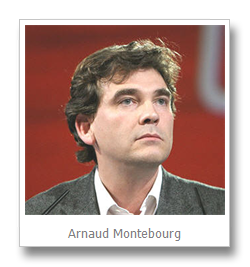
“Nuclear will always make up at least half of our energy (electricity output)," he was quoted as saying during a Franco-Chinese seminar in Beijing on Friday to commemorate a 30-year partnership in the nuclear sector.

"Nuclear energy is a sector of the future," he added.

That’s Arnaud Montebourg, the French industry minister, speaking, so he knows whereof he speaks. France is building two nuclear reactors in China, which raises an important point – nuclear energy technology is not just a economic boon to ratepayers like those in France but to companies like the French-owned AREVA, which is building the Chinese reactors.

The Reuters story also mentions in passing that the French utility EDF is building a new reactor in England. This is how trade works.

---

Which may be why we’re hearing this out of Japan:

In an attempt to overturn the previous administration's pledge to phase out nuclear power, Japanese Prime Minister Shinzo Abe's government will call it an "important source of energy for the country" in its new energy plan.

We mentioned last week (in the post below this one) that a government report signaled a return to nuclear energy in Japan. So it does, as this news attests. The Wall Street Journal has more:

Highlighting the economic necessity of nuclear power, the draft points out that a surge in liquefied natural gas imports to stably supply electricity throughout the country has led to very expensive fossil fuels costs. It also said an overreliance on thermal power has increased the country's carbon dioxide emissions.

The story goes on to report that though nuclear energy has not regained its popularity in Japan, Abe remains quite popular despite these decisions. Polls are polls and can carry a lot of unintended implications, but let’s allow that Abe’s good standing may carry nuclear energy along with it as electricity prices drop and carbon emissions relent. 

Nothing here about trade, really, but Japan does consider nuclear technology an exportable good. I can’t help thinking that that may be playing a part in Abe’s calculations.

Read More
Posted in AREVA, EDF, France, Japan, Nuclear Energy | No comments

Friday, 6 December 2013

Japan: The strongest signal yet on nuclear energy

Posted on 13:47 by Unknown

News from Japan:

Japan should continue to use nuclear power as a key energy source despite the Fukushima power plant disaster, a government panel said on Friday in a reversal of a phase-out plan by the previous government.

Given the turn over in Japanese governments, policy reversals could go on forever, but the recommendation is sound. That doesn’t mean that there will not be significant pushback, though.

The primary example remains the former, much respected, prime minister, Junichiro Koizumi, who has really gone on a tear against nuclear energy:

In a speech Nov. 12 at the Japan National Press Club in Tokyo, Koizumi said, “I think it will be good (for Japan) to end (nuclear power generation) immediately.”

It was a brutally clear message from the mouth of a person who had long been at the center of political power.

And though he faced a lot of criticism for taking this stand (he was for nuclear energy as PM), his words carry real weight with the public:

In an opinion poll conducted by The Asahi Shimbun last weekend, 60 percent of the respondents agreed with Koizumi. Among the supporters of the ruling Liberal Democratic Party [also Koizumi’s party], 58 percent agreed.

Polls being polls, it can be parsed any number of ways, but Koizumi’s influence can be little doubted. 

Which doesn’t mean the recommendation is not good news. It is. Very good news.

Business Week explains why:

Energy costs also are a concern for the government. Power prices in Japan are more than twice those in the U.S. Electricity for industry use costs an average 17.9 cents per kilowatt-hour in Japan compared with 7 cents per kilowatt-hour in the U.S., 12.7 cents per kilowatt-hour in the U.K., and 12.2 cents per kilowatt-hour in France, according to an energy ministry research paper citing 2011 figures.

And:

The alternatives to nuclear power either pollute more or come with a higher fuel cost, limiting Abe’s scope to reshape the energy industry and boost economic growth. Coal use rose 26 percent from a year ago in October. While solar power is taking off, the added capacity is nowhere near replacing what traditional plants supply.

Whatever Japan decided about nuclear energy has always been up to Japan. Whatever arguments could be arrayed to show that it remains the best solution to Japan’s social, economic and energy goals cannot trump the country’s experience after Fukushima Daiichi and the fantastically destructive earthquake and tsunami that precipitated the accident. That’s a national trauma outsiders cannot gainsay. 

And now we need not. Because Japan is close to returning to nuclear energy – current Prime Minister Shinzo Abe will need to issue a policy statement – but as Business Week writes, “this is the strongest signal yet that it wishes to keep nuclear energy.”

Read More
Posted in Fukushima Daiichi, Japan, Nuclear Energy | No comments

Wednesday, 16 October 2013

Your Nuclear Energy, Not Mine: NYT Goes Mushy on Japan

Posted on 13:03 by Unknown

nyt_logoAs we noted a couple of days ago, comments by former Japanese prime minister Junichiro Koizumi against nuclear energy in his country drew both respectful assent - and dissent - from the Japanese press. The key word is “respectful,” because Koizumi is highly regarded, sort of a Bill Clinton of Japan. Unlike former President Clinton, though, Koizumi has stayed aloof from the political scene since retiring. So his comments have been handled gracefully and tactfully, as they should. See the post below for more.

Enter the New York Times:

Japan should welcome Mr. Koizumi’s intervention and begin a healthy debate on the future of nuclear power that has not occurred in the two and a half years since the Fukushima disaster. The Japanese Diet did conduct an independent investigation, which concluded Fukushima to be a man-made disaster. But the investigation did not lead to serious parliamentary debate.

We’ve certainly seen where “healthy debate” can get you in this country, but let’s leave that aside. The people of Japan made a choice in electing the Liberal Democrats to office despite (or because of) its support for nuclear energy and current Prime Minister Shinzo Abe has the authority to implement his party’s platform. That includes restarting the nuclear energy plants. (This doesn’t mean the Diet shouldn’t debate the issue – just that people who call for a “healthy debate” usually mean that their side is the “healthy” one.)

So what does the Times’ editorial board want? Does it see nuclear energy as inherently dangerous? Its view of American nuclear energy has been generally positive, so why impose a highly negative assessment on another country’s industry?

Well, it gets a little fuzzy:

He [Koizumi] also criticizes the current government’s assumption that nuclear power is essential for economic growth. Ever the acute reader of political moods, Mr. Koizumi argues that a zero nuclear policy could be cause for a great social movement in a country still gripped by economic gloom after 15 years of deflation.

And even fuzzier:

Mr. Koizumi makes a compelling argument that if the ruling Liberal Democratic Party were to announce a zero nuclear policy, “the nation could come together in the creation of a recyclable society unseen in the world,” and the public mood would rise in an instant.

I had not seen this quote in Koizumi’s original comments, but the result of turning off the nuclear plants has not resulted in a great social movement. Instead:

Japan plans to start up 14 new gas and coal-fired power plants by the end of 2014, allowing a switch away from pricey oil, as Tokyo struggles with a shutdown of nuclear reactors and energy imports drive a record trade deficit.

This indicates the dreamed-about “recyclable society unseen in the world” really will be unseen.

But what about renewable energy? This story does not really address that, though it speaks to the importance of baseload energy in a highly industrialized nation.

Expanding gas-fired generation is the only viable large-scale option in a nuclear-free Japan to power its industrial and commercial sector and keep electricity prices low enough for businesses to stay competitive globally.

In other words, I don’t know what the Times is on about. It seems to want to lift mushy-headed sentiments about “great social movements” above the issues of running a highly complex society with many practical issues to address. It’s easy to be glib and dreamy from afar – Koizumi is much tougher minded than his comments used by The Times indicate - much more difficult locally.

Read More
Posted in Japan, Junichiro Koizumi, Nuclear Energy | No comments

Thursday, 10 October 2013

Koizumi Goes Anti-Nuclear

Posted on 07:28 by Unknown

Junichiro Koizumi was prime minister of Japan for six years, from 2001 to 2006. At that time, he was a booster of nuclear energy. Since he retired from politics, he has not maintained a public profile, but remains a highly respected figure – maybe because the Japanese public knows him best, as no prime minister since 2006 has been able to hold on to the job for more than a year or so.

So when Koizumi decides to say something, it gets attention:

In a recent lecture meeting, Koizumi asked the government to put forth a zero nuclear energy policy by calling for establishment of “a recycling society based on natural resources and that does not rely on nuclear power generation.” Koizumi said his view on this matter changed after the Great East Japan Earthquake.

The Great East Japan earthquake (and associated tsunami)precipitated the accident at Fukushima Daiichi. The strong public opinion to end nuclear energy has softened considerably and the current government has decided to restart the facilities. In fact, the election that brought the Liberal Democrats to power was considered a kind of referendum on nuclear energy –at first – but the subject barely figured into the campaign.

So I was curious about the response to Koizumi’s comments. It’s hard to measure the impact of retired politicians in this country much less another one, so there is an element of mystery here.

So, from the Yomiuri Shimbun, Japan’s national paper, an editorial:

Koizumi said finding substitute energy sources for nuclear power would “certainly be worked out by wise people.” We think this statement is overly optimistic and irresponsible.

Thermal power generation is currently filling the shortfall created by the loss of nuclear power generation. As a result, utility bills continue to rise due to higher fuel import costs. If this situation goes unchecked, the impact on household budgets and economic activity will be significant.

Thermal power generation is a major cause of accelerated global warming because it discharges a huge amount of carbon dioxide.

Renewable energy sources don’t get a very good reading, either:

Renewable energy sources that utilize sunlight and wind have the disadvantage of being affected by weather conditions. As such, there is no prospect that they will become principal power sources. It is necessary to seek a balanced composition of electricity sources in which nuclear and thermal power account for the lion’s share.

There’s more along these lines, too. I can’t say whether the Yomiuri Shimbun considers Koizumi’s comments a rear-guard action, whether the paper has an editorial distaste for Koizumi in general or it’s all just a consequence of fading opposition to Japanese use of nuclear energy. Maybe some of each.

It is unclear how big a lift, if any, the proclamation will give Japan’s antinuclear movement, which appeared to crest last year when tens of thousands of demonstrators gathered weekly outside the prime minister’s residence. While public opinion polls still show that more than half of Japanese oppose restarting the nation’s idled nuclear plants, the protests have dwindled to a few dozen die-hards.

There is an editorial in the The Daily Mainichi that takes Koizumi’s comments quite seriously and largely agrees with him, but it acknowledges that “It remains to be seen whether Koizumi will take political action to seek to rid Japan of all nuclear reactors…”. It remains to be seen. So, let’s see what happens.

---

Koizumi’s son, Shinjiro Koizumi, considered a political comer in the Liberal Democrat party, is sympathetic to his father’s view, but is still a working politician, so he’s a little more circumspect in his own response: 

"There is continuing concern that it may be inappropriate (to maintain or further increase dependency on nuclear power) without debate," Koizumi added. "Because the economy is now apparently in the process of recovery, people are keeping silent."

That doesn’t seem wholly logical, but it does the job of responding without stating a real view. Koizumi thinks the Liberal Democrats should take a more serious look at renewable energy sources, which it has already proposed doing, while keeping his options open on nuclear energy. That’s not the same as stating out-and-out opposition as his father does but he also does not refute his father, either, which is good both personally and politically.

The younger Koizumi’s comments convince me more that nuclear energy has moved from pariah in Japan to prodigal child.

Read More
Posted in Japan, Nuclear Energy | No comments

Tuesday, 17 September 2013

CNO Summit Diary: Peter Sena of First Energy Reflects on Lessons of Fukushima After Attending US-Japan CNO Summit

Posted on 10:30 by Unknown
While the U.S.-Japan CNO Summit has ended and the American delegation has returned home, we're still seeing reports come in from their time in Japan. The latest is this video diary from Peter Sena, President and Chief Nuclear Officer of First Energy. In this video vignette, Sena reflect on the lessons he learned after visiting Fukushima Daiichi and meeting face to face with TEPCO employees who are working to clean up the site:


As always, please keep up to date with the latest content by following #CNOSummit on Twitter.
Read More
Posted in #CNOSummit, First Energy, Fukushima Daiichi, Fukushima Daini, INPO, JANSI, Japan, Kashiwazaki-Kariwa Nuclear Plant, Tepco | No comments

Monday, 16 September 2013

CNO Summit Diary: Why FLEX Is The Right Response to Fukushima

Posted on 05:30 by Unknown
Maria Korsnick
Constellation Energy Chief Nuclear Officer Maria Korsnick was in Japan last week touring the country’s nuclear facilities with a prominent group of U.S. chief nuclear officers. 

This is the second in a series of travel logs that Maria recorded. You can read an earlier diary entry from Maria, here. Additional coverage of the CNO Summit is on Twitter at #CNOSummit.

Earlier this week I toured Fukushima Daiichi and Fukushima Daini. The stations are only 7.5 miles apart but the contrast is remarkable. When approaching Daiichi, we were stopped at a village 12 miles from the station. The area was previously used as a training facility for Japan's soccer team, but today it serves as temporary housing for site workers and a plant access checkpoint. Each of us received a whole body count before boarding a bus to Daiichi.

The view from the bus window will stay with me forever. It looked like a war zone. The earthquake and the force of the tsunami were evident everywhere. The town was empty, the houses are decaying and the storefronts are damaged. You are surrounded by broken glass, twisted metal and overturned vehicles. Large storage tanks have been torn from their mounting plates and pushed aside. Pieces of the reactor building serve as constant reminders of the hydrogen explosion.

When we arrived at the site we were issued paper face masks, anti-contamination clothing and shoe covers. We dressed out and boarded another bus to tour the station grounds. The seats are covered in pink plastic herculite sheets to further protect us from contamination. As we drove the site, I could see that many buildings were still uninhabitable. Others had been converted to shift worker resting areas or additional checkpoints.

There are six reactors on this site. Units 1, 2 and 3 have damaged cores. Units 4, 5 and 6 do not, but they will never operate again. Decommissioning the entire site will take 30+ years. The biggest challenge right now is water: too much of it in the wrong place to be exact. Rows and rows of large tanks, similar to our condensate storage tanks, are being used to hold contaminated groundwater. The earthquake collapsed the underground drainage system, so the groundwater is collecting around the buildings and leaking in. The reactor building is contaminated from the accident, so the water becomes contaminated, too. They pump the water into the tanks to clean it, but keeping up with the volume of water is very challenging and they can't discharge anything. Even water clean enough to meet U.S. EPA standards cannot be discharged.

Currently they are clearing more land and installing more tanks, but a better solution is needed. Making matters worse, many of the original tanks were bolted together, not welded, and prone to leakage. Cleaning up water and fixing leaks continues 24/7 while they seek a viable long-term solution. It's a massive challenge but it’s evident that they are working very hard to get their arms around it.

The following day we toured Fukushima Daini and its four reactors. The station is only 7.5 miles from Daiichi, so it experienced the same earthquake and tsunami. They also lost power and their emergency diesels and electrical cabinets were affected by flooding. Damage is evident in a few places but, for the most part, the station has been cleaned up and repaired. They fought the same storm, but with the benefit of a few design and response differences, they won.

Unlike Daiichi, Daini retained power to some of the instrumentation in the control room, so they could assess the status of key systems. They were able to rally their site team and find creative solutions. They ran over six miles of heavy electrical cable, in about a day, to bring in offsite power to support their safety systems. Over 500 employees stayed for weeks to support the site. It's an amazing story of an engaged team, under extreme stress, with strong leadership that brought amazing results.

It's clear that the negative outcome of Daiichi overshadowed Daini's remarkable performance. As nuclear professionals, we can learn as much from what went right as we can from what didn't. They proved that our portable, diverse equipment strategy know as FLEX can be successful in protecting their plant and their people. Back home, we need to continue to prepare for and defend against beyond design events. With pre-staged, portable equipment, we can give our team options. The equipment is in place now, but additional training and procedural guidance over the next several months will make us even better prepared for the unimaginable.

Standing here at Fukushima Daini, I'm confident that our FLEX strategy is the right approach for our stations and the industry as a whole. I'm comforted to know that it worked here, and very thankful to our Japanese colleagues for their dedication, hard work and many successes.
Read More
Posted in #CNOSummit, Constellation Energy, Fukushima Daiichi, Fukushima Daini, INPO, JANSI, Japan, Kashiwazaki-Kariwa Nuclear Plant, Tepco | No comments

Friday, 13 September 2013

CNO Summit Diary: PG&E's Ed Halpin on the Lessons From Fukushima

Posted on 13:34 by Unknown
Ed Halpin, SVP & CNO of PG&E
Ed Halpin, Senior Vice President and Chief Nuclear Officer at PG&E, was in Japan this week with virtually all of his American colleagues as part of the U.S.-Japan CNO Summit. He shared this diary entry with us after reflecting on what he saw at Fukushima Daiichi earlier this week. Be sure to follow all the updates from Japan on Twitter using the #CNOSummit hash tag.

As nuclear operators, we have earned a special trust from the communities we serve. My time here reaffirms my belief that the U.S. nuclear industry must always maintain its strong focus on safe operations, intensive training programs, effective peer-review processes, and the continued sharing of lessons-learned across the nation and throughout the world. The U.S. industry has always relied on redundant layers of safety in operating its facilities and is making exceptional gains in implementing a program known as "FLEX" to further enhance safety in the face of extreme natural events.

"FLEX" addresses the major challenges encountered at the Fukushima Daiichi power station following the March 11, 2011, earthquake and tsunami: the loss of power to maintain effective reactor fuel cooling. The strategy focuses on providing an uninterrupted supply of electricity and cooling water to protect critical plant safety systems at all times and ensuring that every U.S. nuclear energy facility can respond safely to extreme events, no matter what the cause.

My belief is that mandating more modifications or changing our design requirements based on the worst potential natural disasters and assuming conditions that are highly improbable will only complicate our response to such an event. Certainly we need to close out the more important issues that are currently on the table and in keeping with our industry "Path to Excellence." Even more importantly, we need to continue to emphasize a strong operational focus with rigorous, realistic training. We must be able to implement our FLEX strategies blindfolded across every operating crew and our emergency response teams and training have got to be exemplary. These actions honor the trust we have earned from our communities and customers and keep us focused on our primary goal - safety.
Read More
Posted in #CNOSummit, FLEX, Fukushima Daiichi, Fukushima Daini, INPO, JANSI, Japan, Kashiwazaki-Kariwa Nuclear Plant, PG&E, Tepco | No comments

CNO Summit Diary: Indelibile Impressions From a Historic Week

Posted on 05:30 by Unknown
Editor's Note: For the past week, NEI's John Keeley has been accompanying a delegation of American chief nuclear officers on a tour of Japan. This is his last blog entry he'll make before returning home to the U.S. 

To find all of the content related to this week's trip from NEI Nuclear Notes, click here. And for all of the chatter about the trip on Twitter, check out the #CNOSummit hash tag. Thanks to John for a job well done. 

(Tokyo, September 13) I won't miss jet-lag-induced risings at 3 a.m.each and every day -- and apparently I was joined in those by each and every American chief nuclear officer and communicator -- but just about everything else on this trip created a once-in-a-lifetime experience for me. So I thought I'd share those moments that stood out most to me: 
  • At every formal engagement between U.S. and Japanese nuclear officers this week our hosts started the proceedings with a formal apology "for the concern and difficulty and confusion we have caused."  
  • Takeyuki Inagaki had the closest and worst seat to the history made at Fukushima Daiichi, stationed in the unit 1 control room and later in the site's Emergency Response Center during the first 100 hours of the accident. The reflections he offered our CNOs about his experience were subdued, poignant, and commendably frank. If you asked him I'm sure he'd tell you he regards his English as poor, but he held our room in rapt attention -- and empathy -- while he spoke. I also thought he was surprisingly composed. My eyes teared up each and every time he uttered this haunting refrain, which he said accompanied each and every instance he had to order one of the Fukushima 50 back into harm's way for inspections: 'Am I [going to be] a murderer?'   
  • We toured the Daini and Daiichi sites in the Fukushima prefecture because, while they endured virtually identical trauma circumstances on March 11, 2011, the outcomes between the sites were dramatically different, and the way the sites responded to the conditions offered a stark contrast as well -- particularly from the vantage of leadership.  
  • Daini had recovery tools at its disposal that Daiichi did not, but there was a spirit of innovation, too, that guided Daini personnel. It's fair and accurate to say that U.S. CNOs very much applied learnings from the Daini experience into their formulation for the U.S. FLEX strategy. 
  • Pete Sena, CNO for FirstEnergy, to the Wall Street Journal on Thursday: "Daini's story hasn't been told. The workers at Daini are national heroes." In the Journal he was quoted thusly: “The takeaway for me personally is internalizing what I saw with my own eyes to make sure this never, ever, ever happens within the U.S.,” he said. “That’s the message I want to get across to my entire workforce, and to the folks on the outside: What we do — it’s not a business; it’s personal.”  
  • Naohiro Masuda, Vice Head, TEPCO Nuclear Safety Oversight Office, and Daini station leader on 3/11, very early in his briefing remarks to the U.S. CNOs: "As children, we were always told to hide under our desks at the arrival of an earthquake, but we never did. On 3/11, for the first time in my life, I did."  
  • Some 500 employees remained at the Daini station for upwards of a month, returning not once to their homes -- if they even had homes to return to -- and working as a trauma team in circumstances our industry had never even considered, let alone encountered. Many slept on floors, subsisted on rudimentary nutrition, and went weeks without changing clothing.  
  • Busing through the ghost towns of Fukushima, wherein storefronts bore the identical staples they did on March 11, 2011. 
    • Chief Nuclear Officers in the United States are First Safety Officers at their sites. It's a designation they hold sacred.     
    • They are also a special fraternity. They are, in Randy Edington's words, "Hostages of each other." One need only be in their company a few hours to notice the special bond they've forged. They are collegial and clique-free, and quietly and discretely they adhere to a rigid honor code: one which promulgates a culture demanding that they lead in a manner that ever serves the best interests of the nuclear industry, even, if need be, at the expense of their own utility. That code is neither theory nor supposition.   
    • Working in the nuclear industry is a source of immense pride for me. I'm returning home bearing a good deal more.
    Read More
    Posted in #CNOSummit, First Energy, FLEX, Fukushima Daiichi, Fukushima Daini, INPO, JANSI, Japan, Tepco | No comments

    Thursday, 12 September 2013

    CNO Summit Diary: Dressing Out to be Witnesses to History

    Posted on 05:19 by Unknown
    At one point Wednesday, while within a few hundred yards of the three melted down reactors at Fukushima Daiichi, I was outfitted in three layers of gloves (two rubber, one cotton), plastic covers over my shoes, a very hot and very insulating Tyvek jumpsuit, and a respirator mask. The interior of our tour bus was fantastically shielded in plastic, and when, while maneuvering on a road between the ocean that sent the monstrous March 2011 tsunami and Daiichi's turbine buildings, our driver dramatically increased our speed as we arrived in front of unit 3, where the dose rate was highest on the site, to limit our exposure.

    Storefront in an abandoned village.
    All week the chief nuclear officers on this trip have regularly referenced their collective need to experience, first-hand, conditions in Japan that all but only a few have only read about. Our bus' movements, and our in-person engagements with shift managers and control room operators on duty the afternoon of March 11, 2011, at both Daini and Daiichi have ensured that they have.  

    One of the many things I've learned this week is how marvelously our industry manages radiological protection. Each day our tour groups were on the Daiichi site (Tuesday and Wednesday) for upwards of 5 hours; our total dose each day, with negligible variation, was 2 millirem -- nothing compared to the 300 millirem we Americans naturally receive in background radiation each and every year.

    Randy Edington, CNO at Palo Verde, has made a point of distinguishing the conditions he encountered on a visit he made to Daiichi in December 2012 with those our group is witnessing this week. Last December, Edington told me, his tour bus couldn't even approach the access road in back of unit 4, as we did Wednesday. There was late last year an enormous debris field still blocking access, and the dose was too high.

    This week Edington has observed the removal of a dramatic volume of debris from numerous areas around the site, most particularly a massive mass of twisted steel that ominously cluttered the top of units 3 and 4. Additionally, there's a new building constructed next to and over unit 4 so that used fuel can be offloaded, perhaps later this year. Significant progress is being made here, without question, but of course one can't ignore some small practical matters whose disposition serves as an exclamation point for the consequences of what happened here 30 months ago: Every plastic bottle of water consumed by site workers and visitors necessarily will never leave the site -- it's radiological waste.

    "Three-eleven is not over," one CNO told our assembly Thursday morning, while meeting in downtown Tokyo. "And it won't be for a long time." Another lesson necessarily learned from our visit. 

    * * * * *

    We were on Tuesday and Wednesday witnesses to history. There are memorial markers about Daiichi's turbine buildings chronicling the levels the tsunami water rose within. One set of floodlights in one turbine building corner still had tsunami water within its glass facings.

    A field used to store contaminated soil.
    A tsunami is a marvel of malevolent nature, a wall of water wider than our eyes' periphery, moving at times faster than 500 miles per hour. At Daiichi it took industrial strength steel -- and concrete -- and twisted it like Twizzler sticks. We saw just offshore a fantastically reconstituted and fortified seawall-breaker, but within the repaired line of defense a sobering reminder of the force that struck: pickup truck-sized chunks of concrete churned into a wide debris field. Daiichi's seawall was shredded by this monster.

    "Nature, sometimes without mercy, comes and attacks us," one Daiichi reactor operator told our CNO's at a briefing Wednesday afternoon.           

    * * * * *

    The American CNOs have been changed this week by their engagements with site supervisers, shift managers and operators who were on duty that fateful 2011 afternoon. It's freshly searing to hear first-hand accounts from TEPCO personnel of how little they knew -- sometimes for weeks -- of the fate of their families, as first a 9.0 magnitude earthquake and then a historic 15-meter wall of water ravaged their land. The CNOs are having robust discussions trying to figure out protocols by which American nuclear utilities can communicate family status to site personnel who are on duty during notably destructive, but not adequately forecast, events. Industry already has such a protocol for hurricane conditions, for instance, but almost always sophisticated meteorological capabilities assure us of enough advance warning with which to account for family. As a consequence of what happened in Japan, and hearing of its impact first-hand, our CNOs want even more protective measures in place for our site personnel.        

    And if the horror of March 2011 wasn't enough for Daini and Daiichi families, some relayed this to the American CNOs this week: in some communities, the children and spouses of some Fukushima personnel are regularly harassed and bullied by their embittered neighbors. 

    * * * * *

    At both Daini and Daiichi officers, operators and managers desperately wanted to know what more in safety strategy they ought to consider, and they looked to the Americans to tell them. In an especially poignant moment, Randy Edington stood up in a crowded conference room, held up his smart phone, pointed to the entirety of his traveling CNO contingency, and said, "In a crisis, I have each and every one of them on speed-dial." There aren't merely two Emergency Response Centers now in the United States, Edington added. There have long been 63 -- the location of every commercial nuclear power plant -- and at every one a CNO poised to aid when most needed to.    
       
    Read More
    Posted in #CNOSummit, Arizona Public Service, Fukushima Daiichi, Fukushima Daini, INPO, JANSI, Japan, Tepco | No comments

    Wednesday, 11 September 2013

    CNO Summit Diary: Entergy Nuclear CNO Calls Visiting Fukushima Daiichi 'Life-Altering'

    Posted on 12:30 by Unknown
    The past two days in Japan, U.S. chief nuclear officers have toured Fukushima Daini and Daiichi, and with respect to the latter, left the experience appreciably changed. We've made a point each day of inviting the CNOs to the very back of our tour bus and asking them to share their experiences on camera with us.

    It's true that every CNO we spoke with identified the Daiichi visit as life-altering, but no reaction seemed better representative of the CNOs than that of Jeff Forbes, Executive Vice President and Chief Nuclear Officer for Entergy Nuclear. Just watch.

    Please remember to follow our updates on Twitter using the #CNOSummit hash tag.
    Read More
    Posted in #CNOSummit, Entergy, Fukushima Daiichi, Fukushima Daini, INPO, JANSI, Japan, Kashiwazaki-Kariwa Nuclear Plant, Tepco | No comments

    CNO Summit Diary: Maria Korsnick's Reflections from Japan

    Posted on 06:31 by Unknown
    Maria Korsnick
    Maria Korsnick is Chief Nuclear Offiicer (CNO) of Constellation Energy. In the aftermath of Fukushima, Maria appeared in a series of videos for NEI explaining exactly what changes the industry was effecting in the wake of Fukushima. 

    She's in Japan this week as part of a delegation of American CNOs touring the country’s nuclear facilities as part of the U.S.-Japan CNO Summit. This is the first in a series of travel logs that Maria recorded to share her experiences. Please remember to follow our updates on Twitter using the #CNOSummit hash tag.

    As I boarded the plane for Japan, I wondered what it was going to be like to experience our business in a completely different culture. Once I arrived, it didn’t take long to generate some first impressions. My hosts were welcoming and polite, surroundings were neat and orderly and properties were well-cared for. It’s abundantly clear that the Japanese people take pride in their surroundings.

    Japan has only one-third the population of the United States; however the entire country is roughly the size of California and only 27% of their land is habitable. That means lots of people in a small space. For perspective, greater Tokyo is home to a staggering 30 million people. Despite its population density, Japan doesn't exude the chaos of a crowd. Trains arrive and depart precisely on schedule, the cars are clean and you better be in line to board or it will leave without you. Thousands of people move around quietly and in orderly fashion. There’s no trace of graffiti, trash or cigarette butts anywhere.  It’s quite unlike anything you would see in any large American city.

    Tokyo at night.
    On our first day, we took a train and a bus to a plant known as “KK”, three hours outside Tokyo. There are seven reactors on the site but none are currently operating. They are in the process of updating their tsunami counter measures. We were warmly welcomed by our hosts. American and Japanese flags were displayed side by side. We had a good discussion on their learnings from the 2007 NCO earthquake. They have since built upon their already strong design and made enhancements to add margin.

    The plant tour was quite impressive. Inside the Unit 7 control room (it’s an advanced BWR design) operators use digital controls and operate plant equipment from computer screens. A member of the Japanese regulatory body was present in the control room, much like NRC residents tour our plants and ask us follow up questions. A banner in the room read, “World Class Nuclear Plant: Resilient to Natural Disasters.” I wish them well on their journey to re-start the units. 

    At the end of day one, I remember thinking that the world of nuclear translates well. Regardless of what language was being spoken, attentive operators worked in pristine conditions and focused intently on effective communications and procedure adherence to ensure safety. Sounds like us!
    Read More
    Posted in #CNOSummit, Constellation Energy, Fukushima Daiichi, Fukushima Daini, INPO, JANSI, Japan, Kashiwazaki-Kariwa Nuclear Plant, Tepco | No comments

    Tuesday, 10 September 2013

    CNO Summit Diary: Chasing lessons in safety at Fukushima by chasing the sun

    Posted on 05:45 by Unknown
    The following post was sent to us via email by John Keeley, who is travelling with a delegation of American chief nuclear officers in Japan this week. You can follow John's observations on Twitter by following @nei_media and the #CNOSummit hash tag.

    In summer, in morning or early afternoon, when a traveler moves by air many thousands of miles from east to west, he never quite escapes the bright sun of day. My communicator colleagues here in Japan all noted the difficulty we had securing substantive rest on our flights over the Pacific during this novel journey. We were ever chasing the sun, they said.

    The American chief nuclear officers we're following with our cameras and electronica this week have been, ever since their arrival here, in perpetual motion in pursuit of safety lessons. In making the unprecedented and extraordinary commitment to "put eyes on the problem" created by the 3/11 Fukushima tragedy, our CNOs, it occurs to me, are following a global commitment to safety much as we communicators were following the sun.

    Remember: this is a trip undertaken *after* U.S. CNOs had unanimously adopted significant safety enhancements at all 63 operating stations in response to the Fukushima accident.

    The CNOs I ran into late on Sunday night were every bit as bleary-eyed and time-zone tortured as we communicators, but about 15 of them awoke at the crack of dawn Monday morning in order to board buses and trains to Kashiwazaki Kariwa, the largest nuclear generating station in the world with a capacity of 8200 MWs and 5400 employees.  Since 2007 the station has invested almost $2 billion dollars fixing earthquake damage and installing post-Fukushima modifications. There were significant safety lessons to be learned in seismic and flooding space at Kashiwazaki, and so our CNOs bused hours across this island to learn them.

    They returned from that site about an hour before meeting their Japanese CNO counterparts at Monday night's welcoming reception. There's no rest for the safety-lesson-craving weary on this trip, and well before a new workday had started in Tokyo on Tuesday every American CNO was back on a tour bus, this time headed for site visits at both Fukushima Daini and Daiichi. We'll have a lot more to say and illustrate about those two extraordinary site visits in the days ahead, but at the end of a hot Tuesday of touring the CNOs were still very much in motion, still very much  in learning mode.

    Darkness was fast setting upon our tour, but instead of heading to our new hotel and a badly needed hot meal our buses trudged slowly through a town called Tomioka. It's a seaside town quite near both Fukushima plant sites, and on March 11, 2011, it knew 16,000 residents. It was a community known in summer for festivals and parades.
    Tomioka. Photo used under Create Commons License through Wikipedia
    Today it's devoid of human existence, devastated by the tsunami and uninhabitable by radiological fallout. Unchecked nature is overgrowing much of what had been developed and thriving little more than two years ago.

    Fallout from the Daiichi accident delivers 1-3 millisieverts microsieverts an hour in Tomioka. The Japanese government has begun decontamination efforts for the town, and there is a plan to have is habitable by 2017, but today it is a sobering wreck of abandonment. Our CNOs wanted to see with their very own eyes the ultimate consequences of a day gone very wrong at a plant.

    I wish them all some early and deep shuteye tonight. They're off to freshly pursue safety lessons through the total  sun again of tomorrow.
    Read More
    Posted in #CNOSummit, Arizona Public Service, Fukushima Daiichi, Fukushima Daini, INPO, JANSI, Japan, Kashiwazaki-Kariwa Nuclear Plant, Tepco, Tomioka | No comments

    Monday, 9 September 2013

    CNO Summit Diary: Randy Edington of Arizona Public Service Reports from the US-Japan CNO Summit

    Posted on 10:00 by Unknown
    Following on John Keeley's message from earlier this morning, here's the first video message we've received out of Japan regarding the #CNOSummit that's taking place there this week. It's from Randy Edington, Executive Vice President and Chief Nuclear Officer of Arizona Public Service. Though the video is intended for Randy's team back in Arizona, we think the message about the trip is universal:


    Look for more content from the #CNOSummit all week both here at NEI Nuclear Notes and on Twitter.
    Read More
    Posted in #CNOSummit, Arizona Public Service, Fukushima Daiichi, Fukushima Daini, INPO, JANSI, Japan, Tepco | No comments

    CNO Summit Diary: Dateline, Japan: Following history in the advance of safe nuclear operations

    Posted on 05:30 by Unknown
    Often, I travel most modestly on behalf of the U.S. nuclear industry -- like say up and back to the Nuclear Regulatory Commission for public meetings, some 7 miles from NEI's offices in Northwest Washington. But about a month ago, as word began circulating in the office about a sizable contingent (almost all) of our nation's chief nuclear officers traveling to Japan to meet with their Japanese CNO counterparts, NEI communications leadership saw a clear role to try and capture the historic visit in words and images. And tweets, of course.

    My bosses picked me to tag along with the CNOs (almost 30 of them), as a bit of an embedded reporter. I've a daunting task in that regard. 

    To be sure, this is a historic visit; nothing of its kind has been undertaken before in the history of commercial nuclear operations in the U.S. For the first time, the chief nuclear officers from the U.S. and Japan will meet together to discuss lessons learned from a severe accident: specifically, actions at Japanese plants during the 2011 earthquake and tsunami as well as steps companies in both countries are taking to enhance safety at nearly 150 reactors total.

    And of course, we've a remarkable backdrop for this trip: news reports the past few weeks have been voluminous -- and, in must be noted, hyperbolic -- related to accounts of TEPCO's management of contaminated water at the Fukushima site. What is actually true is that one water tank on the site developed a leak, it was subsequently stopped, and the remaining water in the leaking tank was transferred. Additionally, the contaminated areas around the affected tanks have been treated, and radiation and tank water levels are being continuously monitored. There has been no threat to public safety. I'm confident the American traveling contingent will return home in a week's time with a great deal more information about conditions at Fukushima Daiichi and Daini.        

    The idea for this spectacular summit really goes to Randy Edington, the chief nuclear officer of Arizona Public Service's Palo Verde nuclear plant. Randy visited Fukushima back in January, and he was so moved by the implications of the accident that he made it his mission to persuade his CNO colleagues to come over to Japan together, to experience what he experienced. It's a powerful statement I think of the U.S. nuclear industry's commitment to safety and continuous learning that we have just about every American CNO on this trip. 
    Tokyo at night.
    Credit for the enormous logistics necessary to pull off such a visit goes to the Atlanta-based Institute of Nuclear Power Operations. INPO shared Randy's view of the imperative of seeing, firsthand, the consequences of the Fukushima accident, discussing the U.S. response to the event, and interacting with the Japanese CNOs to convey, quite personally, our ongoing commitment to helping. INPO has dispatched an impressive team of talented videographers to chronicle the trip as a legacy and teaching moment. I'll be working closely with them.      

    I feel most fortunate to have been selected to travel to Japan with our CNOs, and to aggregate as much content on the ground here as possible, and share it with you. We have plans to publish still and video images, on Facebook and the blog here, and on Twitter (@NEI_media and @N_E_I) I'll share my experience with the hashtag #CNOsummit. But the communications product I'm most excited about is a series of digital diaries I've asked a handful of my companion CNOs to keep for me. A fair number of them are traveling with iPads, and I thought it could be terrifically illuminating to have them construct something akin to digital postcards of their experience, and share them with you. Look for those in the days ahead.

    A part of me is intimidated by a communications challenge obviously unlike anything I've ever attempted before, one which seems massive in scope and technical care and delicacy. But I'm keeping the best possible company, working alongside men and women of marvelous commitment and ability. I'm looking forward to bringing you their story.      
    Read More
    Posted in #CNOSummit, Arizona Public Service, Fukushima Daiichi, Fukushima Daini, INPO, JANSI, Japan, Tepco | No comments

    Monday, 22 July 2013

    A Sour Sweet Nuclear Japan

    Posted on 14:42 by Unknown

    “The central government’s policy on nuclear power generation will return to the pre-disaster one,” said Tatsuya Murakami, mayor of Tokai village in Ibaraki Prefecture, on July 21. “By postponing a solution to the problems resulting from the nuclear accident, the government will do what it wants to do.

    “It is disappointing that Japan will not be able to change itself despite the serious accident it caused,” he said.

    I know, it sounds like sour grapes. But Murakami has a grievance and maybe he’s letting off some steam. It’s really not true that the Japanese government has postponed solutions. 

    Last month, Japan Atomic Power began installing filter-attached vent equipment and erecting sea walls to meet the Nuclear Regulation Authority’s new safety rules on nuclear power generation that took effect on July 8.

    The reason Murakami is so unhappy is that the Liberal Democratic Party (the conservatives) took over the upper chamber in Japan’s diet, giving Prime Minister Shinzo Abe’s party control of both chambers. And quite open about not working as hard as the Democrats with prefecture officials to win their approval for restarts. Hence Murakami’s dissatisfaction.

    This month, TEPCO announced plans to hasten the restarts of reactors at its Kashiwazaki-Kariwa nuclear power plant in Niigata Prefecture. The company did not offer any advance explanation to the local governments hosting the plant.

    Actually, I think it was the central government not the companies working this side of things; still, it would have been better public relations for TEPCO to talk with the prefecture officials.

    As we used to say in grad school, let’s unpack what Japan’s return to nuclear energy means. Japan has been in a political rinse cycle for a long time, with difficulties keeping a government in place for any length of time. What’s up today may be down tomorrow. Still, Japan’s political class has decided that, economically and industrially, it would be ruinous to replace nuclear energy in a resource-poor country, especially since it is unnecessary. It’s not just the carbon emissions profile of natural gas and coal that’s a problem, it’s that Japan has to import those items and that’s proven to be a mammoth financial burden. (It imports uranium, too, but needs much less of it to fulfill its energy needs.) It’s a dreadful double whammy that Japan is wise to avoid.

    Gas to Power puts a price on this:

    The return to nuclear would reduce the share of gas in Japan's energy mix and electricity prices. The Institute for Energy Economics in Japan (IEEJ) forecasts restarting twenty six of the country's nuclear power stations in 2014 could lower the electricity fuel cost by 1.8 trillion yen [about $13.4 billion] and reduce generation costs by about 2 yen/kWh.

    This really is the best direction for Japan to take. But even if we agree wholeheartedly with the Liberal Democrats’ decision, we might want to keep the celebration subdued and tasteful (and not loud and raucous, our preferred party mode). It might have been a sweeter thing if we could be surer that the Japanese people welcome this outcome.

    Nearly 60 percent of voters oppose Prime Minister Shinzo Abe’s plan to use nuclear energy to fuel economic growth, but 51 percent expect his policies to improve the economy, an Asahi Shimbun [Japanese newspaper] survey showed.

    That’s a lot better than one would have seen a year ago. Maybe restarting the facilities – and rehiring furloughed workers – will push those numbers higher. But they are still not very high withal, making the decision to move forward with nuclear energy a braver one than most politicians would dare. Yet it is also a necessary decision – and not really a very difficult one, even for Japan.

    So good for Abe. And good for the Japanese people and Japan’s nuclear industry. Maybe I could talk myself into thinking this problematic if I really worked at it – but it refuses to be problematic.

    Read More
    Posted in Japan, Nuclear Energy, Tepco | No comments

    Tuesday, 4 June 2013

    National Academy of Sciences Says Offshore Fisheries in Japan and California Remain Safe

    Posted on 05:43 by Unknown
    Our readers will recall that it was about a year ago that the media was inundated with stories warning consumers that the fish they eat might be contaminated with radioactive materials from the Fukushima Daiichi Nuclear Power Plant. In terms of sheer volume, it was impossible to cover every outlet that devoted some sort of attention to the story.

    Late yesterday, Medical Daily passed along the following conclusion from the National Academy of Sciences that puts that spate of erroneous news coverage in the proper perspective (emphasis mine):
    Physicists argue that the Fukushima nuclear disaster was less damaging to the global fishing industry than early media reports led people to believe, according to a new report published today in PNAS. This report comes on the heels of United Nations prouncement that no foreseeable health effects are expected from the accident among the general public and the vast majority of workers from the plant.

    [...]

    Two surveys in 2012, also published in PNAS, calculated radioactive contamination in marine life in waters near the accident as well as from tuna that had migrated to shores near San Diego, Calif. In contrast to the ports in immediate vicinity of Fukushima, which remain closed to fishing to this day, the offshore regions of Japan and California were deemed safe.

    "[Radiation] Doses to Japanese consumers were calculated to be higher than to American seafood consumers, but were still very low in most circumstances," said co-author Dr. Nicholas Fisher, Ph.D., distinguished professor at SUNY Stony Brook School of Marine and Atmospheric Sciences.

    Both studies identified nuclear particles - cesium-134 and cesium-137 - in these marine ecosytems, but maintained that "radiation risks are below those generally considered harmful to marine animals and human consumers."

    Despite this reassuring conclusion, over 1,000 stories appeared in newspapers, television, internet media, and radio outlets, with much of the coverage exaggerating the dangers posed to the seafood industry.
    In the immediate aftermath of a crisis like Fukushima, it's normal for news reporting to overstate the risks, but the scientists at the National Academy make it fairly clear that the contemporary reporting in this case was further off base than usual:
    "The main point of this paper is that the radiation doses (and attendant risks) to human consumers eating Pacific bluefin tuna are likely to be extremely low, indeed orders of magnitude lower than that from naturally occurring radiation in the fish," said Fisher.

    The researchers estimated that, on an annual basis, the average seafood lover would consume 600 times more natural radiation than Fukushima-related radioactivity. They argue that 95 percent more radioactive potassium would be ingested by eating a common banana.

    For a recreational fisherman, who the authors assumed eat about five times more seafood, the radiation dose from Pacific bluefin tuna would amount to a routine dentist's X-ray, which would increase their chances of developing cancer by 0.00002 percent.
    PNAS stands for Proceedings of the National Academy of Sciences. I'll give you one guess whether or not this critique gets as much attention as the initial reporting.
    Read More
    Posted in bluefin tuna, California, cesium, Fukushima Daiichi, Japan, pacific ocean | No comments

    Monday, 3 June 2013

    The Tatemae and Honne of Reopening Nuclear Plants

    Posted on 14:10 by Unknown

    Bloomberg has up a pretty good story about the state of nuclear energy in Japan today. The country is currently enjoying some economic gains, but the weak yen is proving a mixed blessing. It’s good for exports but terrible for imports - Or to put it more specifically, it’s good for Japan’s industries but bad for importing massive amounts of coal and natural gas to fill in the nuclear gap. Anti-nuclear forces have lost vigor and local officials (which have to approve the restart of any local nuclear facility) are relenting on keeping the plants shut.

    The article is nicely done and makes a fairly complex topic easier to understand. Still this paragraph stuck out as oddly wrong headed:

    The real challenge is the local governments, which have veto rights. Surprisingly, a recent poll among 135 cities located in nuclear evacuation zones showed that 49 percent of mayors would agree to a restart. The official (what Japanese call “tatemae”) argument is: Nobody likes to live near such a plant, but there they are, as toxic as ever (though certainly less volatile than when switched on), and we don’t know much about disposing of unused nuclear-power plants. So, we might as well turn them back on. The real (“honne”) story is that the plant owner/operators -- the ten local monopolists that run Japan’s energy system -- pay their annual “dues” to the localities, not just in the form of jobs but straight money to communities and incumbent local governments.

    Writer Ulrike Schaede does not tell how he decided that these were the tatemae and honne stories, but both are breathtakingly cynical – I’m not sure why the first is even considered a viable argument to offer the public.

    Allowing for the trauma of the Fukushima Daiichi accident – and it would be wrong to soft pedal it, even if the end result is the complete closure of all the facilities – I cannot imagine the mayors being so blasé in the first instance or so rapacious in the second.

    Let’s take a look at that second part again:

    The real (“honne”) story is that the plant owner/operators -- the ten local monopolists that run Japan’s energy system -- pay their annual “dues” to the localities, not just in the form of jobs but straight money to communities and incumbent local governments.

    This sounds exceptionally sinister and corrupt. But what is being said here is that the facilities (or their shadowy monopolist overlords) employ local people and contribute to their communities. But don’t these activities constitute good corporate behavior?

    Those “incumbent local governments” have kept the plants shut for the last two years, so they do seem to follow the public will even at the cost of a honey deal. And as public opinion starts to move back in the direction of restarting the plants, so does the government change its view. One might wish that officials would do what is best for their citizens rather than follow the variable whims of public opinion, but it’s not diabolical. If it were, virtually every politician everywhere would be in Hell (easy one – go for it!)

    Rather than precipitously decommission all the facilities, Japan’s government (or governments – it’s more “volatile” than a running nuclear plant) instead waited to see if the passage of time would smooth over understandably sharp public displeasure. It seems to be happening, as the article points out. Schaede really has done a good job here  - but the shadow thrown over local government does seem badly overstated, unfair and without much basis.

    Read More
    Posted in Fukushima Daiichi, Japan, Nuclear Energy | No comments

    Thursday, 9 May 2013

    “So many mothers against nuclear energy!”–And For It, Too.

    Posted on 10:27 by Unknown

    A photographer named Nonoko Kameyama decided to take pictures of mothers (with their children) who are against reopening the nuclear facilities in Japan.

    Kameyama is unquestionably moved to use her craft to support her views.

    In 2006 I took a break and travelled to Nepal.  That was a turning point for me - my passion came back right away. I was taking pictures - capturing the joy on the faces of the people in Nepal; it was extraordinary.

    But at the same time I was confronted by the poverty of people and the problems that they were facing, so I started to wonder what I could do. When I came back to Japan I joined two groups, one that tries to rescue children, Stop Child Trafficking, and the other group which promotes fair trade between Japan, Nepal, and Bangladesh. They asked me to help them make a catalogue to sell Fair Trade goods.  This is the first time I got connected with a social cause. 

    I wonder if she also took pictures of the poverty in Nepal to support her social effort – I’m going to assume she did, but it’s curious she doesn’t say so. As we’ll see, she likes to take pictures of happy people. In any event, I can’t imagine anyone questioning the value of what she did as a response to her Nepal visit.

    Then the Fukushima Daiichi accident happened and she decided she did not want the nuclear facilities in Japan to reopen.

    I started taking pictures of these mothers, and joining demonstrations. One after another I kept photographing these mothers - suddenly I realized that I had taken photos of 100 mothers. So many mothers against nuclear energy!  To me, a hundred is like every mother. A hundred is a symbol because, no matter where they live - Fukushima or Tokyo, or Nepal, or India - mothers would protect their children.

    Again, one cannot doubt her sincerity or desire to portray that some who are against nuclear energy are women and some of those women have children. Such is the case with Women in Nuclear, too, I daresay, and if the group hired a good photographer such as Kameyama to take pictures of them and their children, they would look almost precisely like the women she did photograph – that is to say, varied and interesting.

    I have to admit that at the beginning I was worried that if I made a book there would be lots of stern, angry, and depressed faces. I was afraid that I might end up with a depressing book; but soon I realized that mothers with children are always joyful, and there’s a dignity and a beauty. They are soft, but strong and powerful.  This tenderness, love, and compassion will open people’s hearts.

    Let’s let this pass. There are a lot of reasons mother are not “always joyful” and genuinely fretful for their children. But wait – open people’s hearts to what?

    What I can do is connect with other mothers and men too, through photography; and build a movement for renewable energy which is safe for our children.

    That’s a pretty specific goal for a book of lovely photographs of mothers and their children. If Kameyama does a good job, one might want the book for its aesthetic qualities. A book of Women in Nuclear – maybe of Japan’s branch of the organization - would probably include text explaining why the participants value their work, what they think of nuclear energy, what their hopes are for their own and their children’s futures. Voices and thoughts. Maybe we could include some women who are not mothers, though I guess we want to stay in parallel with the rival project.

    Would it be more likely to change minds than Kameyama’s project? Probably not, but it would show that women have professional and industrial aspirations, perhaps a little more unexpected than showing them exclusively in their maternal role and described as fearful. Even Kameyana’s project could show and tell more.

    Here are some of Kameyama’s photographs – they are quite lovely – some include non-explicit nudity, so take that into account.

    Read More
    Posted in Japan, Nuclear Energy | No comments

    Friday, 11 January 2013

    Nuclear: On Which the Nation’s Fate Rests

    Posted on 12:34 by Unknown

    We’ve kept an eye on the English versions of some of Japan’s national newspapers to see if they have thawed the nuclear energy deep freeze there. It’s more an issue of curiosity than an overtly partisan pro-nuclear view, because whether Japan begins to feel comfortable with nuclear energy after it implements post-Fukushima safety measures or it doesn’t is something no amount of partisanship can change.

    If the Japanese ultimately decide to leave nuclear energy, that’s that – if you lived through something harrowing, far be it from others to to tell you to get over it. The advocate in me might say, well, the danger was minimal and no one died as a result of the accident. That’s an exceptionally low bar to clear when people have been scared badly. There’s an understanding that there is only so much one can do about nature’s vicissitudes – which did kill many in this instance – but nuclear energy facilities? Turn the lights out – done!

    But the recent election went strongly for the pro-nuclear party. Prime Minister Shinzo Abe has already spoken of bringing the nuclear facilities back online and even building new reactors.

    Pubic opinion is still rather dire, though, so it’s interesting to see if newspaper editorials will act as bellwethers for a change in attitude.

    That brings us to this editorial in the Daily Yomiuri, which praises Abe’s moves on nuclear energy to date:

    Revitalizing the Japanese economy will require a stable supply of electricity. This year will be important in that the energy and nuclear power policy, on which the nation's fate rests, needs to be drastically reformulated.

    Prime Minister Shinzo Abe has shown his intention to review the "Innovative Strategy for Energy and the Environment" drawn up by the Democratic Party of Japan-led administration, which set a target of having zero nuclear reactors operating by the end of the 2030s. Abe also expressed support for allowing the construction of new nuclear plants with enhanced safety features. We think his position on these issues is reasonable.

    The government should immediately craft a realistic energy strategy that includes the use of various sources of power generation--including nuclear energy.

    That’s – impressive. It suggests that the election hinged on what most elections hinge on: economics, especially the pocketbook. Now, this is one editorial, though the most striking change of tone I’ve seen. There have been others. Business newspaper always offer strong support for resuming with nuclear energy and there are some odd sidewise angles on it.

    For example, this editorial in favor of accepting fish from Fukushima Prefecture:

    Just a few kinds of fish, such as bonito and Pacific saury, which are caught by Iwaki fishermen far away from Fukushima's coast, are unloaded at local ports like Onahama. But it's a sad story. If such fish are unloaded at ports outside Fukushima Prefecture, nobody thinks twice about buying them. But if they are unloaded at ports in the prefecture and then shipped to other places for sale, they attract suspicion because they are from Fukushima Prefecture.

    The Japan Times points out that allowing processing to go on in Fukushima provides employment there, a good goal, and makes the case there is no danger in doing so. It should probably be the government saying this, not a newspaper, but it certainly suggests that a clear-eyed view is present and functional.

    Even with Abe openly flirting with restarting the facilities, support for doing so is rising only minimally, and newspapers support it fitfully. It isn’t much, I know, but it’s something and there’s been progress. I know this is the advocate in me wanting the Japanese to reclaim nuclear energy as a good, perhaps the best, energy source for their resource-poor, electricity hungry country – but really, that’s not for me to say, is it?

    Read More
    Posted in Japan, Nuclear Energy | No comments

    Wednesday, 2 January 2013

    An Authentic Replica of a Closed Nuclear Plant

    Posted on 14:11 by Unknown

    This affects Germany, too, and I suppose any country with a democratic form of government:

    One of the first policy victims of Japan's incoming Liberal Democratic Party is likely to be the commitment to phasing out nuclear power. The promise made after Fukushima does not sit well with the pro-business party.

    Get it? Every few years, the party in control changes and everything that was certain becomes  uncertain. Can you be sure that the next time the government changes in Japan, the nuclear facilities will not be heading into mothballs?

    Now to be fair – and to ding this story a bit – the previous prime minister, Yoshihiko Noda, did not get as far as pledging a shut down of the nuclear facilities. He was, if anything, frustratingly vague on that subject.

    Abe, who has been in power since December 26, has not said directly what he intends to do with the plants. All but two reactors are currently idled and have been since the 2011 accident at Fukushima Daiichi. He has been trying out a few statements, though.

    But Abe's Liberal Democratic Party, which regained power in elections this month, says it plans to spend 10 years studying the best energy mix for the country. Abe has said he may reconsider the previous government's decision to stop building reactors.

    And gotten a good response from the people he would like to appeal to.

    The relatively favorable stance toward resuming operations of more nuclear plants has won favor among business leaders worried about power shortages and rising costs; since the Fukushima disaster, Japanese imports of costly liquefied natural gas have soared.

    To be honest, the thaw in Japan lurked in my mind as something more likely to happen in Germany. There, the government has said it will close nuclear plants by 2025. That’s far enough down the road that a change in regime could reverse it. That’s still true.

    I’ve read that the tax cuts in the current fiscal cliff deal are “permanent.” Really? Permanent? Permanence in government policy is like that authentic reproduction of a Renoir on my wall. Unless Japan or Germany were to bang down the nuclear facilities with sledgehammers and salt the earth, we may expect a similar permanence in their decisions – or at least anticipate the possibility of a complete or partial reversal. Either would be welcome – and good policy, to boot.

    Read More
    Posted in Germany, Japan, Nuclear Energy | No comments
    Older Posts Home
    Subscribe to: Posts (Atom)

    Popular Posts

    • More of The Best Nuclear Energy News of 2013
      1. The 60th anniversary of Atoms for Peace (and NEI, too) – President Dwight Eisenhower gave the Atoms for Peace speech before the Unite...
    • Nuclear Ingots from Canada, Pakistan, UAE
      From Canada, the least unexpected news of the day: The Canadian Nuclear Safety Commission (CNSC) has completed a ground-breaking s...
    • Canada, Westinghouse and A Fusion Follow-Up
      Westinghouse previews a forum taking place today in Toronto called The Future of Nuclear. Westinghouse has no reactors in Canada and isn’t t...
    • What Happens During a Refueling Outage?
      You may have noticed over the past few weeks that a number of nuclear plants are shut down for refueling outages or are resuming operations ...
    • NEI's Richard Myers on the Wall Street Journal Story on Natural Gas and Nuclear Energy
      NEI VP Richard J. Myers The following statement concerning today's story on nuclear energy and natural gas ("Can gas undo nuclear ...
    • Groundwater Study Co-Authors Lack Scientific Credentials
      Here at NEI, my colleagues and I have been batting around a press release from Environment America and U.S. PIRG claiming that nuclear powe...
    • NextEra Sets Record With 700-MW Power Uprate
      NEI’s Top Industry Practice Awards recognize innovation in the nuclear energy industry. Presented at NEI’s annual conference, the awards hon...
    • No Public Health Concern From Radiation Levels in Blue Fin Tuna
      Over the Holiday weekend here in the U.S., the news wires were humming with reports that Blue Fin tuna caught off the coast of California h...
    • Better Sources on Fukushima than Helen Caldicott
      A couple of days ago, a friend of mine passed some news onto me that Dr. Helen Caldicott is hitting the lecture circuit again, this time to ...
    • Seabrook Nuclear Plant Not Impacted by New England Earthquake
      The USGS is reporting that a minor earthquake struck Maine near the town of Lake Arrowhead shortly after 7:00 p.m. this evening . The nucle...

    Categories

    • #CNOSummit
    • 123 agreement
    • 2012 Elections
    • 2012 India Blackout
    • 2012 Nuclear Energy Assembly
    • 2013 Nuclear Energy Assembly
    • 2013 State of the Union
    • 316b
    • 60th Anniversary
    • 9-11
    • ABC
    • Advanced Research Projects Agency
    • advertising
    • Africa
    • Agreement States
    • aircraft impact
    • Al Gore
    • Alabama
    • Alan J. Kuperman
    • Albania
    • Alec Baldwin
    • Alex Flint
    • Allison Macfarlane
    • Amber Lyon
    • Amber Lyons
    • Ameren Missouri
    • American Electric Power
    • American Power Act
    • American Wind Energy Association
    • Andrew Revkin
    • Anil Kadkodkar
    • Ann Bisconti
    • AP1000
    • Apple
    • AREVA
    • argonne national lab
    • Arizona Public Service
    • Arizona Strip
    • Arkansas Nuclear One
    • Arnie Gundersen
    • Associated
    • Associated Press
    • Atomic Industrial Forum
    • atoms for peace
    • Australia
    • Babcock and Wilcox
    • Bangladesh
    • Barack Obama
    • Barclays
    • baseload
    • battery 500
    • Belgium
    • Berlin
    • Bezdek
    • Bhopal
    • Bill Gates
    • Billie Garde
    • Billy Jack
    • Bisconti
    • Blogging
    • Blue Castle
    • blue fin tuna
    • Blue Ribbon Commission
    • bluefin tuna
    • Bob Bishop
    • Bolivia
    • Breakthrough Institute
    • BREDL
    • Britain
    • Brown's Ferry
    • Browns Ferry
    • Bulgaria
    • butterflies
    • California
    • California Energy Commission
    • Callaway
    • Calvert Cliffs
    • Canada
    • cancer
    • Cape Cod Times
    • Carbon Emissions
    • carbon tax
    • Caroline Cochran
    • CASEnergy Coalition
    • Center for Advanced Energy Research
    • cesium
    • Charles Till
    • Charlotte
    • China
    • Chip Pardee
    • Chris Crane
    • Clean Energy
    • clean energy standard
    • climate change
    • Clinton Nuclear Power Station
    • Cloud Atlas
    • CNN
    • coal
    • cold fusion
    • Columbia Journalism Review
    • common language
    • Congress
    • Constellation Energy
    • cooling tower
    • cost recovery
    • crocodiles
    • Crystal River
    • CSIS
    • Curio
    • Curiosity
    • CWIP
    • Cyber Security
    • Czech Republic
    • D.C. Cook
    • Daily Kos
    • Daily Show
    • Dale Klein
    • Dan Lipman
    • data centers
    • David Allard
    • David Fitzpatrick
    • David Lochbaum
    • debate
    • defense
    • Denmark
    • Department of Atomic Energy (India)
    • Department of Energy
    • Department of Homeland Security
    • Department of the Interior
    • Design Basis Threat
    • Diego Garcia
    • Dominion
    • Dominion Resources
    • Dominion Virginia Power
    • Dr. Patrick Moore
    • Dr. Robert Peter Gale
    • Drew Griffin
    • Duane Arnold
    • Duke Energy
    • Dwight Eisenhower
    • Earth Day
    • earthquake
    • East Coast Earthquake
    • economic benefits
    • Ed Halpin
    • EDF
    • Edison
    • education
    • efficiency
    • EIA
    • Einstein Medical Center Montgomery
    • Elaine Grossman
    • electric vehicles
    • electricity
    • emergency alert system
    • emergency planning zone
    • emergency preparedness
    • emergency response
    • energy
    • energy diversity
    • energy information administration
    • Energy Northwest
    • Energy Secretary Chu
    • Entergy
    • Entergy Arkansas
    • environment
    • Environment America
    • EPA
    • EPZ
    • Eric Lax
    • Eric Schmitz
    • Ernest Moniz
    • ERO
    • Eskom
    • ethical investing
    • european union
    • Exelon
    • Exelon Nuclear
    • Export-Import Bank
    • Facebook
    • Fairewinds Associates
    • FBI
    • filtered vents
    • Financial Reporter
    • Finland
    • First Energy
    • FitzPatrick Plant
    • FLEX
    • Florida
    • Florida Power and Light
    • Florida State Senate
    • Fluor
    • food critic
    • Forbes
    • Fox News
    • FPL
    • France
    • Francois Hollande
    • Fred McGoldrick
    • Friends of the Earth
    • Frontline
    • Fukushima Daiichi
    • Fukushima Daini
    • fusion
    • Gallup Poll
    • GAO
    • GE Hitachi Nuclear Energy Award
    • General Atomics
    • Georgetown University
    • Georgia
    • Georgia Power
    • Germany
    • Ghana
    • Ginger Zee
    • Global Nuclear Energy Partnership
    • Global Security Newswire
    • gold standard
    • Google
    • Gov. Jerry Brown
    • Governor Jay Nixon
    • Governor Mitt Romney
    • Great Britain
    • Green Bay
    • Green Energy
    • Green Party
    • greenhouse gases
    • Greenpeace
    • Gregory Jaczko
    • grid reliability
    • Ground Water
    • Gunther Oettinger
    • Gwyneth Cravens
    • Hanford
    • Health Physics
    • Health Physics Society
    • heat wave
    • Helen Caldicott
    • Henry Sokolski
    • Heritage Foundation
    • Higher Education
    • Holtec International
    • House Committee on Energy and Commerce
    • House Foreign Affairs Committee
    • HR 2449
    • Hurricane Sandy
    • hydrogen
    • Hyperion
    • IAEA
    • ibm
    • Idaho
    • Idaho National Lab
    • IEA
    • IEEE
    • Illinois
    • incentives
    • India
    • India Ink
    • Indian Point
    • IndyCar
    • INPO
    • Inside Climate News
    • inspiration
    • international trade
    • Iowa
    • Iran
    • Italy
    • ITER
    • Ivan Penn
    • James Hansen
    • James Howard
    • James Lovelock
    • Janette Sherman
    • JANSI
    • Japan
    • Japan. PBS
    • Japanese earthquake
    • Jeff Donn
    • Jim Asselstine
    • Jim Slider
    • Jim Tusar
    • JJ Abrams
    • jobs
    • John Kerry
    • Jon Stewart
    • Jordan
    • Joseph Mangano
    • Jr.
    • Junichiro Koizumi
    • Kashiwazaki-Kariwa Nuclear Plant
    • KEPCO
    • Kewaunee
    • Kuwait
    • KV Racing Technology
    • laser enrichment
    • leadership
    • Lehman Brothers
    • Levy County
    • liberal politics
    • license renewal
    • licensing
    • Lithuania
    • Los Angeles Times
    • low-level nuclear waste
    • Ltd
    • M.V. Ramana
    • Maine
    • Mark Bittman
    • Mark Cooper
    • Mark Hibbs
    • Mark Lynas
    • Mark Tercek
    • Mars
    • Marv Fertel
    • Maryland
    • Massachusetts
    • Matt Wald
    • Megatons to Megawatts
    • meteor
    • methane
    • Michael Moore
    • Michael Shellenberger
    • Michigan
    • Mid-American Energy
    • Mike Childs
    • minnesota
    • missouri
    • MIT
    • Mitsubishi
    • Monica Trauzzi
    • Mothers in Nuclear
    • movie review
    • MOX Fuel
    • mPower
    • MSNBC
    • NA-YGN
    • Namibia
    • Naomi Oreskes
    • NARUC
    • NASA
    • Nathan Myhrvold
    • National Academy of Sciences
    • National Association of Manufacturers
    • National Mining Association
    • National Oceanic and Atmospheric Administration
    • Natural Gas
    • Nature Conservancy
    • NBC
    • NEI
    • NEI.org
    • Nemo
    • Nevada
    • New Hampshire
    • New Jersey
    • New Mexico
    • new nuclear plants
    • new plant licensing
    • New York Times
    • NextEra Energy
    • Nicholas Sarkozy
    • NIRS
    • No Nukes
    • nonproliferation
    • North Anna
    • Northwestern University
    • NRC
    • Nuclear
    • nuclear arms reduction
    • Nuclear Energy
    • Nuclear Energy Assembly
    • Nuclear Energy Institute
    • Nuclear Energy;
    • nuclear energy.
    • nuclear engineering
    • nuclear exports
    • nuclear option
    • nuclear plant
    • nuclear plant design
    • Nuclear plant security
    • nuclear power
    • Nuclear Power Corporation of India
    • Nuclear Proliferation Prevention Project
    • nuclear reactor
    • nuclear regulatory commission
    • Nuclear Safety Inspections
    • Nuclear Suppliers Group
    • nuclear supply chain
    • nuclear waste
    • nuclear waste fund
    • Nuclear Waste Policy Act
    • nuclear weapons
    • nuclear workforce
    • NuScale Power
    • NY AREA
    • Oconee
    • OECD
    • ohi
    • Oil
    • oil sands
    • Oklo
    • Onagawa
    • Ontario Power Generation
    • Opinionator
    • Oregon
    • Oyster Creek
    • pacific ocean
    • Pakistan
    • Palisades Nuclear Power Plant
    • Palo Verde Nuclear Power Plant
    • Pandora's Promise
    • Part 810
    • Patrick Moore
    • Paul Allen
    • Paul Genoa
    • PCAST
    • Pennsylvania
    • Peter Bradford
    • petition
    • PG&E
    • Pilgrim
    • Pilgrim Nuclear Power Startion
    • Pilgrim Nuclear Power Station
    • Plamt Vogtle
    • Plant Vogtle
    • Plutonium
    • Poland
    • policy
    • polls
    • President Obama
    • Presidential Debates
    • pressurized thermal shock
    • Progress Energy
    • progressive politics
    • Progressives for Nuclear Progress
    • Public Health
    • public opinion
    • public service announcement
    • Quad Cities
    • R. William Borchardt
    • Rachel Doss
    • Rachel Maddow
    • racing
    • radiation
    • radio media tour
    • radioisotope thermoelectric generator
    • Rancho Seco
    • Reddit
    • refueling outage
    • regulation
    • Renault
    • renewable energy
    • renewables
    • Rep. John Shimkus
    • Rep. Mike Simpson
    • research reactors
    • Revolution
    • Richard Branson
    • Richard Myers
    • Richard Rhodes
    • Riverkeeper
    • Robert Alvarez
    • Robert F. Kennedy
    • Robert N. Charette
    • Robert Stone
    • Rolls-Royce
    • Rosatom
    • Russell Gocht
    • Russia
    • safety
    • safety culture
    • San Diego Union-Tribune
    • San Onofre Nuclear Generating Station
    • Savannah River Site
    • SCANA
    • SCANA. VC Summer
    • Scientific American
    • Scotland
    • Seabrook Nuclear Power Plant
    • Section 123 Agreements
    • security
    • Sen. Jeff Bingaman
    • Senator Barbara Boxer
    • Senator Harry Reid
    • September 11
    • Sequoyah Nuclear Power Plant
    • Sharknado
    • Shaw Group
    • Sierra Club
    • Simona De Silvestro
    • Singapore
    • slovakia
    • Small Modular Reactor
    • small reactors
    • solar
    • solar energy
    • Solyndra
    • South Africa
    • South Australia
    • South Carolina
    • South Korea
    • South Texas Project
    • Southern California Edison
    • Southern Company
    • space travel
    • Spent Fuel Pool
    • Stanford University
    • State Department
    • State-of-the-Art Reactor Consequence Analyses (SOARCA)
    • Station Blackout
    • steam generators
    • STEM
    • Steve Byrne
    • Steve Kerekes
    • Steven Chu
    • Stewart Brand
    • storage
    • subsidies
    • Summer nuclear station
    • Sundance
    • Suvrat Raju
    • Switzerland
    • tanks
    • television
    • Temelin
    • Tennessee Valley Authority
    • Tepco
    • TerraPower
    • Thailand
    • The Guardian
    • The New Yorker
    • The Simpsons
    • Thorium
    • TIME Magazine
    • TIP Award
    • Tom Fanning
    • Tom Farrell
    • Tom Laughlin
    • Tom Moore
    • Tomioka
    • Tony Alexander
    • Tony Pietrangelo
    • Toronto
    • Tritium
    • Trojan
    • Tufts University
    • Tugg
    • Turkey
    • Turkey Point
    • TVA
    • U.S. News and World Report
    • U.S. P.I.R.G.
    • UAE
    • UBS
    • UCS
    • Underground
    • Underground Piping
    • union of concerned scientists
    • United Arab Emirates
    • United Kingdom
    • University of Florida
    • University of Missouri
    • University of South Carolina
    • University of Texas at Austin
    • uprates
    • uranium
    • Uranium Mining
    • USEC
    • Used Fuel
    • Used fuel pool
    • used nuclear fuel
    • Utah
    • Vatican City
    • Vermont
    • Vermont Yankee
    • Victor Gilinsky. Vietnam
    • Vietnam
    • Virginia
    • Visaginas
    • vogtle
    • Wall Street
    • Wall Street Journal
    • warheads
    • Washington Post
    • waste
    • waste confidence
    • Waste Isolation Pilot Plant
    • water consumption
    • Watts Bar
    • We The People
    • welding
    • Westinghouse
    • White House
    • wind
    • wind energy
    • Windham County
    • wipp
    • Wisconsin
    • Women In Nuclear
    • World Bank
    • World Energy Outlook
    • world nuclear association
    • World Nuclear Fuel Conference
    • Yucca Mountain
    • Yukiya Amano
    • zion

    Blog Archive

    • ▼  2013 (241)
      • ▼  December (12)
        • More of The Best Nuclear Energy News of 2013
        • Dropping the Ball
        • The Best Nuclear Energy News of 2013
        • Little Presents: NuScale, Germany, Meateasies
        • The Renewable Niche and The Nuclear Shrug
        • Those Irresponsible Physicians
        • DOE Awards NuScale Second Small Reactor Grant
        • The End of Megatons to Megawatts
        • “Nuclear energy is a sector of the future.”
        • Japan: The strongest signal yet on nuclear energy
        • World Bank Toff: “We don’t do nuclear energy.”
        • Recontextualizing the Nuclear Option
      • ►  November (11)
      • ►  October (26)
      • ►  September (24)
      • ►  August (12)
      • ►  July (13)
      • ►  June (31)
      • ►  May (19)
      • ►  April (23)
      • ►  March (23)
      • ►  February (23)
      • ►  January (24)
    • ►  2012 (259)
      • ►  December (12)
      • ►  November (11)
      • ►  October (24)
      • ►  September (17)
      • ►  August (27)
      • ►  July (22)
      • ►  June (28)
      • ►  May (23)
      • ►  April (33)
      • ►  March (25)
      • ►  February (28)
      • ►  January (9)
    Powered by Blogger.

    About Me

    Unknown
    View my complete profile