The Promise 10

  • Subscribe to our RSS feed.
  • Twitter
  • StumbleUpon
  • Reddit
  • Facebook
  • Digg
Showing posts with label Stewart Brand. Show all posts

Tuesday, 17 September 2013

The Unofficial Guide to Pandora's Promise, a Documentary Film About Nuclear Energy by Robert Stone (Bumped)

Posted on 08:20 by Unknown
Updated Editor's Note: The next big date on the Pandora's Promise calendar is November 7 at 9:00 p.m. U.S. EST. That's when the film will make it's cable television debut on CNN. A crew from the cable network visited NEI a few weeks ago, and we anticipate that you'll see a number of features about the future of the nuclear energy industry air over the next several weeks. Be sure to watch on November 7, and join us on Twitter as we participate in a real-time chat about the film using the #PandorasPromise hash tag.

Editor's Note: Here at NEI, we're keeping a close eye on Pandora's Promise, a documentary film by Academy Award-nominated director Robert Stone about how many prominent environmentalists have changed their minds about nuclear energy because of concerns about climate change.  The film was produced independently from the nuclear industry. Among the financial backers of Pandora's Promise are Richard Branson and Microsoft co-founder Paul Allen.


As coverage of the film's debut around the world continues, I'll be collecting all of the online coverage about it in this space. Every time I make a major update to the content below, I'll bump this post back to the top of the blog. As always, our readers are an important part of this conversation, so please don't hesitate to send us links and suggestions as to how we might improve our coverage of the film.

In this guide you will find:
  • Synopsis
  • Official Trailer
  • Where to See Pandora's Promise
  • Videos
  • Social Media 
  • Bios of Film's Principals
  • Reviews and Other Coverage
Synopsis (from the official web site):
Impact Partners and CNN Films present PANDORA’S PROMISE, the groundbreaking new film by Academy-Award®-nominated director Robert Stone. The atomic bomb and meltdowns like Fukushima have made nuclear power synonymous with global disaster. But what if we’ve got nuclear power wrong? An audience favorite at the Sundance Film Festival, PANDORA’S PROMISE asks whether the one technology we fear most could save our planet from a climate catastrophe, while providing the energy needed to lift billions of people in the developing world out of poverty. 
Official Trailer:


Exclusive Clip:

In this exclusive clip from Indiewire, learn how U.S. nuclear reactors are powered by fuel converted from former Russian nuclear warheads. The program is called Megatons to Megawatts.

So Where Can You See Pandora's Promise?

The film's initial theatrical run ended in June 2013. However, if you still want to see it, you can schedule a screening of your own using Tugg, a business that's a cross between Kickstarter and MovieTickets.com. If you can convince 100 friends to pay for a screening up front, Tugg will help you get the film into a participating theater. See the Pandora's Promise Tugg page for more. CNN Films announced that it had acquired cable television broadcast rights to the film. It will air on November 7, 2013 at 9:00 p.m. U.S. EST.  For the latest dates and times for screenings, consult the Pandora's Promise website.

To download a copy of the film, you'll have to wait until December 3, 2013, when Pandora's Promise will be made available on iTunes. If and when you see the film, be sure to tweet about it and include the #PandorasPromise hash tag and the official handle, @PandorasPromise.

Videos:

Q&A with Michael Moore at the Traverse City Film Festival:


Q&A at the IFC Center's Stranger Than Fiction Series (click here for additional interview):


Interview With Ondi Timoner of Bring Your Own Doc:


Robert Stone Interview with GenConnect:


BMI Sundance Composer/Director Roundtable:


Robert Stone and Mark Lynas Interviewed by Tara Hunnewell:


Mark Lynas Interview with Hedgerly Wood Trust:


Social Media:

Follow Pandora's Promise on Twitter and Facebook. Folks on Twitter seem to be using #PandorasPromise to organize conversations around the film. You can also subscribe to the film's YouTube Channel. If you've seen the film already, consider posting your review at the Internet Movie Database. In response to critiques of the film by anti-nuclear activists, Stone has posted his own FAQ on the film. Nick Touran, a recent Ph.D. graduate of the nuclear engineering program at the University of Michigan published a defense of the film. Here at NEI Nuclear Notes, we've created a category label for all of our coverage of the film.


Principals:

Robert Stone, Director:
Robert Stone is a multi-award-winning, Oscar-nominated and Emmy-nominated documentary filmmaker. Born in England in 1958, he grew up in both Europe and America. After graduating with a degree in history from the University of Wisconsin/Madison, he moved to New York City in 1983 determined to pursue a career in filmmaking. He gained considerable recognition for his first film, “RADIO BIKINI” (1987) which premiered at Sundance and was nominated for an Academy Award for Best Feature Documentary. Multi-tasking as a producer, director, writer, editor and cameraman, he has over the last 25 years developed a steady international reputation with a range of unique and critically acclaimed feature-documentaries about American history, pop-culture, the mass media and the environment.
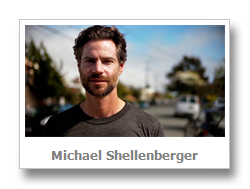
Michael Shellenberger, The Breakthrough Institute:
Ted Nordhaus and Michael Shellenberger are leading global thinkers on energy, climate, security, human development, and politics. Their 2007 book Break Through was called "prescient" by Time and "the best thing to happen to environmentalism since Rachel Carson's Silent Spring" by Wired. (An excerpt in The New Republic can be read here.) Their 2004 essay, "The Death of Environmentalism," was featured on the front page of the Sunday New York Times, sparked a national debate, and inspired a generation of young environmentalists ...
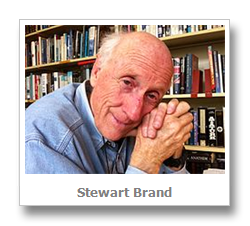
Stewart Brand, Editor, The Whole Earth Catalog and Co-Chair and President of The Long Now Foundation:
Stewart Brand is co-founder and president of The Long Now Foundation and co-founder of Global Business Network. He created and edited the Whole Earth Catalog (National Book Award), and co-founded the Hackers Conference and The WELL. His books include The Clock of the Long Now; How Buildings Learn; and The Media Lab. His most recent book, titled Whole Earth Discipline, is published by Viking in the US and Atlantic in the UK. He graduated in Biology from Stanford and served as an Infantry officer.
Richard Rhodes, Author, The Making of the Atomic Bomb:
RICHARD RHODES is the author or editor of twenty-four books including The Making of the Atomic Bomb, which won a Pulitzer Prize in Nonfiction, a National Book Award and a National Book Critics Circle Award ...
Gwyneth Cravens, Author, The Power to Save the World: The Truth About Nuclear Energy:
[H]as contributed articles and op-eds on science and other topics to Harper’s Magazine, The New York Times, and The Washington Post. She has published five novels. Her fiction and nonfiction have appeared in The New Yorker, where she also worked as a fiction editor, and in Harper’s Magazine, where she was an associate editor. She grew up in New Mexico and now lives on eastern Long Island.
Mark Lynas, Environmentalist and Climate Change Activist (also writing a companion book to the film):
[A] frequent speaker around the world on climate change science and policy, focusing in particular on how carbon neutral targets can break the international logjam on climate mitigation, and how emissions reduction should be seen as an opportunity not a sacrifice. He is also a Visiting Research Associate at Oxford University’s School of Geography and the Environment.
Reviews and Other Coverage:

Tim Wu, Slate:
A good, politically charged documentary often seizes on what the audience already believes and throws fuel on the fire (see, e.g., the work of Michael Moore). A better such documentary tries to convince its audience that what it takes for granted is flat-out wrong. Pandora’s Promise, which premiered at Sundance, does just that. It makes the utterly convincing case that anyone who considers themselves an environmentalist or takes climate change seriously should favor more nuclear power.
Kate Briemann, Rolling Stone:
After sifting through the anti-nuclear choruses and the considerably smaller pro-nuclear groups in an attempt to find the truth about the advantages and disadvantages of nuclear energy, Stone found his answer with Michael Shellberger, the president and co-founder of the Breakthrough Institute: "We can have a world living modern lives without killing the climate."
John Anderson, Variety:
Can one be committed to the environment, and still be against nuclear power? Most issue docs are propaganda, and Robert Stone’s latest is a formidable sales pitch for nukes, yet the film’s points are well reasoned and urgent, and should attract viewers who have been drawn to the director’s earlier work(such as “Earth Days,” a history of the environmentalist movement).
Kyle Smith, New York Post:
New York City filmmaker Robert Stone, like the five experts who are the principal subjects of his documentary, began with the same impeccable environment-first attitude they did. Stone was nominated for an Oscar for his 1988 anti-nukes documentary “Radio Bikini,” about the dire consequences of American bomb testing on the Bikini Atoll in the Pacific. Now Stone, who will be debating Robert F. Kennedy Jr. on nuclear power at the Jacob Burns Film Center in Pleasantville, NY, tomorrow night at 7:30, sheepishly admits that he confused what nuclear bombs do with what nuclear energy does. So many of our ideas about fallout and cancer rates are tied to the former, not the latter.
David Biello, Scientific American:
What has cracked that catholic opposition for Brand and others is the invisible and invidious challenge of climate change. Simply put: nuclear power is one of the few technologies available today that can produce a lot of electricity, a lot of the time without a lot of greenhouse gases entering the atmosphere.
James Conca, Forbes:
Is considering nuclear energy politically dangerous for environmentalists? Does it prevent normally-smart public servants from considering the best path forward on climate change? Indeed it is, and explains the swift and nasty response to Pandora’s Promise from anti-nuclear groups and the expected rants from professional fear-mongerers. They make some interesting fictional points, but provide no real information, using the word science like a mythological sword whose power they recognize but don’t understand.
Craig Bowron, Minneapolis Star Tribune:
As the director, Robert Stone, writes, “The almost theological adherence to a set of unquestionable beliefs [solar and wind power alone will save us] by most liberals and environmentalists has likely contributed as much or more to prolonging our addiction to fossil fuels as the equally appalling state of denial among many conservatives when it comes to climate change.”
John Gibbons, Irish Times:
What’s most likely to get us into trouble, Mark Twain observed, is not what we don’t know “it’s what we know for sure that just ain’t so”. There are few subjects on which so many people, from politicians to rock stars, NGOs and environmentalists, passionately and confidently espouse views that are so completely at variance with observed reality as nuclear energy.
Maxine Segarnick, Poughkeepsie Journal:
The film strives to debunk several nuclear myths, such as the reportedly high radiation level and death toll caused by the explosion at the Chernobyl Nuclear Power Plant. Environmental activists continue to use Chernobyl as an example of the potential danger of nuclear development. However, the film shows a radioactivity monitor at Chernobyl, as well as at other sites in America and Europe, and demonstrates that the level of radioactivity in Chernobyl in 2012 is nearly identical to that of Central Park in New York City.
Natalie Rooney, VoxTalk:
In a world where most people think nuclear plants are dangerous, Pandora’s Promise challenges viewers to see the benefits of nuclear energy. Despite this daunting challenge, the most admirable aspect of Pandora’s Promise is director Robert Stone’s commitment to presenting both sides of the nuclear energy argument.
Lenka Kollar, ANS Nuclear Cafe:
[T]he most compelling part of the documentary is illustrating how those who actually protested against nuclear power have come to now speak in favor of it. Admitting you were wrong takes some humility and can even cost you your professional career.
Joe Bendel, Libertas:
Stone made his name with the anti-nuclear doc Radio Bikini and would further burnish his green credentials with Earth Days. Very concerned about global warming, Stone could no longer accept the environmental movement’s unrealistic claims about solar and wind power. As his primary POV experts argue, any power plan with a significant wind or solar component will by necessity be heavily dependent on big, dirty fossil fuel plants as a back-up. The simple truth is that the sun does not always shine and the wind does not always blow, but coal burns 24-7.
Stephanie Novak:
Pandora’s Promise has the immensely difficult task of changing people’s mindsets about nuclear energy—a task that became extraordinarily more difficult after the nuclear explosions at the Fukushima Daiichi plant in Japan. Knowing that the film was in favor of nuclear energy, I was surprised that during the beginning of the documentary, arguments against nuclear energy were explained—I almost thought that I was wrong and that the film might be anti-nuclear energy. But in my opinion, this was one of the strongest points of the film. I thought that by clearly laying out reasons why people would be against nuclear energy ultimately made the film’s pro-nuclear stance stronger, as I understood arguments on both sides of the debate by the time the film finished.
Tiffany Ujiye:
Stone’s narrative includes personal stories from environmentalists and energy experts, including Stewart Brand, Gwyneth Craven, Mark Lynas, Richard Rhodes and Michael Shellenberger to speak about their journey in supporting nuclear energy. “This film is about hope,” Stone said, “but it can’t be done without nuclear power.”
Don Simpson, Smells Like Screen Spirit:
Sure, it seems pretty strange for a devout environmentalist to take a pro-nuclear energy stance; but after seeing Robert Stone’s documentary Pandora’s Promise, it seems like a perfectly logical switch.
Additional Reviews:

“CLEAR-EYED AND BALANCED… director Robert Stone introduces a cast of unlikely defenders of this awesome source of energy: environmentalists."

- Ashutosh Jogalekar, Scientific American

“COMPELLING.”

- Nick Schrager, Village Voice

"GUARANTEED-TO-BE-CONTROVERSIAL!”

- Kimberly Chun, SF Bay Guardian

“Stone’s worldly feature-length report is sure to raise eyebrows, but it paints a convincing picture.”

- Kelly Vance, East Bay Express

“INTELLIGENT AND RELATABLE… you may find yourself thoroughly surprised with an about-face view on the energy issue.”

- Lori Huck, Examiner.com

“COMPELLING… A debate worth revisiting, and only the most dogmatic will resist it.”

- Roger Moore, McClatchy-Tribune News Service

“OPEN, EARNEST, UNABASHED… it makes a persuasive case… To any viewer with an open mind, ‘Pandora’s Promise’ may help encourage fresh thinking about the huge pros, as well as the better known cons, of this important, if controversial, source of clean energy.”

- David Ropeik, Scientific American

“PROVOCATIVE and IMPORTANT… ‘Pandora’s Promise’ is essential viewing.”

- Andrew Revkin, The New York Times

"THE MOST IMPORTANT MOVIE ABOUT THE ENVIRONMENT SINCE ‘AN INCONVENIENT TRUTH.’”

- Eric Zorn, Chicago Tribune

“CONTROVERSIAL… ENGAGING AND WELL-RESEARCHED… as nuanced as it is credible.”

- Anthony Kaufman, Indiewire

“ESSENTIAL VIEWING… A full dose of strong opinion – and also some much-needed facts."

- Anne Michaud, Newsday
Read More
Posted in climate change, Gwyneth Cravens, Helen Caldicott, Mark Lynas, Michael Moore, Michael Shellenberger, movie review, Pandora's Promise, Paul Allen, Richard Branson, Richard Rhodes, Robert Stone, Stewart Brand | No comments

Friday, 14 June 2013

The Power of Doubt in Pandora’s Promise

Posted on 09:42 by Unknown

Note: Be sure to look at all of Nuclear Notes’ coverage of this important movie, most notably Eric’s review below.

Should you trust a “review” of Pandora’s Promise, Robert Stone’s new movie on nuclear energy, from this particular site? Well, that’s up to you to decide. If I thought the movie terrible as a film going experience, there would still be a lot to say about it – and I wouldn’t want people who have waited a long time for a pro-nuclear movie to avoid it on my account unless it was a briar patch of lies.

But Pandora’s Promise is good. It’s skillfully made, accessible to an interested general audience (in both style and content – this isn’t a dry dissertation) and it maintains a simple interview approach – shots are composed but the compositions are largely determined by the subjects – it isn’t as tightly controlled as an Errol Morris special.

And it allows a more complex point-of-view than is usual for a subject vulnerable to blunt polemics – for example, it shows how decisions made early in the history of domestic nuclear energy exacerbated the current issue of storing used nuclear fuel. (Of course, making different decisions would have opened up different issues.) If nothing else – and there’s plenty else –the movie demonstrates that domestic nuclear energy was founded at the nexus of government, military, scientific, industrial and energy interests, against the 50s backdrop of an escalating cold war.

The history of domestic nuclear energy is fascinating and I’m glad the movie gives such an interesting account of it (Charles Till, of Argonne National Labs, provides a lot of the interesting background.) , but the theme of the film, in brief, is doubt – not doubt about nuclear energy per se but doubt about not nuclear energy. Because: if not nuclear energy, what then?

As the environmental movement expanded from concerns about water and air quality to the more existential issue of climate change, its highly negative view of nuclear energy began to seem, to some movement adherents, more and more untenable. From their perspective, the world would almost certainly experience disaster if  nuclear energy did not exist to provide plentiful greenhouse gas-free base load energy. And that bred another doubt: that nuclear energy was ever as bad as they had believed.

To explore these doubts, Stone spoke to (and sometimes traveled with) various environmentalists, including Stewart Brand, Gwyneth Cravens (her Power to Save the World, at the link, is a great book), Mark Lynas, Richard Rhodes, and Michael Shellenberger. I assume Stone is their interlocutor, but you hear him on the soundtrack only occasionally and rarely see him. Since these are stories about their gathering doubts, the focus is on them.
They’re an impressive crew, and Stone clears space for them to explain themselves. Changing your mind about a key tenet of your guiding philosophy is very hard, akin to deciding there is no God. For many, it would be nearly impossible to fully process.

Doubt for these people occurred because personal curiosity provoked further investigation into nuclear energy; or the terms of their environmental activism changed as the impact of climate change became more apparent; or simply because age burned away some of the certainty (if none of the idealism) of their younger selves.

Most of them still consider themselves primarily as environmental activists (Shellenberger is president of The Breakthrough Institute, for example – NEI’s Insight newsletter has an interview with his partner Jesse Jenkins) but some express very severe doubts about the environmental movement in general. 

Other factors doubtless weighed in, too, notably the arrival of the next generation. Mark Lynas is quite explicit that fatherhood changed many of his views while Gwyneth Cravens never loses sight of her children in any of her activism. Her original distaste for nuclear energy and her current advocacy both root in her concern for her kids – and by extension, all kids everywhere, otherwise known as the future. Others, such as Stewart Brand, seem to have bypassed the experiential and gone straight for the cosmic. Whatever road they traveled down, they arrived at a place where nuclear energy is the most potent solution to climate change, the issue that now most engages them.

One might reasonably have expected some stridency or pugnaciousness from these activists, after lives speaking and arguing and protesting. But, no, this is a very amiable crowd. There is a photograph shown of Shellenberger in younger days that suggests he could bring it when required, but in the new footage, he’s so relaxed he can barely bother with shoes.

Is the movie perfect? Is there such a thing?

From my perspective, there is one serious misstep. One small bit of footage shows Stone making a fool of Dr. Helen Caldicott, a long-time anti-nuclear activist. (Nuclear Notes has a long history with Dr. Caldicott’s brand of mendacity.) Leaving aside how easy this is to do, it inserts a Michael Moore-style mean-spiritedness into a very friendly show – the same thing could probably have been done to Gwyneth Cravens or Stewart Brand in their anti-nuclear days. It’s there for pro-nuclear people to snicker at, which in this context has no useful purpose.

I’ve read some reviews that say the film should have aimed for more balance – i.e. included some anti-nuclear activists in the mix – but this isn’t that kind of film. This is a documentary not a news report and it need not aim for any balance at all. In many news stories, after all, such balance is very often a route to confusion, with information mixed so completely with misinformation that the truth recedes into the distance.

Pandora’s Promise is clearly Robert Stone’s film about nuclear energy and he’s not in the least conflicted about nuclear energy – so there’s no reason for the film to generate artificial conflict. Think of it as an essay, not a news story. An anti-nuclear Robert Stone can have a go at his or her own film essay, but in the meantime, this is what it is.

Like many documentaries that aren’t by Ken Burns and 12 hours long, the goal here is to present a viewpoint as fully as possible and then leave it in our hands. There isn’t time to tell everything, but there is time to suggest a lot of routes for further research, including into the biographies of these people and their plentiful writings (few of them are well-known outside their sphere of interest) and the information provided about nuclear energy (for example, I had no idea that Chernobyl continued operation after the 1987 accident there well into the 1990s, but it did). Such research is unlikely to go unrewarded and I know the perfect place to start.

Read More
Posted in Charles Till, Gwyneth Cravens, Mark Lynas, Michael Shellenberger, Nuclear Energy, Pandora's Promise, Richard Rhodes, Stewart Brand | No comments

A Brief Review of Pandora's Promise

Posted on 05:30 by Unknown
Robert Stone behind the camera.
It was back in 2006 that NEI Nuclear Notes published its first post with the title, "Another Environmentalist for Nuclear Energy." At the time, I could certainly have understood how a statement like that might seem more than a bit unbelievable.

Environmentalists? Supporting? Nuclear? Energy? Wasn't the environmental community unanimously opposed to nuclear energy? 

But what I had begun to see at the time was a growing understanding on the part of a number of thoughtful people about the size and scope of the challenge before mankind. How do you support a world with a growing population that aspires to enjoy the same standard of living that we've grown accustomed to in the developed world? And how do you do it without causing catastrophic damage to the planet?

It's was that conundrum that led environmentalists like Patrick Moore, James Lovelock and the late Rev. Hugh Montefiore to reconsider their position on nuclear energy. What began as a trickle has since become a flood, which is why filmmaker Robert Stone has spent the past several years making Pandora's Promise, a film tracing the journey of five environmentalists as they reconsidered their beliefs about nuclear energy.

Many of the individuals featured in the film will be familiar to the readers of NEI Nuclear Notes. Stewart Brand is the founder of the Whole Earth Catalog and one of the leading lights in the counter-cultural movement of the 1960s. Richard Rhodes is a journalist well known for his work chronicling the race to build the first atomic bomb. Gwyneth Cravens is an author who cut her teeth fighting the Shoreham Nuclear Power Plant on Long Island in the 1970s. Mark Lynas is a veteran of the U.K. environmental movement who at times has been best known for episodes of bombastic public behavior.

So what can you expect out of Pandora's Promise? As I wrote earlier this week, it was impossible not to be heartened to see nuclear energy talked about in terms of the benefits it delivers instead of its supposed shortcomings, and to see that story be told in such a skillful manner. I think the world has a lot to learn from the five principal figures profiled in the film. It takes a lot of guts to seriously examine your beliefs, and decide, as Brand does near the start of the film, "that everything you thought about nuclear energy was wrong."

The driver for their change of heart, of course, is the fear that rising levels of atmospheric carbon are contributing to potentially calamitous changes in the earth's climate. Here at NEI, we're not climate scientists and have never taken a position on anthropogenic global warming. But like Pandora's gang of five, we've come to the conclusion that if you're looking for a zero emission source of baseload power, then nuclear energy is the only option that fits the bill. As Stone himself said in a post-screening discussion on Monday night in Pleasantville, NY, "To take nuclear out of the equation when we need it most is irresponsible."

Pandora's Promise opened in New York City on Wednesday night, and premieres in 15 other cities nationwide today, with additional screenings being added all the time.


Read More
Posted in climate change, Gwyneth Cravens, Helen Caldicott, Mark Lynas, Michael Shellenberger, movie review, Pandora's Promise, Richard Rhodes, Robert Stone, Stewart Brand | No comments

Monday, 10 June 2013

Where Can I See the Nuclear Energy Documentary Pandora's Promise?

Posted on 09:04 by Unknown
This evening in Pleasantville, NY at the Jacob Burns Film Center, Robert Stone's new documentary, Pandora's Promise, will have its New York premiere. Following the screening, Stone will have a discussion with Robert F. Kennedy, Jr. of Riverkeeper about the film. The discussion will be moderated by Andrew Revkin of the New York Times. NEI will be in attendance, and we'll be following the discussion live via our Twitter feed, @n_e_i. Please check in around 9:00 p.m. U.S. EDT for our live coverage.


So Where Can You See Pandora's Promise?

The official opening will be in New York City on June 12 at Sunshine Cinema on the Lower East Side of Manhattan. Two days later, on June 14, the film will open in an additional 15 cities nationwide (Atlanta, Berkeley, Boston, Chicago, Denver, Houston, Irvine, Los Angeles, Minneapolis, Philadelphia, San Diego, San Francisco, Seattle, St. Louis, Washington, DC) with another four cities being added on June 21 (Austin, Charlotte, Dallas, Scottsdale) with other cities (Detroit, Santa Fe, Rhinebeck, NY) being added all the time. Tickets should also be available online through Fandango and MovieTickets.com. Consult the film's web site for a complete list of theaters. On April 30, 2013, CNN Films announced that it had acquired cable television broadcast rights to the film and intended to air it sometime in November 2013.

If and when you see the film, be sure to tweet about it and include the #PandorasPromise hash tag and the official handle, @PandorasPromise.
Read More
Posted in climate change, Gwyneth Cravens, Helen Caldicott, Mark Lynas, Michael Shellenberger, movie review, Pandora's Promise, Richard Rhodes, Robert Stone, Stewart Brand | No comments
Older Posts Home
Subscribe to: Posts (Atom)

Popular Posts

  • More of The Best Nuclear Energy News of 2013
    1. The 60th anniversary of Atoms for Peace (and NEI, too) – President Dwight Eisenhower gave the Atoms for Peace speech before the Unite...
  • Nuclear Fusion and Imploding Porcupines
    When the sun makes energy through nuclear fusion, it has the benefit of not having to pay real cash for the energy expended to make more...
  • All Aboard for the Neutron Express!
    Nuclear energy would be perfect for electric/hybrid cars, a potentially gigantic market for electricity that is well-suited to an energy sou...
  • Without Nuclear, A Rube Goldberg Energy Policy
    Larry Beahan is conservation chairman of the Sierra Club Niagara Group, so he likely has some tart things to say about nuclear energy. B...
  • Little Presents: NuScale, Germany, Meateasies
    Sustainable Business Oregon presents a interview with Pete Lyons, DOE’s assistant secretary for nuclear energy. It’s fine and worth a read –...
  • NextEra Sets Record With 700-MW Power Uprate
    NEI’s Top Industry Practice Awards recognize innovation in the nuclear energy industry. Presented at NEI’s annual conference, the awards hon...
  • The Simpsons and The Reality of Nuclear Power Plant Security
    It looks like the folks at Fox are pulling out all of the stops when it comes to Sunday night's season premiere of The Simpsons . Look f...
  • Patrick Moore’s Economic Justice
    Patrick Moore, ex-Greenpeace, sees in nuclear energy an interesting argument for what he terms “environmental justice,” which is true enough...
  • Setting the Record Straight on the Spent Fuel Pool at Fukushima Daiichi Unit #4
    At the end of April, former Department of Energy official Robert Alvarez sounded the alarm about the safety of the spent fuel pool at Fukush...
  • The Unofficial Guide to Pandora's Promise, a Documentary Film About Nuclear Energy by Robert Stone (Bumped)
    Updated Editor's Note: The next big date on the Pandora's Promise calendar is November 7 at 9:00 p.m. U.S. EST. That's when the ...

Categories

  • #CNOSummit
  • 123 agreement
  • 2012 Elections
  • 2012 India Blackout
  • 2012 Nuclear Energy Assembly
  • 2013 Nuclear Energy Assembly
  • 2013 State of the Union
  • 316b
  • 60th Anniversary
  • 9-11
  • ABC
  • Advanced Research Projects Agency
  • advertising
  • Africa
  • Agreement States
  • aircraft impact
  • Al Gore
  • Alabama
  • Alan J. Kuperman
  • Albania
  • Alec Baldwin
  • Alex Flint
  • Allison Macfarlane
  • Amber Lyon
  • Amber Lyons
  • Ameren Missouri
  • American Electric Power
  • American Power Act
  • American Wind Energy Association
  • Andrew Revkin
  • Anil Kadkodkar
  • Ann Bisconti
  • AP1000
  • Apple
  • AREVA
  • argonne national lab
  • Arizona Public Service
  • Arizona Strip
  • Arkansas Nuclear One
  • Arnie Gundersen
  • Associated
  • Associated Press
  • Atomic Industrial Forum
  • atoms for peace
  • Australia
  • Babcock and Wilcox
  • Bangladesh
  • Barack Obama
  • Barclays
  • baseload
  • battery 500
  • Belgium
  • Berlin
  • Bezdek
  • Bhopal
  • Bill Gates
  • Billie Garde
  • Billy Jack
  • Bisconti
  • Blogging
  • Blue Castle
  • blue fin tuna
  • Blue Ribbon Commission
  • bluefin tuna
  • Bob Bishop
  • Bolivia
  • Breakthrough Institute
  • BREDL
  • Britain
  • Brown's Ferry
  • Browns Ferry
  • Bulgaria
  • butterflies
  • California
  • California Energy Commission
  • Callaway
  • Calvert Cliffs
  • Canada
  • cancer
  • Cape Cod Times
  • Carbon Emissions
  • carbon tax
  • Caroline Cochran
  • CASEnergy Coalition
  • Center for Advanced Energy Research
  • cesium
  • Charles Till
  • Charlotte
  • China
  • Chip Pardee
  • Chris Crane
  • Clean Energy
  • clean energy standard
  • climate change
  • Clinton Nuclear Power Station
  • Cloud Atlas
  • CNN
  • coal
  • cold fusion
  • Columbia Journalism Review
  • common language
  • Congress
  • Constellation Energy
  • cooling tower
  • cost recovery
  • crocodiles
  • Crystal River
  • CSIS
  • Curio
  • Curiosity
  • CWIP
  • Cyber Security
  • Czech Republic
  • D.C. Cook
  • Daily Kos
  • Daily Show
  • Dale Klein
  • Dan Lipman
  • data centers
  • David Allard
  • David Fitzpatrick
  • David Lochbaum
  • debate
  • defense
  • Denmark
  • Department of Atomic Energy (India)
  • Department of Energy
  • Department of Homeland Security
  • Department of the Interior
  • Design Basis Threat
  • Diego Garcia
  • Dominion
  • Dominion Resources
  • Dominion Virginia Power
  • Dr. Patrick Moore
  • Dr. Robert Peter Gale
  • Drew Griffin
  • Duane Arnold
  • Duke Energy
  • Dwight Eisenhower
  • Earth Day
  • earthquake
  • East Coast Earthquake
  • economic benefits
  • Ed Halpin
  • EDF
  • Edison
  • education
  • efficiency
  • EIA
  • Einstein Medical Center Montgomery
  • Elaine Grossman
  • electric vehicles
  • electricity
  • emergency alert system
  • emergency planning zone
  • emergency preparedness
  • emergency response
  • energy
  • energy diversity
  • energy information administration
  • Energy Northwest
  • Energy Secretary Chu
  • Entergy
  • Entergy Arkansas
  • environment
  • Environment America
  • EPA
  • EPZ
  • Eric Lax
  • Eric Schmitz
  • Ernest Moniz
  • ERO
  • Eskom
  • ethical investing
  • european union
  • Exelon
  • Exelon Nuclear
  • Export-Import Bank
  • Facebook
  • Fairewinds Associates
  • FBI
  • filtered vents
  • Financial Reporter
  • Finland
  • First Energy
  • FitzPatrick Plant
  • FLEX
  • Florida
  • Florida Power and Light
  • Florida State Senate
  • Fluor
  • food critic
  • Forbes
  • Fox News
  • FPL
  • France
  • Francois Hollande
  • Fred McGoldrick
  • Friends of the Earth
  • Frontline
  • Fukushima Daiichi
  • Fukushima Daini
  • fusion
  • Gallup Poll
  • GAO
  • GE Hitachi Nuclear Energy Award
  • General Atomics
  • Georgetown University
  • Georgia
  • Georgia Power
  • Germany
  • Ghana
  • Ginger Zee
  • Global Nuclear Energy Partnership
  • Global Security Newswire
  • gold standard
  • Google
  • Gov. Jerry Brown
  • Governor Jay Nixon
  • Governor Mitt Romney
  • Great Britain
  • Green Bay
  • Green Energy
  • Green Party
  • greenhouse gases
  • Greenpeace
  • Gregory Jaczko
  • grid reliability
  • Ground Water
  • Gunther Oettinger
  • Gwyneth Cravens
  • Hanford
  • Health Physics
  • Health Physics Society
  • heat wave
  • Helen Caldicott
  • Henry Sokolski
  • Heritage Foundation
  • Higher Education
  • Holtec International
  • House Committee on Energy and Commerce
  • House Foreign Affairs Committee
  • HR 2449
  • Hurricane Sandy
  • hydrogen
  • Hyperion
  • IAEA
  • ibm
  • Idaho
  • Idaho National Lab
  • IEA
  • IEEE
  • Illinois
  • incentives
  • India
  • India Ink
  • Indian Point
  • IndyCar
  • INPO
  • Inside Climate News
  • inspiration
  • international trade
  • Iowa
  • Iran
  • Italy
  • ITER
  • Ivan Penn
  • James Hansen
  • James Howard
  • James Lovelock
  • Janette Sherman
  • JANSI
  • Japan
  • Japan. PBS
  • Japanese earthquake
  • Jeff Donn
  • Jim Asselstine
  • Jim Slider
  • Jim Tusar
  • JJ Abrams
  • jobs
  • John Kerry
  • Jon Stewart
  • Jordan
  • Joseph Mangano
  • Jr.
  • Junichiro Koizumi
  • Kashiwazaki-Kariwa Nuclear Plant
  • KEPCO
  • Kewaunee
  • Kuwait
  • KV Racing Technology
  • laser enrichment
  • leadership
  • Lehman Brothers
  • Levy County
  • liberal politics
  • license renewal
  • licensing
  • Lithuania
  • Los Angeles Times
  • low-level nuclear waste
  • Ltd
  • M.V. Ramana
  • Maine
  • Mark Bittman
  • Mark Cooper
  • Mark Hibbs
  • Mark Lynas
  • Mark Tercek
  • Mars
  • Marv Fertel
  • Maryland
  • Massachusetts
  • Matt Wald
  • Megatons to Megawatts
  • meteor
  • methane
  • Michael Moore
  • Michael Shellenberger
  • Michigan
  • Mid-American Energy
  • Mike Childs
  • minnesota
  • missouri
  • MIT
  • Mitsubishi
  • Monica Trauzzi
  • Mothers in Nuclear
  • movie review
  • MOX Fuel
  • mPower
  • MSNBC
  • NA-YGN
  • Namibia
  • Naomi Oreskes
  • NARUC
  • NASA
  • Nathan Myhrvold
  • National Academy of Sciences
  • National Association of Manufacturers
  • National Mining Association
  • National Oceanic and Atmospheric Administration
  • Natural Gas
  • Nature Conservancy
  • NBC
  • NEI
  • NEI.org
  • Nemo
  • Nevada
  • New Hampshire
  • New Jersey
  • New Mexico
  • new nuclear plants
  • new plant licensing
  • New York Times
  • NextEra Energy
  • Nicholas Sarkozy
  • NIRS
  • No Nukes
  • nonproliferation
  • North Anna
  • Northwestern University
  • NRC
  • Nuclear
  • nuclear arms reduction
  • Nuclear Energy
  • Nuclear Energy Assembly
  • Nuclear Energy Institute
  • Nuclear Energy;
  • nuclear energy.
  • nuclear engineering
  • nuclear exports
  • nuclear option
  • nuclear plant
  • nuclear plant design
  • Nuclear plant security
  • nuclear power
  • Nuclear Power Corporation of India
  • Nuclear Proliferation Prevention Project
  • nuclear reactor
  • nuclear regulatory commission
  • Nuclear Safety Inspections
  • Nuclear Suppliers Group
  • nuclear supply chain
  • nuclear waste
  • nuclear waste fund
  • Nuclear Waste Policy Act
  • nuclear weapons
  • nuclear workforce
  • NuScale Power
  • NY AREA
  • Oconee
  • OECD
  • ohi
  • Oil
  • oil sands
  • Oklo
  • Onagawa
  • Ontario Power Generation
  • Opinionator
  • Oregon
  • Oyster Creek
  • pacific ocean
  • Pakistan
  • Palisades Nuclear Power Plant
  • Palo Verde Nuclear Power Plant
  • Pandora's Promise
  • Part 810
  • Patrick Moore
  • Paul Allen
  • Paul Genoa
  • PCAST
  • Pennsylvania
  • Peter Bradford
  • petition
  • PG&E
  • Pilgrim
  • Pilgrim Nuclear Power Startion
  • Pilgrim Nuclear Power Station
  • Plamt Vogtle
  • Plant Vogtle
  • Plutonium
  • Poland
  • policy
  • polls
  • President Obama
  • Presidential Debates
  • pressurized thermal shock
  • Progress Energy
  • progressive politics
  • Progressives for Nuclear Progress
  • Public Health
  • public opinion
  • public service announcement
  • Quad Cities
  • R. William Borchardt
  • Rachel Doss
  • Rachel Maddow
  • racing
  • radiation
  • radio media tour
  • radioisotope thermoelectric generator
  • Rancho Seco
  • Reddit
  • refueling outage
  • regulation
  • Renault
  • renewable energy
  • renewables
  • Rep. John Shimkus
  • Rep. Mike Simpson
  • research reactors
  • Revolution
  • Richard Branson
  • Richard Myers
  • Richard Rhodes
  • Riverkeeper
  • Robert Alvarez
  • Robert F. Kennedy
  • Robert N. Charette
  • Robert Stone
  • Rolls-Royce
  • Rosatom
  • Russell Gocht
  • Russia
  • safety
  • safety culture
  • San Diego Union-Tribune
  • San Onofre Nuclear Generating Station
  • Savannah River Site
  • SCANA
  • SCANA. VC Summer
  • Scientific American
  • Scotland
  • Seabrook Nuclear Power Plant
  • Section 123 Agreements
  • security
  • Sen. Jeff Bingaman
  • Senator Barbara Boxer
  • Senator Harry Reid
  • September 11
  • Sequoyah Nuclear Power Plant
  • Sharknado
  • Shaw Group
  • Sierra Club
  • Simona De Silvestro
  • Singapore
  • slovakia
  • Small Modular Reactor
  • small reactors
  • solar
  • solar energy
  • Solyndra
  • South Africa
  • South Australia
  • South Carolina
  • South Korea
  • South Texas Project
  • Southern California Edison
  • Southern Company
  • space travel
  • Spent Fuel Pool
  • Stanford University
  • State Department
  • State-of-the-Art Reactor Consequence Analyses (SOARCA)
  • Station Blackout
  • steam generators
  • STEM
  • Steve Byrne
  • Steve Kerekes
  • Steven Chu
  • Stewart Brand
  • storage
  • subsidies
  • Summer nuclear station
  • Sundance
  • Suvrat Raju
  • Switzerland
  • tanks
  • television
  • Temelin
  • Tennessee Valley Authority
  • Tepco
  • TerraPower
  • Thailand
  • The Guardian
  • The New Yorker
  • The Simpsons
  • Thorium
  • TIME Magazine
  • TIP Award
  • Tom Fanning
  • Tom Farrell
  • Tom Laughlin
  • Tom Moore
  • Tomioka
  • Tony Alexander
  • Tony Pietrangelo
  • Toronto
  • Tritium
  • Trojan
  • Tufts University
  • Tugg
  • Turkey
  • Turkey Point
  • TVA
  • U.S. News and World Report
  • U.S. P.I.R.G.
  • UAE
  • UBS
  • UCS
  • Underground
  • Underground Piping
  • union of concerned scientists
  • United Arab Emirates
  • United Kingdom
  • University of Florida
  • University of Missouri
  • University of South Carolina
  • University of Texas at Austin
  • uprates
  • uranium
  • Uranium Mining
  • USEC
  • Used Fuel
  • Used fuel pool
  • used nuclear fuel
  • Utah
  • Vatican City
  • Vermont
  • Vermont Yankee
  • Victor Gilinsky. Vietnam
  • Vietnam
  • Virginia
  • Visaginas
  • vogtle
  • Wall Street
  • Wall Street Journal
  • warheads
  • Washington Post
  • waste
  • waste confidence
  • Waste Isolation Pilot Plant
  • water consumption
  • Watts Bar
  • We The People
  • welding
  • Westinghouse
  • White House
  • wind
  • wind energy
  • Windham County
  • wipp
  • Wisconsin
  • Women In Nuclear
  • World Bank
  • World Energy Outlook
  • world nuclear association
  • World Nuclear Fuel Conference
  • Yucca Mountain
  • Yukiya Amano
  • zion

Blog Archive

  • ▼  2013 (241)
    • ▼  December (12)
      • More of The Best Nuclear Energy News of 2013
      • Dropping the Ball
      • The Best Nuclear Energy News of 2013
      • Little Presents: NuScale, Germany, Meateasies
      • The Renewable Niche and The Nuclear Shrug
      • Those Irresponsible Physicians
      • DOE Awards NuScale Second Small Reactor Grant
      • The End of Megatons to Megawatts
      • “Nuclear energy is a sector of the future.”
      • Japan: The strongest signal yet on nuclear energy
      • World Bank Toff: “We don’t do nuclear energy.”
      • Recontextualizing the Nuclear Option
    • ►  November (11)
    • ►  October (26)
    • ►  September (24)
    • ►  August (12)
    • ►  July (13)
    • ►  June (31)
    • ►  May (19)
    • ►  April (23)
    • ►  March (23)
    • ►  February (23)
    • ►  January (24)
  • ►  2012 (259)
    • ►  December (12)
    • ►  November (11)
    • ►  October (24)
    • ►  September (17)
    • ►  August (27)
    • ►  July (22)
    • ►  June (28)
    • ►  May (23)
    • ►  April (33)
    • ►  March (25)
    • ►  February (28)
    • ►  January (9)
Powered by Blogger.

About Me

Unknown
View my complete profile