The Promise 10

  • Subscribe to our RSS feed.
  • Twitter
  • StumbleUpon
  • Reddit
  • Facebook
  • Digg
Showing posts with label France. Show all posts

Monday, 9 December 2013

“Nuclear energy is a sector of the future.”

Posted on 13:56 by Unknown

“Nuclear will always make up at least half of our energy (electricity output)," he was quoted as saying during a Franco-Chinese seminar in Beijing on Friday to commemorate a 30-year partnership in the nuclear sector.

"Nuclear energy is a sector of the future," he added.

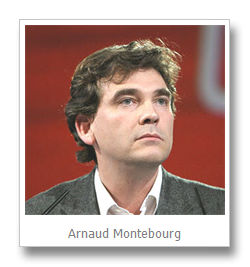
That’s Arnaud Montebourg, the French industry minister, speaking, so he knows whereof he speaks. France is building two nuclear reactors in China, which raises an important point – nuclear energy technology is not just a economic boon to ratepayers like those in France but to companies like the French-owned AREVA, which is building the Chinese reactors.

The Reuters story also mentions in passing that the French utility EDF is building a new reactor in England. This is how trade works.

---

Which may be why we’re hearing this out of Japan:

In an attempt to overturn the previous administration's pledge to phase out nuclear power, Japanese Prime Minister Shinzo Abe's government will call it an "important source of energy for the country" in its new energy plan.

We mentioned last week (in the post below this one) that a government report signaled a return to nuclear energy in Japan. So it does, as this news attests. The Wall Street Journal has more:

Highlighting the economic necessity of nuclear power, the draft points out that a surge in liquefied natural gas imports to stably supply electricity throughout the country has led to very expensive fossil fuels costs. It also said an overreliance on thermal power has increased the country's carbon dioxide emissions.

The story goes on to report that though nuclear energy has not regained its popularity in Japan, Abe remains quite popular despite these decisions. Polls are polls and can carry a lot of unintended implications, but let’s allow that Abe’s good standing may carry nuclear energy along with it as electricity prices drop and carbon emissions relent. 

Nothing here about trade, really, but Japan does consider nuclear technology an exportable good. I can’t help thinking that that may be playing a part in Abe’s calculations.

Read More
Posted in AREVA, EDF, France, Japan, Nuclear Energy | No comments

Tuesday, 22 October 2013

The British Return to Nuclear to Keep the Lights On

Posted on 12:59 by Unknown

Here’s the news:

The 16-billion pound ($25.9 billion) project, which was agreed on Monday with France's EDF energy and a group of Chinese investors, aims to keep the lights on in Britain amid declining supplies of North Sea gas and rapidly escalating fuel costs.

"If people at home want to be able to keep watching the television, be able to turn the kettle on, and benefit from electricity, we have got to make these investments," Energy Secretary Ed Davey told the BBC. "It is essential to keep the lights on and to power British business."

That sounds decidedly apocalyptic, but it’s a theme picked up by other stories. Here’s The Telegraph:

During her reign [Queen Elizabeth’s], our atomic expertise, which promised a future of clean, green and affordable electricity, has been handed to foreign competitors on a plate, and Britain’s grid is now under such strain that 57 years later, we find ourselves relying on China and France to keep the lights on.

And in the same language, too, borrowed from Davey. The Telegraph story, by Michael Hanlon, is very withering about Britain’s loss of dominance in the nuclear sphere and ponders gloomily that a “communist superpower” should be doing this rather than the Brits themselves. (In another era, he would be griping about the French end of the deal.)

---

Here’s the outline of the deal, from The Guardian:

Britain is to embark on building its first nuclear power station for two decades on Monday as the coalition hands a multibillion subsidy to France's EDF with help from a state-owned Chinese firm.

The two planned pressurized water reactors at Hinkley Point C, Somerset, are the first to start construction in Europe since Japan's Fukushima disaster and the first in the UK since the Sizewell B power station came online in 1995.

The Guardian being The Guardian, the nuclear energy industry is a nest of asps hissing and spitting. It all could be so much easier:

The alternative to nuclear, made to appear unthinkable by the industry's lobbying, is in fact far from inconceivable. A huge effort to improve the UK's woeful energy efficiency is the first step. The UK government currently expects electricity demand to rise by 33-66% by 2050.

…

The second step is a genuine commitment to renewable energy, youthful technologies ripe for further cost reductions in stark contrast to nuclear. Even today, once you account for the much longer time for which nuclear is promised subsidies, offshore wind costs the same and it will fall.

I can’t really speak to the British industry’s lobbying efforts, but I do know that here, the industry considers itself part of a continuum that includes energy efficiency and renewable energy. if you want to be cynical about it, and why not?, you could say that there’s money in all of it. But if you want to be a little more idealistic, you could admit that it does not hurt to pursue a full range of options to answer to climate change issues and customer awareness of them. Environmentalists get a lot of mileage out of posing an adversarial relationship between energy generators, but that’s really to charge up the troops not a viable way of doing business.

The 60-year history of the nuclear industry is one unblemished by promises kept. From "too cheap to meter" to safe as houses, every pledge has been broken.

Vicious and pestilent promise breakers – the solution is so clear to some, the government must be blind.

Or perhaps it’s just trying to keep the lights on.

Read More
Posted in China, France, Great Britain, Nuclear Energy, The Guardian | No comments

Tuesday, 16 July 2013

Being Sincere and Being Right on Nuclear Energy

Posted on 14:48 by Unknown
There are things you  really oughtn’t to do, even if you have the best of intentions:

Une vingtaine de militants de Greenpeace ont été interpellés lundi 16 juillet pour avoir pénétré dans la centrale nucléaire du Tricastin, dans la Drôme. L'association entend pointer des failles de sécurité et provoque directement François Hollande, notamment sur le "risque terroriste". 

Which means (my translation – buyer beware):

Twenty Greenpeace activists were arrested Monday, July 16 after trespassing at the Tricastin nuclear power plant, in the Drôme [southeastern France]. The association intended to point out security vulnerabilities and directly provoke [Prime Minister Francois] Hollande, notably about the "terrorist threat" [presumably of a vulnerable nuclear plant.]

Tricastin proved not to be as vulnerable as the activists thought. There are some interesting details in the L’Express story. The security detail knew quickly that the plant grounds had been breached, but did not immediately engage the interlopers.Security decided that a group of 20 was unlikely to sabotage the facility, thinking that people intending harm would be both fewer in number and much more stealthy. And there was no evidence of weapons.

In fact, what the group got up to was the usual Greenpeace mischief:

Local media report that the environmentalists unfurled banners reading “Tricastin is a nuclear accident” and “François Hollande – disaster president?”.

I asked around about the potential American response to such a situation. There are similarities but definite differences. The goal would be to engage the group peacefully, try to resolve the situation and bring in local law enforcement if the trespassers will not leave. That’s what happened at Tricastin, too.

Chalk it up to the experience of 2001, but letting a group wander around facility grounds would not happen here at all. I was told that security would engage them at the plant perimeter (probably by guards patrolling the perimeter) and shoo them off. Still, in France, the level of aggression met the level of threat, which is to say, not much. An embarrassment maybe, but Tricastin’s security did read the situation correctly.

Did all this work to Greenpeace’s advantage? Well, since EDF, the French electric authority, plans to sue the group for trespass, I guess martyrdom and indignant noises are possible – so French, after all. But in terms of the goal behind this exercise, not so much.

The French government has launched an investigation into an intrusion Monday by Greenpeace demonstrators at the Tricastin nuclear power complex and wants new laws to make punishments of intruders harsher, the energy and interior ministries said in a joint statement.

This kind of activism can be useful: it can bring attention to an issue (Greenpeace’s goal here) or shine a light on malfeasance (Greenpeace does not seem to think EDF a snake pit). But all you can say about this specific event is that it shows the group is sincere and committed to not liking nuclear energy. That doesn’t make them right or helpful or preclude other views – the Greenpeace argument about nuclear energy has always been short sighted and founded on myth. This doesn’t change that. All of Greenpeace’s antics over the years have not make a dent – the arguments just don’t favor them.

Read More
Posted in EDF, France, Nuclear Energy | No comments

Monday, 24 June 2013

Nuclear Numbers Up in France

Posted on 12:52 by Unknown

A poll over at Ouest France shows that support for nuclear energy has risen over the last two years, to the point that the percentage of people who do not support it has become strikingly small – at least among those with an opinion. Since there is no English version of the site, let’s look at the numbers as reported by World Nuclear News:

Of the 2004 respondents, 36% declared themselves to support the use of nuclear energy in France, up from 33% in November 2011 and 32% in July 2011. Meanwhile, the proportion expressing opposition to the use of nuclear energy had fallen to 14%, down 3% from the November 2011 figures and 6% from July 2011.

That leaves out half the population. What about them?

About a third of the population polled (34%) described themselves as "hesitant", or undecided, towards nuclear energy. Ifop [the polling firm] notes that for the first time since Fukushima, the pro-nuclear percentage of the population outnumbers the undecided. Meanwhile 16% of respondents said they had no opinion at all on the subject.

Hesitant and undecided are not the same thing, so I’ll assume these are two different groups squashed together. These folks are reachable – if Electricite de France is working for their support, it’s working. From an American perspective, meanwhile, the high number of hesitants can seem a case of French intransigence. But that’s a cliché,right?

59% of those polled agreed that France should maintain its current nuclear share in order to ensure its energy independence, up from 54% in a study carried out in March 2013.

The high on this metric was 67 percent in 2008, so the number here is getting better from what I assume is its low after the Japan accident. And it shows that the French fully understand that their country is rather resource poor – the reason it invested so heavily in nuclear energy back in the 70s.

Why care? Well, in a way, we need not. France could do with a little energy diversity – putting all its eggs in the nuclear coop has caused some issues in charging electric cars, at least it might theoretically  – and French President Francois Hollande wants to reduce the share of nuclear energy from about 80 percent to 50 percent. The poll numbers suggests this might be a harder sell than when Hollande ran for office last year, so, consequently, there will be a good deal of interest in his administration’s new energy policy when it is issued this fall.

This policy seems to be at the root of the poll and some of the news stories emerging in the French press now. Nuclear energy wasn’t precisely on the ropes last year when Hollande won the presidency and it’s even less so now. It’ll be interesting to see the reaction if the policy is markedly nuclear–unfriendly.

Read More
Posted in France, Francois Hollande, Nuclear Energy | No comments

Monday, 1 April 2013

The Value of Energy Diversity, Nuclear Energy Division

Posted on 13:57 by Unknown

On the one hand, people jabber about energy diversity – simply, the practice of not betting the megawatts on one energy source – but if the price is right, there is a rush for, say, natural gas. Now, that’s still within the context, in this country, of a pretty broad energy mix. And natural gas isn’t exactly a villain, as utilities have embraced it as a means of reducing carbon emissions and shuttering coal plants.

But what about France? It gets between 75 and 80 percent of its electricity from nuclear energy. That’s not very diverse, though it doesn’t seem to have caused a lot of problems. Yet.

I ran into this little story at Autoblog Green, about Renault’s warning that the grid may not be able to handle a big influx of electric cars:

The culprit is a combination of France's extensive use of nuclear power, which lacks the flexibility to cope with power-demand surges, and the widespread use of electric heaters during France's cold spells, which already strains the country's power supply.

I seem to recall that France encouraged electrically generated heat as a means to soak up excess electricity. It may be that France just needs to make more electricity if it now needs to accommodate cars. But the story, while not dishonest, seems to want to have nuclear energy as the problem rather than the grid. Since this was picked up out of the Reuters news service, it seemed a good idea to look there for more details.

And voila! The grid does seem to be struggling:

France's power grid, already under strain at peak periods, could struggle to cope if growing numbers of electric car owners all recharge their batteries when they sit down for dinner, power sector executives say.

But, um, Zut alors! Nuclear energy is not completely off the hook:

The heavy reliance on electrical heating in France was instigated by successive governments to absorb surplus nuclear power. Its 19 nuclear power plants make France Europe's biggest electricity exporter and ensure generally steady power supplies.

However, it lacks flexible capacity - usually generated by gas, coal or oil-fired plants - to meet peak evening demand during cold snaps.

So I was right about electric heating, but its use appears to have led the country inadvertently into a kind of cul-de-sac. Would coal or natural gas (let’s let oil slip away) help? Sure – because both can ramp up and down relatively quickly and relieve peak demand – if the grid can absorb more electricity and transmit it where its needed. (France has not done much with a “smart” grid yet that has more routing flexibility.)

Logically, trying to add more nuclear energy will produce more excess electricity when cars are not being charged – presumed to be at night – which may cause the government to encourage – what? – more exports? More electric cars?

A lot of this, according the article, is speculative on the part of Renault, which provides time to cook up ideas to deal with it.

Electric cars' batteries could smooth the variability of wind and solar energy by storing wind power produced at night and injecting it back to the grid when it needs help, he [RTE's Oliveier Grabette] said. Such vehicle-to-grid systems are already being tested in the United States and Japan.

RTE is Reseau de Transport d’Electricite, essentially the manager of the grid. Reseau means grid or network.

In any event, one could reasonably argue that lack of energy diversity might catch up with the French. The decision to go all-in on nuclear energy has allowed the country to have the lowest cost electricity in Europe, to act as a net exporter, and to be exceedingly well-positioned as the issue of carbon emissions rose to the fore. France chose energy security (access to uranium, a recycling regime) over energy diversity to suit its own national interests.

But the lack of diversity also – along with a wobbly grid – might be finding its limit – and ironically, with electric cars, which we’ve found a natural match for nuclear energy. It still might be in France and certainly is here. That said, some renewable energy or natural gas where they can be most effective wouldn’t go amiss.

For more on the subject of energy diversity, you may find this Congressional testimony by William Mohl, the president of Entergy Wholesale Commodities, interesting.

Read More
Posted in France, Nuclear Energy, Renault | No comments

Friday, 29 March 2013

Protesting Nuclear Fusion On the Basis of Nothing

Posted on 14:40 by Unknown

We sometimes bring up nuclear fusion as an object of fun, because activists say that fusion will scale successfully and become commercially viable in 10 years or so – and have been saying so for at least  20 years. That’s one joke. Another one is that it takes a city to power a town with fusion energy because it requires a lot of electricity to produce a little energy.

None of this is (completely) fair, of course, and there are several projects exploring the use of fusion. The most significant of these is the International Thermonuclear Experimental Reactor (ITER).

ITER is a large-scale scientific experiment that aims to demonstrate that it is possible to produce commercial energy from fusion.

This undertaking requires a full-scale reactor – in fact, a full-scale facility. ITER is located in France and financed by the European Union, China, Russia, South Korea, Japan, India and the United States – the big boys and girls of the nuclear world. (The EU is shouldering about 50 percent of the 13 billion euro project.)

Naturally enough, there are protests:

[M]any feel that the money and research would be better spent on renewable sources and addressing immediate problems instead.

The protester class in France is unusually full of know-nothings.

[M]any in France oppose the EU’s enormous financial investment in the project, in addition to the unknown environmental risks that it could pose. For instance, Sortir du Nucléaire [roughly, Get Out of Nuclear] opposes the project because the expensive, experimental reactor may never actually be able to produce energy commercially, there are unknown risks associated with fusion reactors, which still produce radioactive waste.

I’m surprised if anyone in this crowd really cares about the commercial prospects of the facility. These folks do make you wonder how France got to a Fifth Republic. It all feels knee-jerk – you say nuclear, we say “unknown risk.”

“While entertaining the myth of an ever-abundant energy source in a few decades, ITER is diverting attention from real solutions to energy problems like renewable resources and energy conservation,” said Charlotte Mijeon, of Sortir du Nucléaire.

No, ITER isn’t diverting anything – it has nothing whatever to do with renewable resources. Mijeon may mean that ITER is diverting money better spent on other things, but anyone can say that about anything that costs money. Europe seems pretty enthusiastic about renewable energy sources and ITER doesn’t seem to be impeding their uptake.

What struck me about these protests and how they differ from their American counterparts is that the French are standing against the potential for real scientific progress. Everything that leads to ITER’s goal is potentially productive in itself – a benefit of a large experiment – and if ITER does fulfill its goals, forget about it. The implications are immense. There’s a reason all these countries are partners.

And besides, even some of the fusion people can be seen as allies to the misbegotten.

The real effects, however, will be long-term solutions to energy shortages, he [Aris Apollonatos of Fusion for Energy]said. ITER participants are hoping that the research will be invaluable for the future when carbon and petroleum become scarce. Renewable energy sources like wind and water may not be enough, but nuclear energy as it is currently creates too much pollution and risk. With fusion, that could change. “Fusion, and by consequence ITER, is part of the long-term sustainable energy mix given the fact that it does not emit any carbon dioxide,” Apollonatos said.

Very much a “Can’t we all be friends?” moment that might seem a little cagey.

To be honest, I’m not sure how diligently to argue for fusion energy, the perpetual fifth wheel on the energy cart. But fair is fair – many bright minds have turned their luminosity onto fusion and some of the brightest are at ITER. I can see how this is how money should be spent and resources should be deployed – on projects that have the most potential to do the most good for the most people.

Read More
Posted in France, fusion, ITER, Nuclear Energy | No comments

Wednesday, 19 September 2012

France to Reduce Nuclear Capacity by 33%–in 15 Years–Maybe

Posted on 07:52 by Unknown
Fessenheim

Fessenheim

After the big, but rather ambiguous, news out of Japan, some reports have tried to join it to a less big but no less ambiguous declaration out of France:
In Paris, President Francois Hollande confirmed his campaign pledge to cut the share of nuclear power in France's energy mix to 50 percent by 2025 from 75 percent. At the same time he urged the European Union to set tough targets for cuts in greenhouse gas emissions for 2030 and 2040.
"We have an ambitious strategy," Hollande told an environment conference, calling for a 40 percent cut in carbon dioxide (CO2) emissions by 2030 and a 60 percent reduction by 2040 at the EU level, well beyond the 20 percent target set for 2020.
Greenhouse gases are emitted mainly by burning fossil fuels - nuclear power plants are not big contributors.
“Not big contributors?” Not contributors at all. I’m going to ignore the ambitious carbon emission reduction goals for this post because – really – what can say? – Bon chance.

The story doesn’t explain what Hollande will do here. He could close a few plants until he gets where he wants to go in percentage. I looked around to see how the French do license renewals. It’s different than in the U.S., where utilities are licensed to operate for a term of 40 years and can then renew the license – for one thing, it’s largely a state run industry, so it doesn’t really need to license utilities. Instead, France groups reactors review all at once – well, over a number of months actually, but still as a singular block.
The 900 MWe reactors all had their lifetimes extended by ten years in 2002, after their second 10-yearly review. Most started up late 1970s to early 1980s, and they are reviewed together in a process that takes four months at each unit. A review of the 1300 MWe class followed and in October 2006 the regulatory authority cleared all 20 units for an extra ten years' operation conditional upon minor modifications at their 20-year outages over 2005-14.  The 3rd ten-year inspections of the 900 MWe series began in 2009 and run to 2020.  The 3rd ten-year inspections of the 1300 MWe series run from 2015 to 2024.
If I understand the process correctly, Hollande has a fairly open mandate to close nuclear plants as he will. The story suggests the Fessenheim facility, because it is oldest, is a prime candidate, but Hollande hasn’t targeted any specific facility yet.
---
France isn’t Germany and is comparatively resource poor. Part of the move to nuclear in the 70s was due to the shock of that era’s oil embargoes. It allowed France a good deal of energy independence – it imports uranium but mostly from Canada - and drove the price of electricity relentlessly downward. Depending on a low-cost, high-yield energy source paid considerable dividends.
From being a net electricity importer through most of the 1970s, France has become the world's largest net electricity exporter, with electricity being the fourth largest export. (Next door is Italy, without any operating nuclear power plants. It is Europe's largest importer of electricity, most coming ultimately from France.) The UK has also become a major customer for French electricity.
The WNA story doesn’t really tip this but at about 4.1 to 4.6 cents per kilowatt hour, it suggests the French realize fair amount of profit – and that’s the French people, since they own the shop. Closing nuclear facilities in favor of – what? – renewable energy, perhaps? – could work locally because France needs less electricity than it currently generates, but it will cost ratepayers more and whittle away at the export market. That may not seem such a good trade, especially in a country with a voluble and politically engaged people.
---
Sometimes, when it comes to energy and electricity production, you do wonder if countries shoot themselves in both feet trying to endlessly square circles, especially when the circle is doing pretty well. The nuclear energy strategy is foot one.

I don’t really have a brief on fracturing, but this seems like a shot at the other foot:
One way French energy diversification would not be achieved, Hollande emphasized, was by the environmentally controversial practice of hydraulic fracturing for shale gas. The relatively new technology, whose gold rush mentality has outpaced safety considerations for water table contamination and releases of methane gas – a greenhouse gas 20 times more potent than carbon dioxide – will, said Hollande, remain banned in France, Euractiv reported.
That’s a harsh assessment of fracking. It is controversial, but the French approach kills it off without much of a hearing. Closing the door on it so completely should be controversial, too.
Read More
Posted in France, Nuclear Energy | No comments

Monday, 7 May 2012

Nuclear Energy Goes Dark in Japan

Posted on 14:21 by Unknown

For now, anyway, Japan is doing without nuclear energy:

Over the weekend, Japan's last remaining nuclear reactor shut down for regular maintenance. In the wake of the Fukushima Daiichi nuclear disaster, reactors have not been allowed back on. Japan is now the first major economy to see the modern era without nuclear power.

Tomari Nuclear Power Plant's reactor 3 in Hokkaido shut down Saturday evening in a much-watched move by government, industry and environmentalists, who are waged in a public battle over the future of Japan's energy policy.

This is especially tough as Japan enters one of its sweltering summers, but really, that’s the least of it:

The party's deputy policy chief, Yoshito Sengoku, bluntly said without nuclear energy the world's third-largest economy would suffer. "We must think ahead to the impact on Japan's economy and people's lives, if all nuclear reactors are stopped. Japan could, in some sense, be committing mass suicide," Sengoku said.

The party in question here is the ruling Democratic Party (similar to our Democrats – the main conservative party is – yes – The Liberal Democrats). Japan has 50 operable nuclear plants – the four at Fukushima, of course, excluded – but that’s a lot of workers in a twilight zone.

Right now, most of the facilities are in refueling or maintenance mode. But a lot of the talk is what will happen if Japan doesn’t proceed with nuclear energy.

Hiromasa Yonekura, chairman of Japan's biggest business lobby, Keidanren, joined the plea in an April press conference. "We cannot possibly agree to do the kind of energy saving yet again this year, or every year from now on," he said, referring to the country's efforts to turn off air conditioners and shift operation of production lines to weekends. "The government must bring the nuclear power stations back into operation."

And:

Some also warn of the long-term fallout as the rising cost of electricity, coupled with a strong yen, hits production and could prompt companies to shift operations overseas.

"Depending on the weather, power supply could constrain output during the summer," the Bank of Japan said.

"But we must be mindful not just of such short-term effects but the chance (the power shortages) could hurt Japan's medium- and long-term growth expectations," the central bank said in a twice-yearly report on the economy issued on April 27.

We shouldn’t be hypocrites about this. If Japan chooses a different direction for energy, that’s its right. Government and industry and business seem to understand the possible consequences and if they can live with them – or a find a way around them - so be it.

With the loss of nuclear energy, the Ministry of Environment projects that Japan will produce about 15 percent more greenhouse gas emissions this fiscal year than it did in 1990, the baseline year for measuring progress in reducing emissions. In fiscal 2010, Japan's actual emissions were close to 1990 levels. It also raises doubts about whether it will be able to meet a pledge made in Copenhagen in 2009 to slash emissions by 25 percent from 1990 levels by 2020.

But that doesn’t mean you can reasonably think it a good outcome. Japan is working with communities to turn the facilities on – Japanese society is exceptionally consensus based – and that may prove successful for at least some of the plants before summer kicks in.

So it’s not all grumbles and hrumphs. But it’s mostly so.

---

I paid some attention to the French presidential election because it looked for a time that it would be consequential for nuclear energy. But that seemed to fade.

We should at least finish the story:

Francois Hollande became France's first socialist president in 17 years on Sunday, ousting conservative incumbent Nicolas Sarkozy in what one observer called an "earth-shaking" election.

With 95 per cent of the ballots counted, official results showed Hollande with 51.6 per cent of the vote compared with Sarkozy's 48.4 per cent. More than 80 per cent of eligible voters cast their ballots in the run-off election.

It is a consequential election. Hollande is, I believe, only the second socialist president since the founding of the fifth republic in 1959 (though Francois Mitterand, the first socialist president, did hold on for 15 years). But you can explore what that might mean on your own – for our purposes, Hollande is not anti-nuclear energy and has no plans to close any plant aside from an older one due to retire.

So, um, anyone else having an election soon?

Read More
Posted in France, Japan, Nuclear Energy | No comments

Friday, 4 May 2012

Choisis le Nucleaire

Posted on 11:06 by Unknown

Cute and only somewhat cringe worthy, this anthemic pro-nuclear song by a French group called ACDC (les Artistes Chanteurs de la Droite Conservatrice – Singers of the Conservative Right) may be an intervention into the Presidential election (the YouTube page says no) that will wrap up this weekend after the second round of voting or may just be a gesture at this juncture in time.

Or who knows? It could be an anti-nuclear parody. The lyrics are certainly weird enough in spots.

I started transcribing and translating the lyrics when I saw the YouTube page already has this. Lucky you – and me.

Song lyrics, like poems and jokes are murder to get from one language to another because they contain a lot of local knowledge and metaphors; it makes translation tough.

---

Sometimes, the effort to make a rhyme in the original foils interpretation:

Comme un oeuf dans un micro-ondes
Nous allons changer le monde...

or:

Like an egg in a microwave
We will change the world

Song lyrics don’t have to make literal sense, but yikes!

---

Other parts are just a bit clumsy to translate:

Au pays des éoliennes, on a besoin de vent
Au pays des barrages, on a besoin de l'eau
Au pays du pétrole, on a besoin d'argent
Et moi dans ma centrale, j'ai tout ce qu'il me faut

or:

In the land of wind farms, they need wind
In the land of dams, they need water
In the land of oil, they need money
But in my power plant, I've got everything I need

That’s literally right. I’d probably go with something closer to “When you have wind farms, you need wind.” And the last line, “And me, I have everything I need.”

---

Then there’s this:

If you want to save the Earth
Choose Nuclear Power
By sea and sky,
Spread it into the atmosphere

The original for that fourth line, which struck me as a bit sinister, is:

Répands-le dans l'atmosphère

So it’s literally right. But it might really mean something like “Spread the news.” – a lot less sinister.

---

And of course pop songs are pop songs:

Little child, little child
Tonight you will sleep
My power plant is taking care of you

Which no mother ever sang to any child.

---

Then, you’d have to make it all work as English lyrics. And figure out what to with “like an egg in a microwave.”

Give a listen, read the lyrics, see what you think.

Read More
Posted in France, Nuclear Energy | No comments

Wednesday, 2 May 2012

Patrick Moore’s Economic Justice

Posted on 13:45 by Unknown
hanglidingPatrick Moore, ex-Greenpeace, sees in nuclear energy an interesting argument for what he terms “environmental justice,” which is true enough, and economic justice, used in the headline, works as well:
African-American and Hispanic advocacy groups have historically been focused on civil rights, but they're "morphing into economic development," Moore said, and looking at energy policy for the first time.
Unlike many other big industrial facilities, he noted, polls show nuclear power plants have increasing popular support the closer people live to them. Nuclear plants are "wealth creating machines," Moore said, with no pollution, better roads and schools financed by the plants' property taxes, and large payrolls.
Moore is right about this. Nuclear energy facilities are also often union shops, which offers a good path to the middle class and out of economic uncertainty. A city of industry can be a world of opportunity and nuclear energy plants have the added benefit of not turning communities into pollution laden sump holes. A cooling tower is not a smoke stack.
Moore told AOL Energy that he is reaching out to African-American and Hispanic business and labor groups, telling them that nuclear plants, in contrast to projects like coal plants, are long-term community assets.
I’m sure the coal industry might say a few words about that, but Moore has a point.
[N]uclear not only needs thousands of skilled workers when plants are built new but generations of skilled workers to keep the units running for 60 or more years.
Moore addresses other issues, too, including natural gas and small reactors – and his comments on these are interesting – but his comments on the economic value of nuclear plants seems particularly germane at this moment in time. Visit the Clean and Safe (CASE) Energy Coalition for more on his current activities.
---
And Greenpeace? Constructive as always:
"A Greenpeace activist arrived with a motorized paraglider around 7:40 am (0540 GMT). He flew over the plant, threw a smoke bomb and landed inside, where he was detained," police near the Bugey plant in southeastern France told AFP.
See blog post below for more information on the paragliding story.


Hangliding over Le Bugey. The idea was to show a security breach, but it may well be the French decided not to kill a nitwit (or a regular joe, er, pierre who went drastically off course). In any event, he couldn’t have hurt the containment structure even if he had been explosives laden and blew up against it – something the plant workers also would have known. But zut alors! The workers would sure have a nasty job hosing off the structure afterward.
Read More
Posted in CASEnergy Coalition, France, Greenpeace, Patrick Moore | No comments

Wanted: New Stunt Men for Greenpeace

Posted on 12:34 by Unknown

imageThe French arm of Greenpeace is probably searching for a few new recruits after two of its activists were arrested today by French authorities for paragliding onto the grounds of the Bugey nuclear energy facility and dropping a smoke bomb. The stunt is nothing more than a political ploy by the organization to expose what it calls, “gaps,” in nuclear plant security ahead of the French presidential election. However, plant owner EDF assures the public that no such security gaps exist and that the plant remained safe and secure despite today’s criminal activity:

Safety at the installation was never called into question. Safety measures put in place at the end of 2011 allowed the detection and immediate arrest of the intruder.

But, some people still wrongly believe that the criminal activity proves just how easily someone could intrude a nuclear plant and wreak havoc. To their false notions, I’d like to point out a few facts about nuclear plant security.

First, simply landing at a nuclear energy facility via a paraglider is about the same as watching a feather land on a bucket of water. Nuclear energy facilities are highly fortified structures with many built-in, redundant safety measures, making it nearly impossible to penetrate the reactor and cause a radiation release.

The reactor is protected by roughly 4 feet of steel-reinforced concrete with a thick steel liner and the reactor vessel is made of steel about 6 inches thick. The steel-reinforced concrete containment structures are designed to withstand the impact of natural disasters as well as airborne objects with a substantial force.

Research by the Electric Power Research Institute after 9/11 confirmed the latter part of these scenarios in a 2002 study on the impact of an unexpected jetliner attack. The study results found that the structures that house reactor fuel can adequately guard against a release of radiation in the event of a terrorist strike by a large, fully fueled Boeing 767-400. The state-of-the-art computer modeling techniques used in the study determined that the areas of the plant most vulnerable to radiation release—including used fuel storage pools or the nuclear reactor—could withstand the impact forces despite concrete crushing and bent steel on the containment structures.

NEI has a video that shows the different layers of protection in a reactor containment structure and also the impact to a jetliner if it were to strike one of these elaborate structures (around the 1:30-mark).

image

As you can see in the video, a jetliner that strikes a nuclear energy facility at roughly 350 miles per hour (about the same speed as the aircraft that struck the Pentagon on September 11) does more harm to the plane than the structure. One can only imagine what dire consequences would come to a paraglider if he or she were to strike a nuclear energy facility at the same force!

Second, if the paraglider actually was a terrorist who had attempted to fly into a reactor and cause damage, he would have had a lot more to worry about—including the French military.

Threats of aerial attack are serious scenarios that are handled with great care by the military and air traffic control. These types of attacks are not something that government authorities, or nuclear energy facilities, take lightly and given such a scenario, there are provisions in place to “neutralize” the attacker. In fact, after the Greenpeace stunt, EDF’s head of the nuclear division Dominique Miniere confirmed this point.

The case of aircraft approaching nuclear plants is handled with great care and the French air force intervenes to divert airplanes violating--generally by mistake--the no-fly zone around nuclear plants, he said. "Sometimes airplanes get lost and they get the scare of their life," Miniere said.

This type of high-level, interagency security is mirrored in the United States, making U.S. nuclear energy facilities some of the best-defended facilities among the nation’s critical infrastructure. The utilities that operate the plant monitor the airspace around the nuclear energy facility and the government and the Transportation Security Administration protect the area.

After talking to NEI’s Security Director Dave Kline this morning about the Greenpeace stunt, he reassured me that U.S. nuclear plants are very secure facilities:

I am very confident that the U.S. plants would identify and neutralize any threats related to paragliders.

Put that way, I think Kline fully captures the ridiculousness of stunts by Greenpeace activists to show the “threat of aerial attack.” It only begs the question…what’s next? Hot air balloooning over a facility?

In the French case, officials were able to make the determination that the paraglider and his accomplice were not trying to cause harm, but rather, to make a political statement. This is why they arrested the activists immediately after the demonstration. In the future, I’d hate to hear about the copycat stuntman who meets a different fate and learns firsthand what the word “neutralize” means…

Photo: AFP/Greenpeace

Read More
Posted in France, Greenpeace, nuclear plant, nuclear plant design, Nuclear plant security, security, September 11 | No comments

Tuesday, 24 April 2012

Nuclear Energy Not Affected by French Election

Posted on 09:22 by Unknown

2010_06_04Centrale_nucléaire_de_Fessenheim2We’ve followed the French election here a bit because we were interested to see whether challenger Francois Hollande would hold to his stand to close 30 nuclear plants – a promise he made to the Green party when it appeared he might need its help against incumbent Nicholas Sarkozy. He’d already broken away from his pledge, but let’s see how things are going.

In the round one voting, Sarkozy (conservative) won about 25% of the vote, Hollande (liberal) about 28% and Marine Le Pen (reactionary) about 20%. Le Pen and the other minor party candidates now drop out and it’s Sarkozy vs. Hollande on May 6.

Anyway, Hollande has backed away from his earlier negative view of nuclear energy (but see below – he’s basically returned to his original view):

He wants to reduce the share of nuclear energy in the power supply to 50% from 75% by 2025, and promises to close the ageing Fessenheim nuclear plant but complete work on the advanced Flamanville European pressurized reactor power station.

But by increasing renewable energy sources, not a wholesale reduction of the nuclear fleet.

And Sarkozy? From the same rundown:

Backs nuclear power but says renewable energy will make up 23% of power supply by 2020.

Guess we’ll have to wait a few years to see where the percentages land. Increasing energy diversity would be an advisable move – if France goes forward with renewable energy sources, as seems likely, it’s all good. For baseload energy, after all, it’s covered. All clear, all clean.

--

If you want a broader view of French politics and nuclear energy, check out this article from last year – dated but very good.

While François Hollande sees nuclear power as an important part of the future of France’s energy landscape, Martine Aubry has declared that “France’s energy change should be characterized by phasing out nuclear in 20 or 30 years’ time”. France’s future energy supply would mainly come from renewable energy sources and the respective domestic industry would be subsidized through eco-taxes.

This is from before the Socialist party primary, obviously, and Hollande and Aubry mark out different views that remain consistent with the socialist ideology. We may say that the primary answered the question of the article: “Will the nuclear debate determine the French presidential election?” The answer: Non.

Fessenheim.

Read More
Posted in France, Nuclear Energy | No comments

Tuesday, 10 April 2012

Eating Peppo

Posted on 14:21 by Unknown

lesvertsWe’ve written a bit about the upcoming French election and the fact that one of the candidates, Francois Hollande, is less nuclear friendly than incumbent Nicholas Sarkozy.

Hollande has said he would like to knock nuclear energy down from 80 percent to 50 percent of electricity generation, though I ‘m not sure why. One could guess a desire for energy diversity, which would be defensible, but it could be a knee-jerk reaction to the accident at Fukushima Daiichi, not so defensible.

Electricite de France SA, at the center of a debate over the future of nuclear power in France, may not fare as badly as feared if presidential hopeful Francois Hollande is elected because the Socialist candidate will discard promises to scale back atomic energy, HSBC Holdings Plc said.

“We expect backtracking,” HSBC analysts wrote today in a report. Hollande’s pledge to lower France’s dependence on nuclear power is “unworkable” and lacks union as well as public support, they said.

Note, EDF isn’t saying this. HSBC’s analysts, however, are so sure, they have raised their recommendation on EDF stock. HBSC admits that nuclear energy would likely have a rougher time of it with any socialist president (such as Hollande), but nothing as dire as multiple plant closings.

In the meantime, Hollande has been a little skittish (according to HSBC) around the Greens (Les Verts? Les Branches? – it used to be the first – it’s now Europe Écologie–Les Verts – see picture).

Hollande wouldn’t push ahead with closing nuclear reactors, HSBC said. He has already watered down an earlier commitment reached last year with the Greens to shut 24 reactors by 2025, declining to specify which plants and how many would be closed, other than the Fessenheim reactor, EDF’s oldest. He has pledged to close that plant within five years if he’s elected.

I suspect this issue just isn’t a big winner and becoming less of one as time passes. We can’t really know what will happen until after Hollande wins the election – he’s ahead, but Sarkozy is a strong competitor with a bully pulpit – still, it’s striking that such strong doubts have percolated to the surface so close to the election.

Voting will be in two rounds. The third party candidates will be cleared away after the April 29 first round and then it’s Hollande versus Sarkozy (probably – never bet against an upset) in the big bout on May 5.

I have no preference – French elections are for French voters, and I wager few of them will be single issue nuclear energy voters. But we can watch with keen interest, oui?

---

If you’ve read comic books for any length of time, you know that radiation has taken a outsized role in creating superheroes, from the Hulk (gamma rays), the Fantastic Four (cosmic rays) and Spider-Man (radioactive spider bit him). But that’s not all (click for larger)?

tta4044goofy3_thumb[1]

This is from an early issue of Strange Tales (about 1964) featuring Ant-Man. The artist is Don Heck. I suspect Jason will use his power to persuade bank tellers to give him lots of money, thus bringing Ant Man onto the scene. But I prefer to believe he started a new culinary fashion for dog food and leave it at that. Thinking big in comics invariably meets with sorrow.

Radiation – it’s all around you all the time. Why, you might be able to convince people to eat Peppo.

What can I say? If you’re going to call yourself Les Verts, your logo had better be heavy with vert. Mission accomplished.

Read More
Posted in France, Nicholas Sarkozy, Nuclear Energy | No comments

Wednesday, 15 February 2012

The French Choice; The Iowan Misapprehension

Posted on 11:54 by Unknown

francois_hollande_referenceEven in the context of a political contest, it’s nice to be reminded how nuclear energy benefits people in the nickel-and-dime sense:

France's electricity bills will rise less over the next two decades if it continues to rely on nuclear power for its energy needs, a government-commissioned report showed on Monday, two months ahead of the country's upcoming presidential election.

Neither President Nicholas Sarkozy (the conservative more-or-less) nor his main opponent in the upcoming election, Francois Hollande (the liberal give or take), wants to shut down the nuclear plants. Hollande wants to close an older facility and reduce the dependence on nuclear energy from 80 to about 50 percent. I’m not sure why, but there it is.

Still, French users could pay around one quarter less at the end of the next decade if the country decides to keep relying on nuclear power for at least 70 percent of its power instead of boosting renewable energy's role and lowering nuclear output to 20 percent of its needs, figures in the report showed.

I think the story means one-quarter less than other European countries not 25 percent less than now. In any event, suspicion about a “convenient” report (for Sarkozy’s view, since he holds the levers of government) is balanced somewhat by the reality that the French do not seem all that eager to tack away from nuclear energy. And anyway, the report isn’t saying anything outlandish – you could say Sarkozy is making a case, but that’s about it.

Currently, Hollande is ahead in polls, but neither he nor Sarkozy are above 50 percent, which makes a second round likely – that happened in 2007, too. The first round of voting comes on April 22 and the run-off on May 6. (Note that Sarkozy has not announced his candidacy yet – the stories I read suggest this is tactical rather than hesitancy, so every poll counts him as in.)

---

It looks like Sarkozy is taking that report quite seriously:

Nicolas Sarkozy a décidé de prolonger la durée de vie des centrales nucléaires françaises au-delà de quarante ans pour permettre à l'économie de disposer d'une énergie bon marché, a déclaré dimanche 12 février le ministre de l'industrie Eric Besson, précisant que le chef de l'Etat a demandé aux opérateurs "de procéder à tous les efforts de maintenance, de recherche des plus hauts standards de sécurité et de sûreté, pour faire en sorte que ce parc puisse être prolongé".

Let’s see if my French is up to this:

Nicolas Sarkozy will prolong the lives of French nuclear power plants beyond forty years to allow the economy [I think an American politician would have said “the people”] to have inexpensive energy, said Minister of Industry Eric Besson February 12, with Sarkozy [the chief of state] asking the facility operators "to conduct all maintenance efforts to maintain the highest standards of safety and security so that the lives of the plants can be extended."

A little clumsy, but that does the trick. I reckon this will show up in American papers soon enough.

---

Some Iowans are missing the point:

Some lawmakers and advocacy groups are questioning a measure that would help MidAmerican Energy pay for a possible nuclear power plant, arguing that slow-growing Iowa produces significantly more energy than it uses and doesn't need an expensive electricity generator.

Consider that about 9 percent of electricity in Iowa is generated by nuclear energy (at Duane Arnold, to be exact). 72 percent of it is coal-fired. Iowa has done a good job with renewable energy – about 15 percent. So you may say that Iowa has filled the energy coffers, but not in the best possible way.

But there’s an elephant in the room and the new nuclear facility can help push it out. The story almost gets there:

Potthoff said the excess supply in Iowa also likely won't continue for long because expected environmental regulations could limit coal-powered electrical plants at a time when an improving economy will increase demand. Although wind power is important, it's less consistent than coal or nuclear power, she said.

But not quite. Build a nuclear facility, shut down a couple of coal plants – or more, as Iowa seems able to afford it – and it’s your classic win-win.

Potthoff is MidAmerican spokeswoman Tina Potthoff.

---

Coming from Warner Brothers: The Chernobyl Diaries:

Diaries is set in the city of Prypiat that once housed the workers of the Chernobyl nuclear reactor and follows a group of friends who, while vacationing in Europe, find themselves stranded in the abandoned city only to discover that they are not alone.

Presumably, the kids get left there by a tour bus. Whether they will be set upon by giant insects or Hills Have Eyes-style cannibals remains to be seen.

Francois Hollande – and yes, France has pointing politicians.

Read More
Posted in France, Iowa, Nicholas Sarkozy, Nuclear Energy | No comments
Older Posts Home
Subscribe to: Posts (Atom)

Popular Posts

  • More of The Best Nuclear Energy News of 2013
    1. The 60th anniversary of Atoms for Peace (and NEI, too) – President Dwight Eisenhower gave the Atoms for Peace speech before the Unite...
  • Nuclear Fusion and Imploding Porcupines
    When the sun makes energy through nuclear fusion, it has the benefit of not having to pay real cash for the energy expended to make more...
  • All Aboard for the Neutron Express!
    Nuclear energy would be perfect for electric/hybrid cars, a potentially gigantic market for electricity that is well-suited to an energy sou...
  • Without Nuclear, A Rube Goldberg Energy Policy
    Larry Beahan is conservation chairman of the Sierra Club Niagara Group, so he likely has some tart things to say about nuclear energy. B...
  • Little Presents: NuScale, Germany, Meateasies
    Sustainable Business Oregon presents a interview with Pete Lyons, DOE’s assistant secretary for nuclear energy. It’s fine and worth a read –...
  • NextEra Sets Record With 700-MW Power Uprate
    NEI’s Top Industry Practice Awards recognize innovation in the nuclear energy industry. Presented at NEI’s annual conference, the awards hon...
  • The Simpsons and The Reality of Nuclear Power Plant Security
    It looks like the folks at Fox are pulling out all of the stops when it comes to Sunday night's season premiere of The Simpsons . Look f...
  • Patrick Moore’s Economic Justice
    Patrick Moore, ex-Greenpeace, sees in nuclear energy an interesting argument for what he terms “environmental justice,” which is true enough...
  • Setting the Record Straight on the Spent Fuel Pool at Fukushima Daiichi Unit #4
    At the end of April, former Department of Energy official Robert Alvarez sounded the alarm about the safety of the spent fuel pool at Fukush...
  • The Unofficial Guide to Pandora's Promise, a Documentary Film About Nuclear Energy by Robert Stone (Bumped)
    Updated Editor's Note: The next big date on the Pandora's Promise calendar is November 7 at 9:00 p.m. U.S. EST. That's when the ...

Categories

  • #CNOSummit
  • 123 agreement
  • 2012 Elections
  • 2012 India Blackout
  • 2012 Nuclear Energy Assembly
  • 2013 Nuclear Energy Assembly
  • 2013 State of the Union
  • 316b
  • 60th Anniversary
  • 9-11
  • ABC
  • Advanced Research Projects Agency
  • advertising
  • Africa
  • Agreement States
  • aircraft impact
  • Al Gore
  • Alabama
  • Alan J. Kuperman
  • Albania
  • Alec Baldwin
  • Alex Flint
  • Allison Macfarlane
  • Amber Lyon
  • Amber Lyons
  • Ameren Missouri
  • American Electric Power
  • American Power Act
  • American Wind Energy Association
  • Andrew Revkin
  • Anil Kadkodkar
  • Ann Bisconti
  • AP1000
  • Apple
  • AREVA
  • argonne national lab
  • Arizona Public Service
  • Arizona Strip
  • Arkansas Nuclear One
  • Arnie Gundersen
  • Associated
  • Associated Press
  • Atomic Industrial Forum
  • atoms for peace
  • Australia
  • Babcock and Wilcox
  • Bangladesh
  • Barack Obama
  • Barclays
  • baseload
  • battery 500
  • Belgium
  • Berlin
  • Bezdek
  • Bhopal
  • Bill Gates
  • Billie Garde
  • Billy Jack
  • Bisconti
  • Blogging
  • Blue Castle
  • blue fin tuna
  • Blue Ribbon Commission
  • bluefin tuna
  • Bob Bishop
  • Bolivia
  • Breakthrough Institute
  • BREDL
  • Britain
  • Brown's Ferry
  • Browns Ferry
  • Bulgaria
  • butterflies
  • California
  • California Energy Commission
  • Callaway
  • Calvert Cliffs
  • Canada
  • cancer
  • Cape Cod Times
  • Carbon Emissions
  • carbon tax
  • Caroline Cochran
  • CASEnergy Coalition
  • Center for Advanced Energy Research
  • cesium
  • Charles Till
  • Charlotte
  • China
  • Chip Pardee
  • Chris Crane
  • Clean Energy
  • clean energy standard
  • climate change
  • Clinton Nuclear Power Station
  • Cloud Atlas
  • CNN
  • coal
  • cold fusion
  • Columbia Journalism Review
  • common language
  • Congress
  • Constellation Energy
  • cooling tower
  • cost recovery
  • crocodiles
  • Crystal River
  • CSIS
  • Curio
  • Curiosity
  • CWIP
  • Cyber Security
  • Czech Republic
  • D.C. Cook
  • Daily Kos
  • Daily Show
  • Dale Klein
  • Dan Lipman
  • data centers
  • David Allard
  • David Fitzpatrick
  • David Lochbaum
  • debate
  • defense
  • Denmark
  • Department of Atomic Energy (India)
  • Department of Energy
  • Department of Homeland Security
  • Department of the Interior
  • Design Basis Threat
  • Diego Garcia
  • Dominion
  • Dominion Resources
  • Dominion Virginia Power
  • Dr. Patrick Moore
  • Dr. Robert Peter Gale
  • Drew Griffin
  • Duane Arnold
  • Duke Energy
  • Dwight Eisenhower
  • Earth Day
  • earthquake
  • East Coast Earthquake
  • economic benefits
  • Ed Halpin
  • EDF
  • Edison
  • education
  • efficiency
  • EIA
  • Einstein Medical Center Montgomery
  • Elaine Grossman
  • electric vehicles
  • electricity
  • emergency alert system
  • emergency planning zone
  • emergency preparedness
  • emergency response
  • energy
  • energy diversity
  • energy information administration
  • Energy Northwest
  • Energy Secretary Chu
  • Entergy
  • Entergy Arkansas
  • environment
  • Environment America
  • EPA
  • EPZ
  • Eric Lax
  • Eric Schmitz
  • Ernest Moniz
  • ERO
  • Eskom
  • ethical investing
  • european union
  • Exelon
  • Exelon Nuclear
  • Export-Import Bank
  • Facebook
  • Fairewinds Associates
  • FBI
  • filtered vents
  • Financial Reporter
  • Finland
  • First Energy
  • FitzPatrick Plant
  • FLEX
  • Florida
  • Florida Power and Light
  • Florida State Senate
  • Fluor
  • food critic
  • Forbes
  • Fox News
  • FPL
  • France
  • Francois Hollande
  • Fred McGoldrick
  • Friends of the Earth
  • Frontline
  • Fukushima Daiichi
  • Fukushima Daini
  • fusion
  • Gallup Poll
  • GAO
  • GE Hitachi Nuclear Energy Award
  • General Atomics
  • Georgetown University
  • Georgia
  • Georgia Power
  • Germany
  • Ghana
  • Ginger Zee
  • Global Nuclear Energy Partnership
  • Global Security Newswire
  • gold standard
  • Google
  • Gov. Jerry Brown
  • Governor Jay Nixon
  • Governor Mitt Romney
  • Great Britain
  • Green Bay
  • Green Energy
  • Green Party
  • greenhouse gases
  • Greenpeace
  • Gregory Jaczko
  • grid reliability
  • Ground Water
  • Gunther Oettinger
  • Gwyneth Cravens
  • Hanford
  • Health Physics
  • Health Physics Society
  • heat wave
  • Helen Caldicott
  • Henry Sokolski
  • Heritage Foundation
  • Higher Education
  • Holtec International
  • House Committee on Energy and Commerce
  • House Foreign Affairs Committee
  • HR 2449
  • Hurricane Sandy
  • hydrogen
  • Hyperion
  • IAEA
  • ibm
  • Idaho
  • Idaho National Lab
  • IEA
  • IEEE
  • Illinois
  • incentives
  • India
  • India Ink
  • Indian Point
  • IndyCar
  • INPO
  • Inside Climate News
  • inspiration
  • international trade
  • Iowa
  • Iran
  • Italy
  • ITER
  • Ivan Penn
  • James Hansen
  • James Howard
  • James Lovelock
  • Janette Sherman
  • JANSI
  • Japan
  • Japan. PBS
  • Japanese earthquake
  • Jeff Donn
  • Jim Asselstine
  • Jim Slider
  • Jim Tusar
  • JJ Abrams
  • jobs
  • John Kerry
  • Jon Stewart
  • Jordan
  • Joseph Mangano
  • Jr.
  • Junichiro Koizumi
  • Kashiwazaki-Kariwa Nuclear Plant
  • KEPCO
  • Kewaunee
  • Kuwait
  • KV Racing Technology
  • laser enrichment
  • leadership
  • Lehman Brothers
  • Levy County
  • liberal politics
  • license renewal
  • licensing
  • Lithuania
  • Los Angeles Times
  • low-level nuclear waste
  • Ltd
  • M.V. Ramana
  • Maine
  • Mark Bittman
  • Mark Cooper
  • Mark Hibbs
  • Mark Lynas
  • Mark Tercek
  • Mars
  • Marv Fertel
  • Maryland
  • Massachusetts
  • Matt Wald
  • Megatons to Megawatts
  • meteor
  • methane
  • Michael Moore
  • Michael Shellenberger
  • Michigan
  • Mid-American Energy
  • Mike Childs
  • minnesota
  • missouri
  • MIT
  • Mitsubishi
  • Monica Trauzzi
  • Mothers in Nuclear
  • movie review
  • MOX Fuel
  • mPower
  • MSNBC
  • NA-YGN
  • Namibia
  • Naomi Oreskes
  • NARUC
  • NASA
  • Nathan Myhrvold
  • National Academy of Sciences
  • National Association of Manufacturers
  • National Mining Association
  • National Oceanic and Atmospheric Administration
  • Natural Gas
  • Nature Conservancy
  • NBC
  • NEI
  • NEI.org
  • Nemo
  • Nevada
  • New Hampshire
  • New Jersey
  • New Mexico
  • new nuclear plants
  • new plant licensing
  • New York Times
  • NextEra Energy
  • Nicholas Sarkozy
  • NIRS
  • No Nukes
  • nonproliferation
  • North Anna
  • Northwestern University
  • NRC
  • Nuclear
  • nuclear arms reduction
  • Nuclear Energy
  • Nuclear Energy Assembly
  • Nuclear Energy Institute
  • Nuclear Energy;
  • nuclear energy.
  • nuclear engineering
  • nuclear exports
  • nuclear option
  • nuclear plant
  • nuclear plant design
  • Nuclear plant security
  • nuclear power
  • Nuclear Power Corporation of India
  • Nuclear Proliferation Prevention Project
  • nuclear reactor
  • nuclear regulatory commission
  • Nuclear Safety Inspections
  • Nuclear Suppliers Group
  • nuclear supply chain
  • nuclear waste
  • nuclear waste fund
  • Nuclear Waste Policy Act
  • nuclear weapons
  • nuclear workforce
  • NuScale Power
  • NY AREA
  • Oconee
  • OECD
  • ohi
  • Oil
  • oil sands
  • Oklo
  • Onagawa
  • Ontario Power Generation
  • Opinionator
  • Oregon
  • Oyster Creek
  • pacific ocean
  • Pakistan
  • Palisades Nuclear Power Plant
  • Palo Verde Nuclear Power Plant
  • Pandora's Promise
  • Part 810
  • Patrick Moore
  • Paul Allen
  • Paul Genoa
  • PCAST
  • Pennsylvania
  • Peter Bradford
  • petition
  • PG&E
  • Pilgrim
  • Pilgrim Nuclear Power Startion
  • Pilgrim Nuclear Power Station
  • Plamt Vogtle
  • Plant Vogtle
  • Plutonium
  • Poland
  • policy
  • polls
  • President Obama
  • Presidential Debates
  • pressurized thermal shock
  • Progress Energy
  • progressive politics
  • Progressives for Nuclear Progress
  • Public Health
  • public opinion
  • public service announcement
  • Quad Cities
  • R. William Borchardt
  • Rachel Doss
  • Rachel Maddow
  • racing
  • radiation
  • radio media tour
  • radioisotope thermoelectric generator
  • Rancho Seco
  • Reddit
  • refueling outage
  • regulation
  • Renault
  • renewable energy
  • renewables
  • Rep. John Shimkus
  • Rep. Mike Simpson
  • research reactors
  • Revolution
  • Richard Branson
  • Richard Myers
  • Richard Rhodes
  • Riverkeeper
  • Robert Alvarez
  • Robert F. Kennedy
  • Robert N. Charette
  • Robert Stone
  • Rolls-Royce
  • Rosatom
  • Russell Gocht
  • Russia
  • safety
  • safety culture
  • San Diego Union-Tribune
  • San Onofre Nuclear Generating Station
  • Savannah River Site
  • SCANA
  • SCANA. VC Summer
  • Scientific American
  • Scotland
  • Seabrook Nuclear Power Plant
  • Section 123 Agreements
  • security
  • Sen. Jeff Bingaman
  • Senator Barbara Boxer
  • Senator Harry Reid
  • September 11
  • Sequoyah Nuclear Power Plant
  • Sharknado
  • Shaw Group
  • Sierra Club
  • Simona De Silvestro
  • Singapore
  • slovakia
  • Small Modular Reactor
  • small reactors
  • solar
  • solar energy
  • Solyndra
  • South Africa
  • South Australia
  • South Carolina
  • South Korea
  • South Texas Project
  • Southern California Edison
  • Southern Company
  • space travel
  • Spent Fuel Pool
  • Stanford University
  • State Department
  • State-of-the-Art Reactor Consequence Analyses (SOARCA)
  • Station Blackout
  • steam generators
  • STEM
  • Steve Byrne
  • Steve Kerekes
  • Steven Chu
  • Stewart Brand
  • storage
  • subsidies
  • Summer nuclear station
  • Sundance
  • Suvrat Raju
  • Switzerland
  • tanks
  • television
  • Temelin
  • Tennessee Valley Authority
  • Tepco
  • TerraPower
  • Thailand
  • The Guardian
  • The New Yorker
  • The Simpsons
  • Thorium
  • TIME Magazine
  • TIP Award
  • Tom Fanning
  • Tom Farrell
  • Tom Laughlin
  • Tom Moore
  • Tomioka
  • Tony Alexander
  • Tony Pietrangelo
  • Toronto
  • Tritium
  • Trojan
  • Tufts University
  • Tugg
  • Turkey
  • Turkey Point
  • TVA
  • U.S. News and World Report
  • U.S. P.I.R.G.
  • UAE
  • UBS
  • UCS
  • Underground
  • Underground Piping
  • union of concerned scientists
  • United Arab Emirates
  • United Kingdom
  • University of Florida
  • University of Missouri
  • University of South Carolina
  • University of Texas at Austin
  • uprates
  • uranium
  • Uranium Mining
  • USEC
  • Used Fuel
  • Used fuel pool
  • used nuclear fuel
  • Utah
  • Vatican City
  • Vermont
  • Vermont Yankee
  • Victor Gilinsky. Vietnam
  • Vietnam
  • Virginia
  • Visaginas
  • vogtle
  • Wall Street
  • Wall Street Journal
  • warheads
  • Washington Post
  • waste
  • waste confidence
  • Waste Isolation Pilot Plant
  • water consumption
  • Watts Bar
  • We The People
  • welding
  • Westinghouse
  • White House
  • wind
  • wind energy
  • Windham County
  • wipp
  • Wisconsin
  • Women In Nuclear
  • World Bank
  • World Energy Outlook
  • world nuclear association
  • World Nuclear Fuel Conference
  • Yucca Mountain
  • Yukiya Amano
  • zion

Blog Archive

  • ▼  2013 (241)
    • ▼  December (12)
      • More of The Best Nuclear Energy News of 2013
      • Dropping the Ball
      • The Best Nuclear Energy News of 2013
      • Little Presents: NuScale, Germany, Meateasies
      • The Renewable Niche and The Nuclear Shrug
      • Those Irresponsible Physicians
      • DOE Awards NuScale Second Small Reactor Grant
      • The End of Megatons to Megawatts
      • “Nuclear energy is a sector of the future.”
      • Japan: The strongest signal yet on nuclear energy
      • World Bank Toff: “We don’t do nuclear energy.”
      • Recontextualizing the Nuclear Option
    • ►  November (11)
    • ►  October (26)
    • ►  September (24)
    • ►  August (12)
    • ►  July (13)
    • ►  June (31)
    • ►  May (19)
    • ►  April (23)
    • ►  March (23)
    • ►  February (23)
    • ►  January (24)
  • ►  2012 (259)
    • ►  December (12)
    • ►  November (11)
    • ►  October (24)
    • ►  September (17)
    • ►  August (27)
    • ►  July (22)
    • ►  June (28)
    • ►  May (23)
    • ►  April (33)
    • ►  March (25)
    • ►  February (28)
    • ►  January (9)
Powered by Blogger.

About Me

Unknown
View my complete profile