The Promise 10

  • Subscribe to our RSS feed.
  • Twitter
  • StumbleUpon
  • Reddit
  • Facebook
  • Digg

Wednesday, 11 December 2013

The End of Megatons to Megawatts

Posted on 13:35 by Unknown

MegatonsToMegawatts-IGThis is what it is – or was:

The Megatons to Megawatts Program is a unique, commercially financed government-industry partnership in which uranium from dismantled Russian nuclear warheads has been recycled to produce fuel for American nuclear power plants.  The 20-year, $8 billion program has been implemented at no cost to taxpayers and is arguably the most successful nuclear disarmament program in history. Virtually the entire U.S. nuclear reactor fleet has used this fuel.

And this has been its benefit:

Since 1995, U.S. utilities have purchased this fuel for their commercial nuclear power plants under Megatons to Megawatts, which has helped fuel approximately 10 percent of the country’s electricity during that time. Nuclear energy facilities received this fuel as part of its commercial fuel contract for low enriched uranium with USEC Inc., the U.S. executive agent for the program.

And now, the Russians have sent the last of the low enriched uranium to the United States. The AP notes it briefly:

The final shipment arrived in Baltimore this week. The shipment was loaded last month from St. Petersburg, Russia. It was the last one under a program known as Megatons to Megawatts. Energy Secretary Ernest Moniz called the program one of the most successful nuclear nonproliferation partnerships ever undertaken.

That’s putting it mildly. You could almost hear the mechanisms of the cold war disassembling.

It could have continued, but the Russians decided to end the program when the agreement expired. There was no particular given reason for this, but Russia has seen an upswing in its nuclear technology exports in recent years and it has explicitly wanted to make more money from the uranium – according to Agence France-Presse, “USEC has signed a new agreement with Russian consortium Techsnabexport, but fuel provided under the deal will be at market prices, USEC said in October.” So, in a way, it is continuing, but as a more commercial enterprise. Still, it’s 20,000 warheads that became megawatts. That’s as good a definition of Atoms for Peace as any, isn’t it?

---

NEI President and CEO Marv Fertel offers his thoughts on the end of Megatons to Megawatts and it legacy on NEI’s YouTube channel. Worth a look.

The great looking infographic used as the illustration above can be found – larger and printable – at the main NEI site.
Read More
Posted in Megatons to Megawatts, Nuclear Energy | No comments

Monday, 9 December 2013

“Nuclear energy is a sector of the future.”

Posted on 13:56 by Unknown

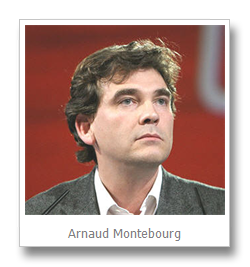
“Nuclear will always make up at least half of our energy (electricity output)," he was quoted as saying during a Franco-Chinese seminar in Beijing on Friday to commemorate a 30-year partnership in the nuclear sector.

"Nuclear energy is a sector of the future," he added.

That’s Arnaud Montebourg, the French industry minister, speaking, so he knows whereof he speaks. France is building two nuclear reactors in China, which raises an important point – nuclear energy technology is not just a economic boon to ratepayers like those in France but to companies like the French-owned AREVA, which is building the Chinese reactors.

The Reuters story also mentions in passing that the French utility EDF is building a new reactor in England. This is how trade works.

---

Which may be why we’re hearing this out of Japan:

In an attempt to overturn the previous administration's pledge to phase out nuclear power, Japanese Prime Minister Shinzo Abe's government will call it an "important source of energy for the country" in its new energy plan.

We mentioned last week (in the post below this one) that a government report signaled a return to nuclear energy in Japan. So it does, as this news attests. The Wall Street Journal has more:

Highlighting the economic necessity of nuclear power, the draft points out that a surge in liquefied natural gas imports to stably supply electricity throughout the country has led to very expensive fossil fuels costs. It also said an overreliance on thermal power has increased the country's carbon dioxide emissions.

The story goes on to report that though nuclear energy has not regained its popularity in Japan, Abe remains quite popular despite these decisions. Polls are polls and can carry a lot of unintended implications, but let’s allow that Abe’s good standing may carry nuclear energy along with it as electricity prices drop and carbon emissions relent. 

Nothing here about trade, really, but Japan does consider nuclear technology an exportable good. I can’t help thinking that that may be playing a part in Abe’s calculations.

Read More
Posted in AREVA, EDF, France, Japan, Nuclear Energy | No comments

Friday, 6 December 2013

Japan: The strongest signal yet on nuclear energy

Posted on 13:47 by Unknown

News from Japan:

Japan should continue to use nuclear power as a key energy source despite the Fukushima power plant disaster, a government panel said on Friday in a reversal of a phase-out plan by the previous government.

Given the turn over in Japanese governments, policy reversals could go on forever, but the recommendation is sound. That doesn’t mean that there will not be significant pushback, though.

The primary example remains the former, much respected, prime minister, Junichiro Koizumi, who has really gone on a tear against nuclear energy:

In a speech Nov. 12 at the Japan National Press Club in Tokyo, Koizumi said, “I think it will be good (for Japan) to end (nuclear power generation) immediately.”

It was a brutally clear message from the mouth of a person who had long been at the center of political power.

And though he faced a lot of criticism for taking this stand (he was for nuclear energy as PM), his words carry real weight with the public:

In an opinion poll conducted by The Asahi Shimbun last weekend, 60 percent of the respondents agreed with Koizumi. Among the supporters of the ruling Liberal Democratic Party [also Koizumi’s party], 58 percent agreed.

Polls being polls, it can be parsed any number of ways, but Koizumi’s influence can be little doubted. 

Which doesn’t mean the recommendation is not good news. It is. Very good news.

Business Week explains why:

Energy costs also are a concern for the government. Power prices in Japan are more than twice those in the U.S. Electricity for industry use costs an average 17.9 cents per kilowatt-hour in Japan compared with 7 cents per kilowatt-hour in the U.S., 12.7 cents per kilowatt-hour in the U.K., and 12.2 cents per kilowatt-hour in France, according to an energy ministry research paper citing 2011 figures.

And:

The alternatives to nuclear power either pollute more or come with a higher fuel cost, limiting Abe’s scope to reshape the energy industry and boost economic growth. Coal use rose 26 percent from a year ago in October. While solar power is taking off, the added capacity is nowhere near replacing what traditional plants supply.

Whatever Japan decided about nuclear energy has always been up to Japan. Whatever arguments could be arrayed to show that it remains the best solution to Japan’s social, economic and energy goals cannot trump the country’s experience after Fukushima Daiichi and the fantastically destructive earthquake and tsunami that precipitated the accident. That’s a national trauma outsiders cannot gainsay. 

And now we need not. Because Japan is close to returning to nuclear energy – current Prime Minister Shinzo Abe will need to issue a policy statement – but as Business Week writes, “this is the strongest signal yet that it wishes to keep nuclear energy.”

Read More
Posted in Fukushima Daiichi, Japan, Nuclear Energy | No comments

Wednesday, 4 December 2013

World Bank Toff: “We don’t do nuclear energy.”

Posted on 14:16 by Unknown

So says World Bank President Jim Yong Kim:

“We don’t do nuclear energy.”

Okay.

“The World Bank Group does not engage in providing support for nuclear power. We think that this is an extremely difficult conversation that every country is continuing to have.

“And because we are really not in that business our focus is on finding ways of working in hydro electric power, in geo-thermal, in solar, in wind,” he said.

“We are really focusing on increasing investment in those modalities and we don’t do nuclear energy.”

But the story from Agence France-Presse also includes this tidbit:

In some countries, only 10% of the population has electricity.

Hope there are enough rivers to dam in those places.

---

From Scotland:

New nuclear would not play a role in an independent Scotland, according to a white paper published by the Scottish government in November.

The current Scottish government is opposed to the building of any new nuclear power stations in Scotland and will phase out existing stations in Scotland over time, it said.

Scots independence could happen – a referendum is scheduled for 2014 and Scotland would become a new nation in 2016 if the vote is successful – but polling tends to be rather dim on the prospect. See here for more.

So, absent nuclear energy, what then?

The Scottish Government aims to generate the equivalent of 100% of electricity from renewables and thermal sources fitted with carbon capture and storage by 2020.

Yup, that’ll boil the haggis.

---

Boy, some days you wake up and no one likes you. Let’s leave it to John Parker, resident of Falmouth Maine, to make the case:

So, if you are one of the fanatics, I urge you to reconsider the issue [of nuclear energy] in a rational manner. We should all promote the only source of power that has no environmental impact and will have enough capacity to start closing down carbon-burning plants. We have many years of total success, our technology and know-how have come a long way since the construction of Three Mile Island, and the blatant errors in Ukraine and Japan can easily be avoided.

Parker makes some overly broad assumptions, but his rough-and-ready defense is a real tonic. Props to the Portland Press-Herald for not polishing his comments into blandness.

Read More
Posted in Maine, Nuclear Energy, Scotland, World Bank | No comments

Monday, 2 December 2013

Recontextualizing the Nuclear Option

Posted on 12:56 by Unknown

newyorker_logoWhen the Senate changed the filibuster rules to allow judicial and executive appointments to proceed to the floor with 51 votes instead of the 60 the filibuster required, the process was called the nuclear option, a name given it (probably) by Sen. Trent Lott (R-Miss.) back in 2006. The association has always been with weaponry not energy, but the New Yorker’s Hendrik Hertzberg goes with energy – in a notably detailed metaphor – and in notably familiar language:

But global warming has changed the picture. Nuclear power isn’t the best way to reduce carbon emissions—that would be wind and solar. For the intermediate future, though, breezes and rays won’t be enough. As growing numbers of environmentalists and climate scientists have come to realize, nuclear power is much, much better than what remains the real-world alternative: fossil fuels like oil and, especially, coal. When it comes to energy, the nuclear option, though not the best of all possible worlds, is better than the one we’re living in.

In Hertzberg’s view, exercising the nuclear option in politics or energy policy is the equivalent of doing the next best thing given the status quo.

There’s a larger point, too, to focus on the experiential nature of political or energy choices. One knows that a simple majority in the Senate might reduce the backlog of appointments. One knows that nuclear energy is carbon emission free and scalable. Hertzberg carries his metaphor no further than that - the quote above is all there is to it. He doesn’t really describe, for example, what the wind and solar energy options for filibuster reform would be – he seems in favor of fully ending the filibuster, even for legislation, so perhaps that’s it.

---

The way Hertzberg phrases his support is interesting, too. Take this bit from the open letter recently released by four prominent environmentalists:

Renewables like wind and solar and biomass will certainly play roles in a future energy economy, but those energy sources cannot scale up fast enough to deliver cheap and reliable power at the scale the global economy requires. While it may be theoretically possible to stabilize the climate without nuclear power, in the real world there is no credible path to climate stabilization that does not include a substantial role for nuclear power.

We wrote much more about this important missive here and had an eye out for pickup in the press – we rounded up some of that here – but Hertzberg does not reference it. It’s just in the wind, being lit by the sun. Hertzberg has his mind on a different topic entirely, but I wonder whether his matter-of-fact endorsement was influenced by the letter. 

As for the filibuster rule change, early days. For climate change, getting later every minute. And for the nuclear option? Thanks to Hertzberg, it has a much better metaphorical future.

Read More
Posted in Nuclear Energy, nuclear option, The New Yorker | No comments

Friday, 22 November 2013

Maybe Yes Maybe No for Nuclear Energy in Bolivia

Posted on 12:30 by Unknown

Add another country to the growing list of those who know there’s something to this nuclear energy thing:

Bolivia is on track to develop a national nuclear power program for peaceful civilian purposes that include building electricity export capacity in the country, official media reported.

According to the UPI story, this has been percolating since last month, when Bolivian President Evo Morales reactivated a long-delayed nuclear energy program.

This has proven mildly controversial because Morales has had fractious relations with the United States – the countries booted out each other’s ambassadors in 2008 - though the relationship has improved in recent years.

Whether Bolivia can field a nuclear energy program is guesswork at this time. Bolivia is a relatively small country – with about 10.5 million in population – and poverty alleviation is a priority for the Morales government. While the country might be a prime candidate for clean-energy industrialization, there is a lot of stress on resources – the government recently tried to scale back on commodities subsidies but had to relent after protests.

And, of course, talking isn’t doing, which leads to reservations:

Morales told an energy conference in Tarija, southern Bolivia, in October the country has achieved conditions necessary to obtain nuclear power for "pacific ends," Los Tiempos reported. Morales did not elaborate, nor did he offer details when he announced Argentina and France would help Bolivia attain nuclear power generation capacity.

So, as always, we’ll see.

---

There’s nothing for us to say about the recently-activated nuclear option. But it has led to some great headlines:

Senate Goes for Nuclear Option

Senate Democrats Go Nuclear

Going Nuclear

Forced to Go Nuclear at Last

I’ve cheated on a few of these and, of course, some headline writers went for nuclear war analogies – fallout, launched, etc. But the overall consensus settled on “going nuclear.” And we have no problem with that at all. You say it’s all about the fili – what? Sometimes, ignorance can be bliss.

Read More
Posted in Bolivia, Nuclear Energy | No comments

Wednesday, 20 November 2013

Absent a Repository, Nuclear Waste Fee Suspended

Posted on 12:51 by Unknown

The nuclear waste fee, established by the Nuclear Waste Policy Act of 1982, pays for the building of a permanent repository for used nuclear fuel. When the government settled on Nevada’s Yucca Mountain for the repository site, Congress in 1987 amended the act to include it.

All that made sense – the industry paid for a repository and the government would take charge of used fuel and put it there. But when President Barack Obama ended the Yucca Mountain project in 2009 with no alternative site envisioned, numerous unresolved problems developed: first, the law stipulates Yucca Mountain and no place else as the repository. And second, how much money should the industry’s ratepayers pay into the nuclear waste fund without an actual repository to fund. Is $29 billion enough? Because that’s how much has been collected. Should the industry keep paying about $750 million per year when the government has no designated repository site to spend it on.

The U.S. Court of Appeals in Washington ruled that the Energy Department must take steps to suspend collection of the nuclear-waste fee from utilities because the government has provided no alternative to a canceled project at Yucca Mountain in Nevada, for which the funds are collected.

The three-judge panel said the Energy Department failed to come up with an adequate evaluation for the waste fee, which is paid into a fund that has grown to more than $29 billion since the first money was collected in 1983.

Because how do you evaluate it when the repository itself is vapor?

The agency’s assessment of disposal costs was “so large as to be absolutely useless to be used as an analytic technique,” Circuit Judge Laurence Silberman wrote in the seven-page decision. He said the department’s presentation reminded the court of a line from the musical “Chicago,” which says, “Give them the old razzle dazzle.” 

This is from Bloomberg’s Brian Wingfield and Andrew Zajac. Matt Wald a the New York Times adds more context.

In a decision written by Judge Laurence H. Silberman, the court ruled that “until the department comes to some conclusion as to how nuclear wastes are to be deposited permanently, it seems quite unfair to force petitioners to pay fees for a hypothetical option.” What they have already paid might cover that cost, Judge Silberman wrote, adding, “the government apparently has no idea.”

That’s on the button. That’s the issue and Judge Silberman makes of it a simple question of fairness – well, not only fairness, of course, but that is key to the industry’s position. You can read the whole decision here. It was fair to contribute when there was a repository and will be again when there is a designated site, but now?

---

Wald points out that this dovetails with another court decision that has implications for the used fuel repository:

There is in fact no assurance that Yucca would turn out to be suitable. The Energy Department applied to the Nuclear Regulatory Commission for a license to build and operate the repository, but then tried to withdraw the application, and the commission stopped work. This year, the appeals court ordered the commission to resume work on the license, and on Monday, the commission said it would do so until it had exhausted the money it had on hand for that purpose, about $11 million.

It’s taken awhile, but the consequences of stopping Yucca Mountain – and continuing the fee – and ending the NRC’s assessment of the site – has become considerably clearer. And Congress, which passed the act and now could amend it to cover current circumstances?

The decision increases pressure on Congress to act, but on this issue, as on others, it is deadlocked. House Republicans want Mr. Obama to follow the laws passed in the 1980s and develop Yucca. Harry Reid, the Nevada Democrat who is the Senate majority leader, has blocked funding.

And so it goes. Some bipartisan movement has occurred on the issue and the court decision could spur further developments. In any event, a lot of the news lately on these issues have been good – and when the news about this is good, it’s good not just for the industry, but especially for electricity consumers.

---

NEI’s General Counsel Ellen Ginsberg issued this statement on the nuclear waste fee decision:

“Today’s decision confirms that the federal government cannot continue to defy Congress’ explicit direction to implement a viable program to manage reactor fuel from America’s nuclear power plants. The court’s ruling reinforces the fundamental principle that the federal government’s obligation is to carry out the law, whether or not the responsible agency or even the president agrees with the underlying policy.

“We agree with the court that unless and until the Energy Department’s repository program is restarted or another waste disposal program is developed, it is appropriate that the Nuclear Waste Fund fee be suspended.

“The court’s decision should prompt Congress to reform the government’s nuclear waste disposal program. We strongly encourage Congress to establish a new waste management entity, and endow it with the powers and funding necessary to achieve the goals originally established in the Nuclear Waste Policy Act. We look forward to working with Congress as members develop legislative proposals to remedy the currently untenable situation.”

Read More
Posted in Nuclear Energy, nuclear waste fund, Nuclear Waste Policy Act, Yucca Mountain | No comments
Newer Posts Older Posts Home
Subscribe to: Posts (Atom)

Popular Posts

  • More of The Best Nuclear Energy News of 2013
    1. The 60th anniversary of Atoms for Peace (and NEI, too) – President Dwight Eisenhower gave the Atoms for Peace speech before the Unite...
  • Nuclear Ingots from Canada, Pakistan, UAE
    From Canada, the least unexpected news of the day: The Canadian Nuclear Safety Commission (CNSC) has completed a ground-breaking s...
  • Canada, Westinghouse and A Fusion Follow-Up
    Westinghouse previews a forum taking place today in Toronto called The Future of Nuclear. Westinghouse has no reactors in Canada and isn’t t...
  • What Happens During a Refueling Outage?
    You may have noticed over the past few weeks that a number of nuclear plants are shut down for refueling outages or are resuming operations ...
  • NEI's Richard Myers on the Wall Street Journal Story on Natural Gas and Nuclear Energy
    NEI VP Richard J. Myers The following statement concerning today's story on nuclear energy and natural gas ("Can gas undo nuclear ...
  • Groundwater Study Co-Authors Lack Scientific Credentials
    Here at NEI, my colleagues and I have been batting around a press release from Environment America and U.S. PIRG claiming that nuclear powe...
  • No Public Health Concern From Radiation Levels in Blue Fin Tuna
    Over the Holiday weekend here in the U.S., the news wires were humming with reports that Blue Fin tuna caught off the coast of California h...
  • NextEra Sets Record With 700-MW Power Uprate
    NEI’s Top Industry Practice Awards recognize innovation in the nuclear energy industry. Presented at NEI’s annual conference, the awards hon...
  • Better Sources on Fukushima than Helen Caldicott
    A couple of days ago, a friend of mine passed some news onto me that Dr. Helen Caldicott is hitting the lecture circuit again, this time to ...
  • Seabrook Nuclear Plant Not Impacted by New England Earthquake
    The USGS is reporting that a minor earthquake struck Maine near the town of Lake Arrowhead shortly after 7:00 p.m. this evening . The nucle...

Categories

  • #CNOSummit
  • 123 agreement
  • 2012 Elections
  • 2012 India Blackout
  • 2012 Nuclear Energy Assembly
  • 2013 Nuclear Energy Assembly
  • 2013 State of the Union
  • 316b
  • 60th Anniversary
  • 9-11
  • ABC
  • Advanced Research Projects Agency
  • advertising
  • Africa
  • Agreement States
  • aircraft impact
  • Al Gore
  • Alabama
  • Alan J. Kuperman
  • Albania
  • Alec Baldwin
  • Alex Flint
  • Allison Macfarlane
  • Amber Lyon
  • Amber Lyons
  • Ameren Missouri
  • American Electric Power
  • American Power Act
  • American Wind Energy Association
  • Andrew Revkin
  • Anil Kadkodkar
  • Ann Bisconti
  • AP1000
  • Apple
  • AREVA
  • argonne national lab
  • Arizona Public Service
  • Arizona Strip
  • Arkansas Nuclear One
  • Arnie Gundersen
  • Associated
  • Associated Press
  • Atomic Industrial Forum
  • atoms for peace
  • Australia
  • Babcock and Wilcox
  • Bangladesh
  • Barack Obama
  • Barclays
  • baseload
  • battery 500
  • Belgium
  • Berlin
  • Bezdek
  • Bhopal
  • Bill Gates
  • Billie Garde
  • Billy Jack
  • Bisconti
  • Blogging
  • Blue Castle
  • blue fin tuna
  • Blue Ribbon Commission
  • bluefin tuna
  • Bob Bishop
  • Bolivia
  • Breakthrough Institute
  • BREDL
  • Britain
  • Brown's Ferry
  • Browns Ferry
  • Bulgaria
  • butterflies
  • California
  • California Energy Commission
  • Callaway
  • Calvert Cliffs
  • Canada
  • cancer
  • Cape Cod Times
  • Carbon Emissions
  • carbon tax
  • Caroline Cochran
  • CASEnergy Coalition
  • Center for Advanced Energy Research
  • cesium
  • Charles Till
  • Charlotte
  • China
  • Chip Pardee
  • Chris Crane
  • Clean Energy
  • clean energy standard
  • climate change
  • Clinton Nuclear Power Station
  • Cloud Atlas
  • CNN
  • coal
  • cold fusion
  • Columbia Journalism Review
  • common language
  • Congress
  • Constellation Energy
  • cooling tower
  • cost recovery
  • crocodiles
  • Crystal River
  • CSIS
  • Curio
  • Curiosity
  • CWIP
  • Cyber Security
  • Czech Republic
  • D.C. Cook
  • Daily Kos
  • Daily Show
  • Dale Klein
  • Dan Lipman
  • data centers
  • David Allard
  • David Fitzpatrick
  • David Lochbaum
  • debate
  • defense
  • Denmark
  • Department of Atomic Energy (India)
  • Department of Energy
  • Department of Homeland Security
  • Department of the Interior
  • Design Basis Threat
  • Diego Garcia
  • Dominion
  • Dominion Resources
  • Dominion Virginia Power
  • Dr. Patrick Moore
  • Dr. Robert Peter Gale
  • Drew Griffin
  • Duane Arnold
  • Duke Energy
  • Dwight Eisenhower
  • Earth Day
  • earthquake
  • East Coast Earthquake
  • economic benefits
  • Ed Halpin
  • EDF
  • Edison
  • education
  • efficiency
  • EIA
  • Einstein Medical Center Montgomery
  • Elaine Grossman
  • electric vehicles
  • electricity
  • emergency alert system
  • emergency planning zone
  • emergency preparedness
  • emergency response
  • energy
  • energy diversity
  • energy information administration
  • Energy Northwest
  • Energy Secretary Chu
  • Entergy
  • Entergy Arkansas
  • environment
  • Environment America
  • EPA
  • EPZ
  • Eric Lax
  • Eric Schmitz
  • Ernest Moniz
  • ERO
  • Eskom
  • ethical investing
  • european union
  • Exelon
  • Exelon Nuclear
  • Export-Import Bank
  • Facebook
  • Fairewinds Associates
  • FBI
  • filtered vents
  • Financial Reporter
  • Finland
  • First Energy
  • FitzPatrick Plant
  • FLEX
  • Florida
  • Florida Power and Light
  • Florida State Senate
  • Fluor
  • food critic
  • Forbes
  • Fox News
  • FPL
  • France
  • Francois Hollande
  • Fred McGoldrick
  • Friends of the Earth
  • Frontline
  • Fukushima Daiichi
  • Fukushima Daini
  • fusion
  • Gallup Poll
  • GAO
  • GE Hitachi Nuclear Energy Award
  • General Atomics
  • Georgetown University
  • Georgia
  • Georgia Power
  • Germany
  • Ghana
  • Ginger Zee
  • Global Nuclear Energy Partnership
  • Global Security Newswire
  • gold standard
  • Google
  • Gov. Jerry Brown
  • Governor Jay Nixon
  • Governor Mitt Romney
  • Great Britain
  • Green Bay
  • Green Energy
  • Green Party
  • greenhouse gases
  • Greenpeace
  • Gregory Jaczko
  • grid reliability
  • Ground Water
  • Gunther Oettinger
  • Gwyneth Cravens
  • Hanford
  • Health Physics
  • Health Physics Society
  • heat wave
  • Helen Caldicott
  • Henry Sokolski
  • Heritage Foundation
  • Higher Education
  • Holtec International
  • House Committee on Energy and Commerce
  • House Foreign Affairs Committee
  • HR 2449
  • Hurricane Sandy
  • hydrogen
  • Hyperion
  • IAEA
  • ibm
  • Idaho
  • Idaho National Lab
  • IEA
  • IEEE
  • Illinois
  • incentives
  • India
  • India Ink
  • Indian Point
  • IndyCar
  • INPO
  • Inside Climate News
  • inspiration
  • international trade
  • Iowa
  • Iran
  • Italy
  • ITER
  • Ivan Penn
  • James Hansen
  • James Howard
  • James Lovelock
  • Janette Sherman
  • JANSI
  • Japan
  • Japan. PBS
  • Japanese earthquake
  • Jeff Donn
  • Jim Asselstine
  • Jim Slider
  • Jim Tusar
  • JJ Abrams
  • jobs
  • John Kerry
  • Jon Stewart
  • Jordan
  • Joseph Mangano
  • Jr.
  • Junichiro Koizumi
  • Kashiwazaki-Kariwa Nuclear Plant
  • KEPCO
  • Kewaunee
  • Kuwait
  • KV Racing Technology
  • laser enrichment
  • leadership
  • Lehman Brothers
  • Levy County
  • liberal politics
  • license renewal
  • licensing
  • Lithuania
  • Los Angeles Times
  • low-level nuclear waste
  • Ltd
  • M.V. Ramana
  • Maine
  • Mark Bittman
  • Mark Cooper
  • Mark Hibbs
  • Mark Lynas
  • Mark Tercek
  • Mars
  • Marv Fertel
  • Maryland
  • Massachusetts
  • Matt Wald
  • Megatons to Megawatts
  • meteor
  • methane
  • Michael Moore
  • Michael Shellenberger
  • Michigan
  • Mid-American Energy
  • Mike Childs
  • minnesota
  • missouri
  • MIT
  • Mitsubishi
  • Monica Trauzzi
  • Mothers in Nuclear
  • movie review
  • MOX Fuel
  • mPower
  • MSNBC
  • NA-YGN
  • Namibia
  • Naomi Oreskes
  • NARUC
  • NASA
  • Nathan Myhrvold
  • National Academy of Sciences
  • National Association of Manufacturers
  • National Mining Association
  • National Oceanic and Atmospheric Administration
  • Natural Gas
  • Nature Conservancy
  • NBC
  • NEI
  • NEI.org
  • Nemo
  • Nevada
  • New Hampshire
  • New Jersey
  • New Mexico
  • new nuclear plants
  • new plant licensing
  • New York Times
  • NextEra Energy
  • Nicholas Sarkozy
  • NIRS
  • No Nukes
  • nonproliferation
  • North Anna
  • Northwestern University
  • NRC
  • Nuclear
  • nuclear arms reduction
  • Nuclear Energy
  • Nuclear Energy Assembly
  • Nuclear Energy Institute
  • Nuclear Energy;
  • nuclear energy.
  • nuclear engineering
  • nuclear exports
  • nuclear option
  • nuclear plant
  • nuclear plant design
  • Nuclear plant security
  • nuclear power
  • Nuclear Power Corporation of India
  • Nuclear Proliferation Prevention Project
  • nuclear reactor
  • nuclear regulatory commission
  • Nuclear Safety Inspections
  • Nuclear Suppliers Group
  • nuclear supply chain
  • nuclear waste
  • nuclear waste fund
  • Nuclear Waste Policy Act
  • nuclear weapons
  • nuclear workforce
  • NuScale Power
  • NY AREA
  • Oconee
  • OECD
  • ohi
  • Oil
  • oil sands
  • Oklo
  • Onagawa
  • Ontario Power Generation
  • Opinionator
  • Oregon
  • Oyster Creek
  • pacific ocean
  • Pakistan
  • Palisades Nuclear Power Plant
  • Palo Verde Nuclear Power Plant
  • Pandora's Promise
  • Part 810
  • Patrick Moore
  • Paul Allen
  • Paul Genoa
  • PCAST
  • Pennsylvania
  • Peter Bradford
  • petition
  • PG&E
  • Pilgrim
  • Pilgrim Nuclear Power Startion
  • Pilgrim Nuclear Power Station
  • Plamt Vogtle
  • Plant Vogtle
  • Plutonium
  • Poland
  • policy
  • polls
  • President Obama
  • Presidential Debates
  • pressurized thermal shock
  • Progress Energy
  • progressive politics
  • Progressives for Nuclear Progress
  • Public Health
  • public opinion
  • public service announcement
  • Quad Cities
  • R. William Borchardt
  • Rachel Doss
  • Rachel Maddow
  • racing
  • radiation
  • radio media tour
  • radioisotope thermoelectric generator
  • Rancho Seco
  • Reddit
  • refueling outage
  • regulation
  • Renault
  • renewable energy
  • renewables
  • Rep. John Shimkus
  • Rep. Mike Simpson
  • research reactors
  • Revolution
  • Richard Branson
  • Richard Myers
  • Richard Rhodes
  • Riverkeeper
  • Robert Alvarez
  • Robert F. Kennedy
  • Robert N. Charette
  • Robert Stone
  • Rolls-Royce
  • Rosatom
  • Russell Gocht
  • Russia
  • safety
  • safety culture
  • San Diego Union-Tribune
  • San Onofre Nuclear Generating Station
  • Savannah River Site
  • SCANA
  • SCANA. VC Summer
  • Scientific American
  • Scotland
  • Seabrook Nuclear Power Plant
  • Section 123 Agreements
  • security
  • Sen. Jeff Bingaman
  • Senator Barbara Boxer
  • Senator Harry Reid
  • September 11
  • Sequoyah Nuclear Power Plant
  • Sharknado
  • Shaw Group
  • Sierra Club
  • Simona De Silvestro
  • Singapore
  • slovakia
  • Small Modular Reactor
  • small reactors
  • solar
  • solar energy
  • Solyndra
  • South Africa
  • South Australia
  • South Carolina
  • South Korea
  • South Texas Project
  • Southern California Edison
  • Southern Company
  • space travel
  • Spent Fuel Pool
  • Stanford University
  • State Department
  • State-of-the-Art Reactor Consequence Analyses (SOARCA)
  • Station Blackout
  • steam generators
  • STEM
  • Steve Byrne
  • Steve Kerekes
  • Steven Chu
  • Stewart Brand
  • storage
  • subsidies
  • Summer nuclear station
  • Sundance
  • Suvrat Raju
  • Switzerland
  • tanks
  • television
  • Temelin
  • Tennessee Valley Authority
  • Tepco
  • TerraPower
  • Thailand
  • The Guardian
  • The New Yorker
  • The Simpsons
  • Thorium
  • TIME Magazine
  • TIP Award
  • Tom Fanning
  • Tom Farrell
  • Tom Laughlin
  • Tom Moore
  • Tomioka
  • Tony Alexander
  • Tony Pietrangelo
  • Toronto
  • Tritium
  • Trojan
  • Tufts University
  • Tugg
  • Turkey
  • Turkey Point
  • TVA
  • U.S. News and World Report
  • U.S. P.I.R.G.
  • UAE
  • UBS
  • UCS
  • Underground
  • Underground Piping
  • union of concerned scientists
  • United Arab Emirates
  • United Kingdom
  • University of Florida
  • University of Missouri
  • University of South Carolina
  • University of Texas at Austin
  • uprates
  • uranium
  • Uranium Mining
  • USEC
  • Used Fuel
  • Used fuel pool
  • used nuclear fuel
  • Utah
  • Vatican City
  • Vermont
  • Vermont Yankee
  • Victor Gilinsky. Vietnam
  • Vietnam
  • Virginia
  • Visaginas
  • vogtle
  • Wall Street
  • Wall Street Journal
  • warheads
  • Washington Post
  • waste
  • waste confidence
  • Waste Isolation Pilot Plant
  • water consumption
  • Watts Bar
  • We The People
  • welding
  • Westinghouse
  • White House
  • wind
  • wind energy
  • Windham County
  • wipp
  • Wisconsin
  • Women In Nuclear
  • World Bank
  • World Energy Outlook
  • world nuclear association
  • World Nuclear Fuel Conference
  • Yucca Mountain
  • Yukiya Amano
  • zion

Blog Archive

  • ▼  2013 (241)
    • ▼  December (12)
      • More of The Best Nuclear Energy News of 2013
      • Dropping the Ball
      • The Best Nuclear Energy News of 2013
      • Little Presents: NuScale, Germany, Meateasies
      • The Renewable Niche and The Nuclear Shrug
      • Those Irresponsible Physicians
      • DOE Awards NuScale Second Small Reactor Grant
      • The End of Megatons to Megawatts
      • “Nuclear energy is a sector of the future.”
      • Japan: The strongest signal yet on nuclear energy
      • World Bank Toff: “We don’t do nuclear energy.”
      • Recontextualizing the Nuclear Option
    • ►  November (11)
    • ►  October (26)
    • ►  September (24)
    • ►  August (12)
    • ►  July (13)
    • ►  June (31)
    • ►  May (19)
    • ►  April (23)
    • ►  March (23)
    • ►  February (23)
    • ►  January (24)
  • ►  2012 (259)
    • ►  December (12)
    • ►  November (11)
    • ►  October (24)
    • ►  September (17)
    • ►  August (27)
    • ►  July (22)
    • ►  June (28)
    • ►  May (23)
    • ►  April (33)
    • ►  March (25)
    • ►  February (28)
    • ►  January (9)
Powered by Blogger.

About Me

Unknown
View my complete profile